- About Us
- Contact Us
- English


LDPE Plastic: Uses, Grades and Industrial Applications
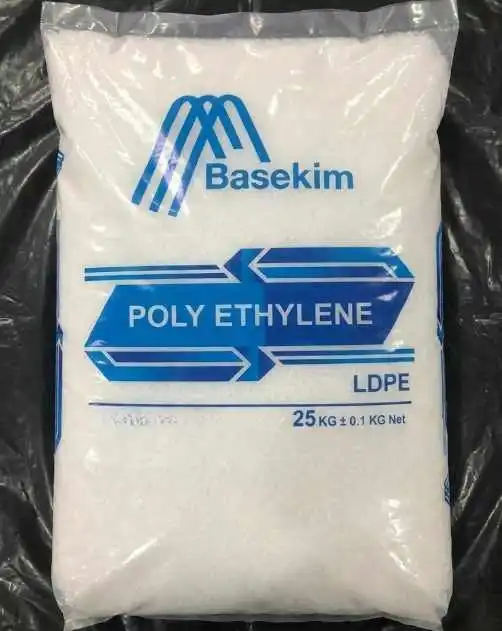
A practical guide to Low Density Polyethylene used in packaging and processing industries
LDPE (Low Density Polyethylene) is a flexible thermoplastic widely used in packaging, coating, and molded products. It is known for its soft structure, high clarity, and stable processing behavior, which make it suitable for applications where sealing quality, surface finish, and consistency matter.
Unlike rigid polyethylene types, LDPE offers high chain branching, resulting in better flexibility and easier flow during processing. For this reason, it remains one of the most commonly used polymers in global plastic manufacturing.
What makes LDPE different from other polyethylene types?
Low Density Polyethylene is produced using a high-pressure polymerization process. This creates a branched molecular structure that directly affects its performance.
Because of this structure:
LDPE feels softer and more flexible than HDPE
It offers better transparency than most polyethylene grades
It seals easily at lower temperatures
It flows smoothly during extrusion and coating
It performs well in thin films and soft molded products
These characteristics explain why LDPE is preferred in flexible packaging and coating applications rather than rigid structural products.
Key Material Characteristics (Quick Overview)
LDPE combines processing simplicity with functional performance:
Flexible and soft mechanical behavior
High clarity and glossy surface appearance
Good heat sealing capability
Stable melt flow during extrusion
Resistance to moisture and many chemicals
Good electrical insulation properties
Recyclable polymer (Resin Code: 4)
This balance allows manufacturers to achieve consistent quality while maintaining efficient production output.
Where LDPE Is Commonly Used
LDPE appears in a wide range of everyday and industrial products. Its versatility allows it to adapt to different production technologies and performance requirements.
Main application areas:
Flexible and consumer packaging
Shopping and carrier bags
Shrink and stretch films
Agricultural and greenhouse films
Industrial liners and protective sheets
Paper and aluminum foil coating
Laminated packaging structures
Soft molded consumer goods
Caps, closures, and squeeze containers
LDPE Film Grades – Performance Overview
Film grades are designed for blown film and related extrusion processes where flexibility, sealing behavior, and surface quality are critical.
They are commonly used in mono-layer and multi-layer film structures and perform reliably in continuous production lines.
Technical Range – Film Grades
| Application | MFI (190°C / 2.16 kg) | Density (g/cm³) |
|---|---|---|
| General purpose film | 0.3 – 1.0 | 0.918 – 0.925 |
| High clarity film | 0.5 – 1.2 | 0.918 – 0.923 |
| Shrink film | 0.3 – 0.7 | 0.918 – 0.922 |
| Heavy-duty film | 0.2 – 0.6 | 0.920 – 0.926 |
LDPE for Extrusion Coating
Extrusion coating grades are developed to apply a uniform polymer layer onto substrates such as paper, aluminum foil, or plastic films.
These grades are valued for:
Strong adhesion to substrates
Smooth and uniform coating surface
Stable performance at high line speeds
Consistent thickness control
Technical Range – Extrusion Coating
| Application | MFI (190°C / 2.16 kg) | Density (g/cm³) |
|---|---|---|
| Standard coating | 4 – 8 | 0.918 – 0.922 |
| High-speed coating | 6 – 12 | 0.918 – 0.922 |
LDPE Injection Molding Applications
Injection molding grades of LDPE are used where soft, flexible parts with smooth surfaces are required. These materials flow easily into molds and allow stable cycle times during production.
Common products include:
Squeeze bottles
Caps and closures
Household plastic items
Soft molded components
Technical Range – Injection Grades
| Application | MFI (190°C / 2.16 kg) | Density (g/cm³) |
|---|---|---|
| General injection | 5 – 20 | 0.920 – 0.930 |
| High-flow injection | 20 – 40 | 0.920 – 0.930 |
Processing Behavior and Performance Notes
Low Density Polyethylene processes at relatively low temperatures compared to other polyethylene types, helping reduce energy consumption. Its melt strength supports smooth extrusion, while its flexibility minimizes cracking during forming and use.
The material also shows good resistance to moisture and many chemical agents, which helps extend product lifetime in packaging and industrial environments.
Supply Scope and Technical Support
Basekim supplies LDPE grades suitable for a wide range of industrial applications. Materials are selected based on performance stability, processing behavior, and export suitability.
We support buyers with:
Grade selection guidance
Technical documentation
Export-ready packaging
Long-term supply planning
Our focus is to provide reliable Low Density Polyethylene solutions for manufacturers and distributors operating in international markets.
WIKI
Q1:What is LDPE used for?
LDPE is mainly used in flexible packaging, film production, extrusion coating, and soft molded products. Common applications include shopping bags, shrink and stretch films, agricultural films, coated paper, laminated packaging, squeeze bottles, and flexible containers.
Q2:What makes LDPE different from other polyethylene types?
LDPE has a highly branched molecular structure that gives it greater flexibility, better clarity, and easier processing compared to HDPE. Unlike LLDPE, LDPE offers smoother surfaces and stronger heat-sealing performance, which makes it ideal for film and coating applications.
Q3:Is LDPE suitable for food packaging?
Yes, many LDPE grades are suitable for food-contact applications when produced according to relevant international regulations. Food-grade compliance depends on the specific grade and certification provided by the manufacturer.
Q4:What is the typical density range of LDPE?
LDPE usually has a density range between 0.918 and 0.930 g/cm³, depending on the grade and intended application. Lower densities are often used for flexible films, while higher densities are selected for molding and coating uses.
What melt flow index (MFI) ranges are available for LDPE?
LDPE is available in a wide range of melt flow indices depending on application:
Film grades: typically 0.3–1.2 g/10 min
Extrusion coating grades: around 4–12 g/10 min
Injection molding grades: approximately 5–40 g/10 min
These ranges help manufacturers select the right balance between flow and mechanical performance.
Contact Info
Turkey office:No.6 of Fahrettin Pasa Sokak , Galip Erdem steet, Ilkbahar Mah. Turan Gunes Ave. Çankaya Ankara
Phone:00903125147055
Dubai office: 3509 of the Burligton tower, business bay, Dubai-UAE
Phone:0097142369830