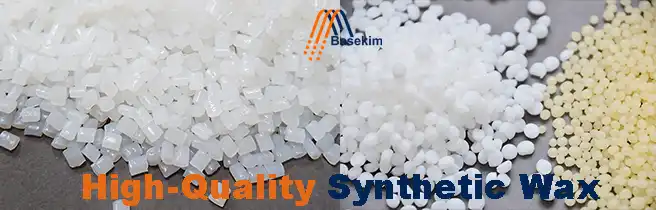
Synthetic wax is a high performance industrial material that delivers consistent quality, predictable behavior, and long term stability across many applications. Unlike natural waxes, which can vary in composition and performance, synthetic wax is produced under controlled conditions, so every batch works the same way. This reliability makes it essential for industries such as plastics, coatings, adhesives, packaging, automotive, textiles, and cosmetics. Because it performs well under heat, resists oxidation, and blends easily with other raw materials, manufacturers rely on it daily. Basekim, with strong supply bases in the UAE and Turkey, supplies high quality synthetic wax to global buyers who demand consistency, fast delivery, and dependable technical standards.
What Is Synthetic Wax?
Synthetic wax is an engineered wax produced from petroleum, natural gas, or other hydrocarbon sources. Engineers design it to meet specific industrial needs, such as controlled melting point, hardness, lubrication, or surface protection. Because it is manufactured in controlled environments, synthetic wax has a uniform molecular structure, which ensures stable and repeatable results.
In contrast, natural waxes may change from batch to batch due to climate or source variation. engineered wax removes this uncertainty. As a result, manufacturers gain better control over their production process, product quality, and final performance.
Key characteristics of synthetic wax include:
High thermal stability
Excellent lubrication properties
Strong resistance to oxidation and aging
Long shelf life
Easy compatibility with polymers, resins, and additives
Because of these features, synthetic wax has become a preferred choice in modern manufacturing.
Why Industries Prefer Synthetic Wax
Industries today demand precision and efficiency. Synthetic wax meets these expectations by offering stable performance in demanding conditions. Since it does not break down easily under heat or pressure, it improves both processing and final product quality.
Manufacturers benefit because:
Production runs remain consistent
Equipment experiences less wear and friction
Finished products look better and last longer
Waste and reprocessing costs decrease
Therefore, petroleum-based wax is not just a raw material—it is a performance enhancer.
Main Types of Synthetic Wax
Different industries require different properties. For this reason, synthetic wax is available in several types, each designed for specific uses.
Fischer–Tropsch (FT) Wax
FT wax is produced from natural gas using advanced conversion technology. It has a high melting point, high hardness, and very low oil content. Because of these properties, it is widely used in:
Plastics processing
Industrial coatings
Hot melt adhesives
Polishes
It improves surface hardness, abrasion resistance, and heat stability.
Polyethylene (PE) Wax
PE wax is one of the most widely used synthetic waxes. It improves flow, dispersion, and surface quality. In addition, it adds scratch resistance and gloss.
Typical applications include:
Plastics and masterbatches
Printing inks
Rubber processing
Coatings and paints
Polypropylene (PP) Wax
PP wax offers higher chemical resistance and toughness compared to PE wax. Because of this, it performs well in demanding environments.
It is commonly used in:
Industrial lubricants
Adhesives
Textile finishing
Engineering plastics
Amide Waxes
Amide waxes are specialty waxes used to reduce friction and improve surface smoothness. They also provide slip and anti blocking effects.
Common uses include:
Printing and packaging
Coatings and varnishes
Film production
Blended Synthetic Waxes
Blended waxes combine two or more wax types to balance cost and performance. Manufacturers often choose blends when they need tailored properties without increasing production costs.
Applications of Synthetic Wax
Synthetic wax is used across many industries because it adapts easily to different formulations.
Plastics Industry
Improves melt flow
Prevents sticking during processing
Enhances surface gloss
Rubber Industry
Reduces cracking and aging
Improves flexibility
Protects against oxidation
Coatings and Paints
Increases scratch resistance
Enhances surface smoothness
Improves durability and appearance
Adhesives and Sealants
Improves bonding strength
Adds flexibility
Enhances heat resistance
Paper and Packaging
Improves water resistance
Enhances surface feel
Supports cleaner processing
Cosmetics and Personal Care
Stabilizes formulations
Improves texture and consistency
Enhances product appearance
Because of this wide range of uses, synthetic wax supports both heavy industry and consumer goods production.
Benefits of Using Synthetic Wax
Companies choose industrial wax because it solves many production challenges at once.
Key benefits include:
Consistency: uniform quality in every batch
Durability: resists heat, wear, and aging
Efficiency: longer shelf life reduces waste
Reliability: predictable performance in production
Versatility: suitable for many industries
As a result, This wax has moved from being an alternative to natural wax to becoming the industry standard.
Grades and Physical Forms
To meet different processing needs, synthetic wax is supplied in multiple forms:
Powder
Flakes
Granules
Pastilles
These formats allow easy dosing, faster melting, and better dispersion in formulations.
| Wax Type | Common Forms | Main Applications | Key Advantages |
|---|---|---|---|
| FT Wax | Powder, flakes | Plastics, coatings, adhesives | High hardness, high melting point |
| PE Wax | Granules, powder | Plastics, inks, rubber | Gloss, lubrication, stability |
| PP Wax | Flakes, granules | Adhesives, textiles | Chemical resistance, toughness |
| Amide Wax | Flakes, pastilles | Packaging, coatings | Slip, smooth surface |
| Blended Wax | Custom forms | General industry | Balanced performance and cost |
Packaging and Logistics
Proper packaging protects wax quality during transport and storage. Basekim offers secure options to suit different order sizes:
25 kg bags for easy handling
Cartons for organized shipping
Jumbo bags for bulk supply
Each shipment includes full documentation and clear logistics coordination, ensuring smooth global delivery.
Market Outlook
The global synthetic wax market continues to grow. Expansion in plastics, packaging, automotive, and coatings drives rising demand. At the same time, interest in cleaner and more efficient formulations supports further innovation.
Manufacturers now look for waxes that offer both performance and sustainability, which increases the importance of reliable suppliers.
Final Thoughts
Synthetic wax plays a critical role in modern manufacturing by delivering consistency, durability, and efficiency across countless applications. It improves production processes, protects finished products, and reduces long term costs. Basekim, with supply hubs in the UAE and Turkey, provides high quality synthetic wax, flexible packaging, and dependable global delivery. When your business needs a reliable wax solution, Basekim stands ready as a trusted long term partner.