- About Us
- Contact Us
- English


Sodium chloride
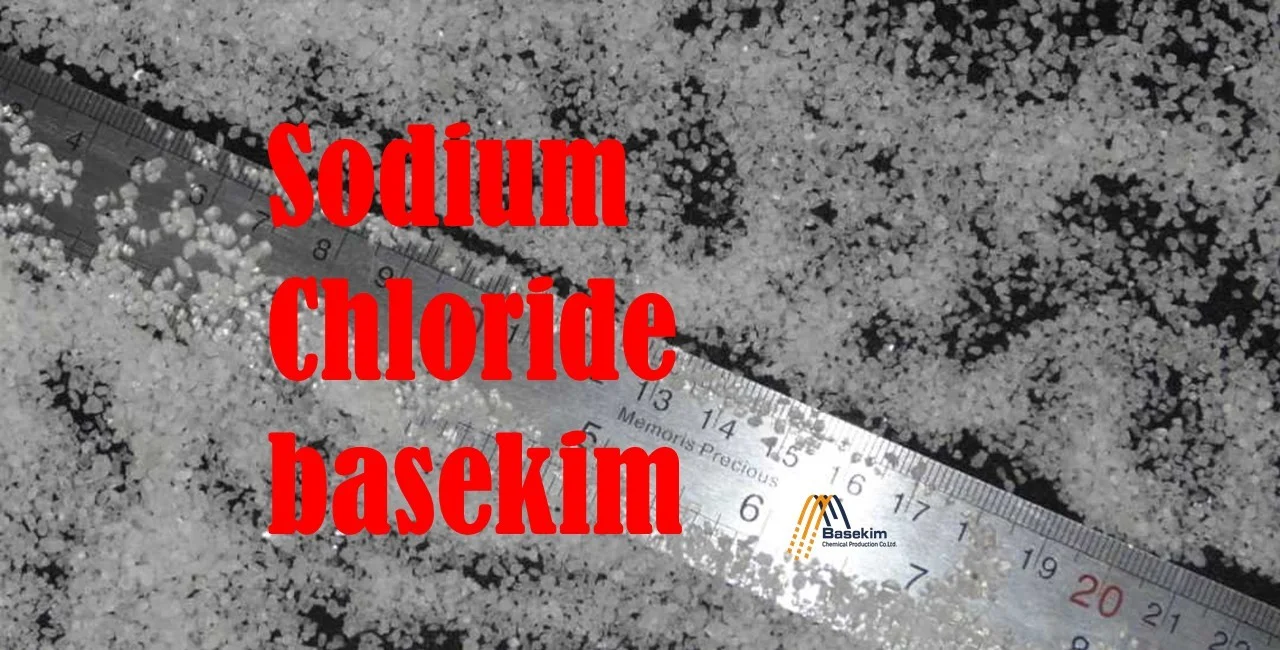
Sodium chloride is a widely used industrial chemical known for its stability, availability, and essential role in many manufacturing processes. It matters because it supports production in food processing, chemicals, water treatment, pharmaceuticals, and de-icing without complex handling or high costs. Manufacturers, engineers, and procurement teams rely on Industrial salt when they need a dependable source of sodium and chloride ions at scale. If your operation requires consistency, bulk supply, and predictable performance, sodium chloride remains a practical choice.
What sodium chloride is and why industry depends on it
Sodium chloride is an inorganic compound made of sodium and chlorine ions arranged in a stable crystal structure. In industrial environments, it appears as white crystalline solids, granules, or powders with controlled purity levels.
Because it dissolves easily in water and reacts predictably, industries use it as a raw material, process aid, or functional additive. Unlike specialty chemicals, sodium chloride offers reliability without complex storage or transport requirements.
As a result, it plays a foundational role in many value chains rather than a niche role.
Key physical and chemical properties
Understanding the basic properties helps buyers select the right grade and avoid performance issues.
Core properties include:
High water solubility
Neutral chemical behavior in most systems
Stable crystal structure
Non flammable and non volatile nature
Typical characteristics:
| Property | Value |
|---|---|
| Chemical formula | NaCl |
| Appearance | White crystals or powder |
| Solubility | Highly soluble in water |
| Melting point | ~801°C |
| Density | ~2.16 g/cm³ |
Because of these properties, Industrial salt works well in both high volume and precision applications.
Main industrial uses of sodium chloride
Sodium chloride supports a wide range of industries. Each use depends on purity level, particle size, and moisture control.
Chemical manufacturing and chlor alkali processes
Chemical producers use sodium chloride as a feedstock to produce:
Chlorine
Sodium hydroxide
Hydrogen
In chlor alkali plants, consistent salt quality directly affects membrane life and process efficiency. Therefore, low impurity levels matter more than price alone.
Water treatment and conditioning
Water treatment facilities use sodium chloride for:
Ion exchange regeneration
Water softening systems
Brine preparation
Clean dissolution and controlled particle size reduce clogging and downtime. For this reason, many operators prefer industrial-grade salt with low insoluble matter.
Food processing and preservation
Food manufacturers rely on refined Industrial salt for:
Flavor enhancement
Preservation and fermentation control
Texture and moisture regulation
In this sector, purity, trace minerals, and compliance with food standards determine suitability.
Pharmaceutical and medical applications
Pharmaceutical producers use high purity sodium chloride in:
Saline solutions
Dialysis fluids
Medical formulations
Here, strict specifications and traceability matter more than volume.
De icing and road maintenance
Municipalities and contractors apply sodium chloride to:
Lower freezing points on roads
Improve winter safety
Control ice buildup
For de icing, particle size distribution and moisture resistance improve spreading efficiency and storage life.
Benefits that make sodium chloride a preferred choice
Industrial salt remains popular because it balances performance and cost.
Key benefits include:
Easy handling and storage
Broad compatibility with equipment
Stable supply in global markets
Multiple grades for different industries
Because it performs reliably across sectors, buyers can standardize procurement without frequent reformulation.
Industrial grades and purity levels explained
Not all Industrial salt products serve the same purpose. Grade selection affects performance and compliance.
Common industrial grades include:
Industrial grade for chemical processing
Refined grade for food and pharmaceuticals
Water treatment grade for softening systems
De icing grade for infrastructure use
Each grade differs in purity, moisture, and particle size. Therefore, buyers should match the grade to the application rather than rely on general descriptions.
Packaging and bulk supply options
Sodium chloride suits large scale transport due to its stability.
Typical packaging formats include:
25 kg bags
50 kg bags
Jumbo bags
Bulk shipments
Export oriented suppliers like Basekim focus on moisture resistant packaging to maintain quality during long transit periods.
Handling, storage, and safety con siderations
Although sodium chloride is safe to handle, proper storage preserves quality.
Best practices include:
Store in dry, covered areas
Prevent contact with moisture
Use corrosion resistant equipment
Because sodium chloride attracts moisture, poor storage can lead to caking or reduced flowability.
Quality control and specifications buyers should request
Experienced procurement teams request documentation before purchase.
Common checks include:
Certificate of analysis
Moisture content
Insoluble matter percentage
Particle size distribution
These factors reduce process variability and protect equipment.
How to choose the right sodium chloride supplier
Choosing a supplier involves more than price comparison.
Reliable suppliers offer:
Consistent quality
Transparent specifications
Export documentation support
Stable logistics
For international buyers, supplier experience in bulk export matters as much as product quality.
Conclusion: Is sodium chloride right for your application?
Sodium chloride remains one of the most reliable and versatile industrial chemicals available. Its predictable behavior, wide availability, and adaptable grades make it suitable for many sectors. Buyers who focus on grade selection, supplier reliability, and quality documentation gain the most value.
If your operation depends on stable raw materials with global supply support, sodium chloride offers a practical and proven solution. Reviewing specifications and matching the grade to your process is the best next step before procurement.
Share On
Q1: What is sodium chloride used for in industrial applications?
Industries use sodium chloride as a raw material and processing aid in chemical manufacturing, water treatment, food processing, pharmaceuticals, and de-icing. Its stable composition and easy solubility make it suitable for both high-volume and precision uses.
Q2: How is industrial sodium chloride different from household salt?
Industrial grades vary in purity, moisture, and particle size. Unlike household salt, they usually contain no additives and meet specifications designed for manufacturing and process control rather than taste.
Q3: Which grade should I choose for my application?
The right grade depends on purity requirements, particle size, and end use. Chemical plants focus on low impurities, water treatment systems need clean dissolution, and food or pharmaceutical uses require higher refinement and compliance.
Q4:
??
Q5:
???

Contact Info
Ankara Office
No.6, Fahrettin Pasa St. (613), Ilkbahar, Cankaya – Ankara
Tel: +90 312 514 70 55
Istanbul Office
No. 219, Sogut St., No.20, T4A Block, Maslak, Sariyer – Istanbul
Tel: +90 212 807 22 33
Dubai Office
No.3509, The Burlington Tower, Business Bay, Dubai – UAE
Tel: +971 4 236 98 30