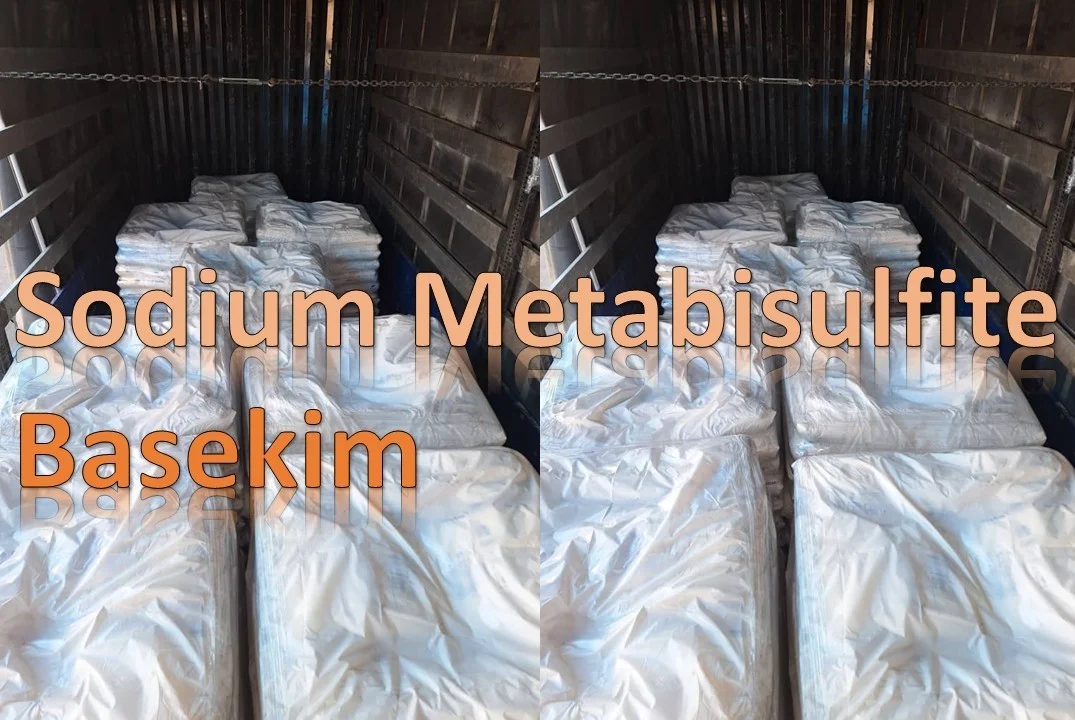
Sodium metabisulfite is a widely used industrial chemical that acts as a strong reducing agent, preservative, and oxygen scavenger. Industries rely on it to prevent oxidation, control microbial growth, and protect product quality during processing and storage. Manufacturers, water treatment operators, food processors, and chemical plants use it when they need controlled deoxygenation, color stability, or chlorine removal. If your process suffers from oxidation, discoloration, or residual oxidants, sodium metabisulfite often becomes the practical and cost effective solution.
What sodium metabisulfite actually is in practical terms
Sodium metabisulfite is an inorganic salt with the formula Na₂S₂O₅. In real operations, buyers see it as a white to slightly yellow crystalline powder with a noticeable sulfur odor. When dissolved in water, it releases sulfur dioxide, which gives the product its reducing and antimicrobial power.
From an industrial perspective, this behavior matters more than the formula. The product reacts quickly with oxygen, chlorine, and other oxidizing agents. That reaction protects sensitive materials, stabilizes formulations, and prevents unwanted chemical changes during processing.
Most industrial grades follow common international specifications, such as limits on purity, iron content, heavy metals, and insoluble matter. Buyers usually select grades based on application sensitivity rather than just price.
Why industries depend osodium metabisulfite
Oxidation causes real losses in industrial systems. It fades colors, degrades raw materials, reduces shelf life, and damages equipment. Sodium metabisulfite addresses these problems directly by removing oxygen and neutralizing oxidants before they can cause harm.
Industries value it because it works fast, stores easily in dry conditions, and integrates smoothly into existing processes. Compared to alternative antioxidants or dechlorination chemicals, it often delivers stronger performance at lower dosage levels.
Common industrial applications and what buyers should know
Water treatment and dechlorination
Water treatment plants use sodium metabisulfite to remove residual chlorine and chloramine before discharge or downstream processing. Operators prefer it because it reacts quickly and leaves minimal secondary residues.
In practice, correct dosing matters. Under dosing leaves residual chlorine, while over dosing can reduce dissolved oxygen too far. Engineers usually calculate dosage based on chlorine concentration, flow rate, and contact time.
Food and beverage processing
Food processors use sodium metabisulfite as a preservative and antioxidant in controlled applications such as dried fruits, starch processing, and fermentation systems. Its role is to prevent enzymatic browning and microbial growth.
Here, purity and compliance become critical. Food grade material must meet stricter limits for heavy metals and contaminants. Buyers often request certificates of analysis for each batch to ensure consistency.
Pulp, paper, and textile industries
In pulp and paper mills, sodium metabisulfite supports bleaching control and color stabilization. Textile processors use it to neutralize excess bleaching agents and protect fibers from oxidative damage.
Plant managers usually focus on solubility and reaction speed. Poor quality material can leave insoluble residues that clog dosing lines or reduce efficiency.
Chemical manufacturing and processing
Chemical producers use sodium metabisulfite as a reducing agent in synthesis reactions and as a stabilizer during storage of sensitive intermediates. Its predictable reactivity makes it easy to integrate into batch or continuous processes.
In these settings, iron content and moisture levels matter. Excess impurities can interfere with catalysts or side reactions.
Handling, storage, and safety considerations
Sodium metabisulfite is stable when kept dry, but moisture exposure triggers sulfur dioxide release. That gas can irritate eyes and respiratory systems in enclosed spaces.
Experienced operators follow these basic practices:
Store in sealed bags or drums away from humidity
Use local ventilation in mixing and dosing areas
Avoid contact with acids, which accelerate gas release
Wear basic PPE such as gloves and eye protection
Most suppliers provide safety data sheets aligned with international standards to guide safe handling and emergency response.
Quality parameters buyers should evaluate
Not all sodium metabisulfite performs the same in industrial systems. Buyers usually review several key parameters before approving a supplier:
| Parameter | Why it matters |
|---|---|
| Purity (%) | Affects reaction efficiency and dosage accuracy |
| Sulfur dioxide content | Determines reducing strength |
| Iron and heavy metals | Critical for food, textile, and chemical uses |
| Insoluble matter | Impacts filtration and dosing systems |
| Packaging integrity | Prevents moisture pickup during transport |
Reliable suppliers test each batch and issue documentation to support traceability and quality assurance.
Packaging and logistics realities
Industries typically receive sodium metabisulfite in 25 kg bags, 50 kg bags, or jumbo bags, depending on consumption volume. Packaging must protect against moisture during sea freight and storage.
From a logistics standpoint, buyers often ask about palletization, container loading plans, and shelf life under normal warehouse conditions. Clear answers reduce handling losses and unexpected quality issues.
Where sodium metabisulfite fits — and where it does not
Sodium metabisulfite works best in systems that need fast and controllable reduction. It may not suit applications requiring long term antioxidant protection without repeated dosing. In some sensitive consumer products, alternative antioxidants may offer milder behavior.
Experienced buyers evaluate the full process rather than choosing based only on chemical name. Compatibility testing remains a standard step before full scale adoption.
Supplier reliability and consistency
In industrial supply chains, consistency matters more than spot pricing. Plants design processes around predictable chemical behavior. Variations in purity or moisture can disrupt operations and increase downtime.
Basekim supplies sodium metabisulfite to industrial buyers who require stable quality, clear documentation, and export ready packaging. Procurement teams usually engage after reviewing technical data sheets and confirming application fit.
Practical conclusion for buyers and engineers
Sodium metabisulfite remains a dependable solution for oxidation control, dechlorination, and preservation across many industries. It delivers strong reducing performance, integrates easily into existing systems, and offers cost efficiency when specified correctly.
Before purchasing, buyers should confirm grade suitability, review quality parameters, and align packaging with their logistics needs. The next practical step is to match the product specification with your exact application and operating conditions, then request technical documentation to validate compatibility.