- About Us
- Contact Us
- English


Asphalt Tape for Professional Asphalt Repair Systems
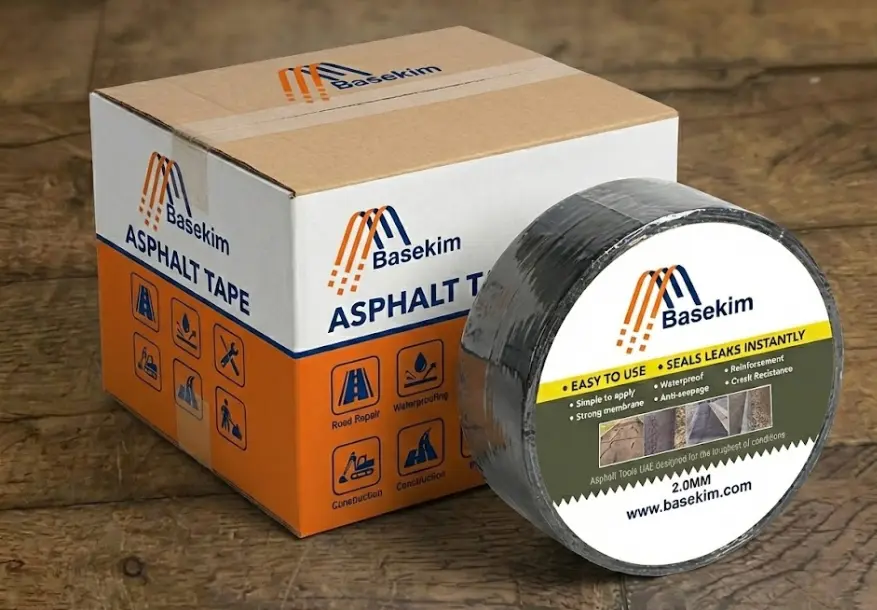
Asphalt Tape plays a critical role in modern repair and joint sealing systems. It seals weak points, protects patchwork areas, and prevents early pavement failure. As a result, contractors use it to extend pavement life and reduce maintenance costs.
Moreover, this solution works without hot application, which makes installation faster and safer on site.
Asphalt Tape as a Market and Search Term
In the construction market, professionals commonly use the term Asphalt Tape to describe materials that seal joints and cracks in asphalt surfaces.
However, this name represents a category rather than a single technical definition.
Therefore, engineers and project managers rely on more specific classifications to select the right product.
Self-Adhesive Bituminous Tape – Technical Definition
From a technical perspective, Asphalt Tape falls under Self-Adhesive Bituminous Tape.
This type of tape uses a bitumen-based compound that bonds directly to asphalt without heating. In addition, it creates a flexible layer that absorbs movement between old and new pavement layers. Consequently, it reduces reflective cracking and blocks water penetration.
Polymer Modified Bitumen Tape – Material Performance
When manufacturers enhance the bitumen with SBS polymers, Asphalt Tape becomes Polymer Modified Bitumen Tape.
This modification improves performance in several ways:
It keeps the tape flexible at low temperatures
It maintains shape at high surface temperatures
It resists deformation under traffic load
As a result, polymer-modified tape performs reliably in both hot and cold climates.
Bitumen Joint Tape – Functional Application
In joint-related applications, professionals often call Asphalt Tape Bitumen Joint Tape.
They use it to seal:
Asphalt-to-concrete joints
Asphalt-to-metal interfaces
Manholes and inspection chambers
By sealing these transition zones, the tape prevents crack formation and limits water ingress.
Asphalt Crack Repair Tape – Maintenance Use
During maintenance and patchwork operations, crews refer to the product as Asphalt Crack Repair Tape.
They apply it around:
Patching areas
Utility trench repairs
Pothole restoration zones
As a result, repaired sections last longer and require fewer follow-up repairs.
Installation Method – Cold Applied and Efficient
Tape installs quickly and easily:
Clean and dry the surface
Remove the release liner
Press the tape firmly into place
Apply new asphalt over the tape
In colder weather, light pre-heating improves adhesion. However, the tape does not require flame or hot bitumen.
Asphalt Tape for Infrastructure Projects
Contractors use Tape in:
Urban and intercity roads
Industrial pavements
Parking areas
Airports and logistics zones
Basekim manufactures this Tape under controlled production standards to meet professional road construction needs.
Long-Term Value in Asphalt Repair
By sealing joints and reinforcing repairs, Tape lowers lifecycle costs and improves pavement durability.
For this reason, Basekim supplies this product as a reliable solution for repair and pavement preservation systems.
WIKI
Share On
Q1:Is Asphalt Tape the same as Self-Adhesive Bituminous Tape?
Yes. Asphalt Tape is the market term, while Self-Adhesive Bituminous Tape is the technical classification.
Q2:When should Asphalt Tape be called Bitumen Joint ?
When it is used specifically for sealing joints between asphalt and other materials.
Q3:Is Polymer Modified Bitumen Tape necessary for heavy-duty roads?
Yes. Polymer modification ensures performance under temperature variation and traffic movement.
Q4:Is Asphalt Crack Repair Tape suitable for permanent repairs?
It is designed to reinforce repairs and significantly extend their service life.

Contact Info
Ankara Office
No.6, Fahrettin Pasa St. (613), Ilkbahar, Cankaya – Ankara
Tel: +90 312 514 70 55
Istanbul Office
No. 219, Sogut St., No.20, T4A Block, Maslak, Sariyer – Istanbul
Tel: +90 212 807 22 33
Dubai Office
No.3509, The Burlington Tower, Business Bay, Dubai – UAE
Tel: +971 4 236 98 30