- About Us
- Contact Us
- English


Defoamers for Industry — Fast, Clean Foam Control from Basekim
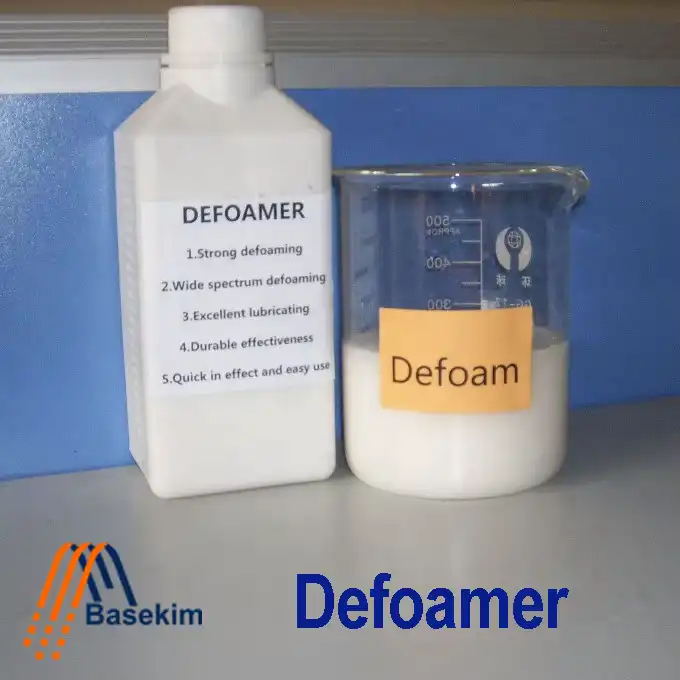
Foam is a widespread issue across many industries, and it causes serious operational problems. It slows production, reduces quality, and creates waste. Moreover, foam blocks tanks, overflows pipes, and even damages pumps and sensors. Because of these costly issues, companies require fast and reliable solutions to control foam effectively.
Defoamers provide instant relief by breaking foam as soon as it forms, while anti-foams work to prevent new foam from appearing. Since most industrial processes need both immediate action and long-term stability, Basekim supplies specialized products that deliver quick results and ongoing protection.
Understanding How Defoamers Work
Foam forms when air becomes trapped in a liquid and is stabilized by surfactants. This usually happens during activities such as mixing, pumping, or chemical reactions. A defoamer spreads over the foam, breaks the thin bubble walls, and releases the trapped air.
Because the defoamer does not fully dissolve into the liquid, it remains active on the surface for extended periods. Therefore, it continues to suppress foam while improving process efficiency. As a result, operations run smoothly, production delays are minimized, and maintenance costs decrease.
Why Foam Is Harmful to Your Business
Uncontrolled foam does much more than create a messy appearance. It disrupts production flow, increases costs, and reduces product quality.
For example, foam can overflow tanks and cause dangerous working conditions. It also interferes with sensors, which leads to inaccurate readings and poor process control. In addition, foam slows filtration and pumping, which results in higher energy consumption and wasted resources.
Furthermore, in industries such as paints and coatings, foam leaves visible surface defects like craters, pinholes, and rough finishes. These defects often cause products to be rejected, which leads to rework, delays, and lost profits. Consequently, managing foam properly is vital to protect both efficiency and brand reputation.
Main Types of Defoamers
When selecting a defoamer, understanding the available options is important. Each type has specific benefits and applications.
Silicone Emulsion Defoamers
These are powerful and effective at very low doses. Because they spread quickly, they provide instant foam control. They are also stable across a wide pH range, making them ideal for many water-based systems. However, in sensitive applications such as paints or coatings, overdosing can create surface defects. Therefore, careful testing is always recommended before full-scale use.Non-Silicone or Mineral-Oil Defoamers
These are popular in industries where silicone may not be suitable. Since they do not contain silicone, they greatly reduce the risk of problems such as fisheyes or craters in coatings.Polyether (EO-PO) Defoamers
These are ideal for high-temperature processes such as paper production or fermentation. Because they remain stable under heat, they provide continuous foam control even in extreme conditions.Powder or Granular Defoamers
These are used in dry formulations like cement, gypsum, and powdered adhesives. They stay inactive until they come into contact with water, which makes them convenient for storage and handling.
In many industrial settings, companies combine a fast-acting defoamer for immediate foam removal with a slower anti-foam to prevent future foam formation. This approach ensures both quick action and long-term stability.
How to Choose the Right Defoamer
Choosing the correct defoamer requires careful consideration. First, evaluate the type of liquid in your process. For example, water-based systems often need silicone or polyether defoamers, while oil-based or solvent-based systems may require non-silicone alternatives.
Next, consider the temperature and pH of your process. High temperatures or extreme pH levels demand more stable products to ensure consistent performance. In addition, examine the amount of surfactants and level of agitation. Heavily foaming systems with strong mixing typically need more powerful solutions.
Regulatory requirements also play an important role. In industries such as food and pharmaceuticals, only certified food-grade defoamers should be used to meet strict safety standards. Moreover, think about where the defoamer will be added. For best results, add it at a point of high shear—such as near a pump or mixer—so it disperses evenly and quickly.
By reviewing these factors together, you can confidently select a defoamer that is both effective and cost-efficient.
Proper Dosage and Application
Using the correct dosage is crucial for success. Too little product will leave foam in the system, while too much can lead to surface issues or even worsen the foam problem. Because of this, always begin with a low dose and increase gradually until you find the minimum effective amount.
Silicone emulsions: Start with 10–100 ppm of active material.
General industrial systems: The range can vary from 10 to 1000 ppm depending on how severe the foaming is.
Overdosing can sometimes cause foam stabilization rather than elimination. Therefore, it’s essential to monitor the results closely and adjust the dosage step by step.
Industries That Depend on Defoamers
Defoamers are vital across many sectors because foam is a universal challenge. In wastewater treatment, they control foam in aeration tanks and clarifiers, ensuring smooth and compliant operations. Similarly, paint and coating manufacturers use defoamers to maintain flawless surface quality and avoid costly rework.
The pulp and paper industry relies on defoamers to keep machines running efficiently and to prevent disruptions. In concrete and cement production, defoamers eliminate trapped air, resulting in stronger and more durable products. Furthermore, food and beverage processors must use only food-grade defoamers to guarantee safety and meet strict regulatory guidelines.
In adhesives and sealants, defoamers reduce air bubbles, which improves product strength and appearance. Finally, in the oil and gas sector, defoamers are critical for managing foam in drilling fluids and cementing operations. Because foam can appear in so many different systems, having the right defoamer is essential for consistent performance and efficiency.
Why Choose Basekim as Your Supplier
Basekim is a trusted global supplier of industrial defoamers. Because we operate from strategic hubs in the UAE and Turkey, we can deliver products quickly and reliably to customers worldwide.
We offer a complete range of defoamers, including silicone emulsions, non-silicone grades, polyether types, and powdered formulations. In addition, we provide flexible packaging options such as 25 kg pails, 200 kg drums, and 1,000 L IBCs for liquids, as well as 10–20 kg moisture-protected bags for powders. Private-label solutions are also available on request.
Every shipment includes full documentation, including certificates of analysis and safety data sheets. Moreover, our technical experts are ready to assist with dosing plans, troubleshooting, and process optimization. Because of this comprehensive support, Basekim has become a trusted partner for businesses seeking reliable foam control solutions.
FAQs
1) What’s the difference between a defoamer and an anti-foam?
A defoamer removes existing foam, while an anti-foam prevents new foam from forming. Many plants use both to ensure total control.
2) Do silicone defoamers always cause defects?
No. When selected correctly and used at the proper dosage, silicone defoamers are both safe and highly effective.
3) How much defoamer should I use initially?
Start with 10–100 ppm and then adjust slowly until foam is fully controlled.
Share On

Contact Info
Ankara Office
No.6, Fahrettin Pasa St. (613), Ilkbahar, Cankaya – Ankara
Tel: +90 312 514 70 55
Istanbul Office
No. 219, Sogut St., No.20, T4A Block, Maslak, Sariyer – Istanbul
Tel: +90 212 807 22 33
Dubai Office
No.3509, The Burlington Tower, Business Bay, Dubai – UAE
Tel: +971 4 236 98 30