


Sodium bicarbonate is a mild alkaline compound widely used in industrial processes to control pH, neutralize acids, release carbon dioxide, and support safe, stable reactions. It matters because it offers predictable performance without aggressive reactivity, which makes it suitable for water treatment, flue gas cleaning, food processing, pharmaceuticals, detergents, and many manufacturing operations. Engineers and procurement teams choose it when they need controlled alkalinity, buffering capacity, or gas generation with low corrosion risk. In short, it solves everyday industrial problems safely, consistently, and at scale.
What sodium bicarbonate is in industrial terms
In industrial settings, sodium bicarbonate (NaHCO₃) works as a weak base and buffering agent rather than a strong alkali. This difference matters in real operations. Unlike sodium carbonate or sodium hydroxide, it reacts more gently, which reduces equipment stress and process upsets.
From practical experience, plants prefer sodium bicarbonate when:
They need gradual pH adjustment, not rapid spikes
Operators handle material manually or semi-automatically
Downstream equipment has corrosion sensitivity
This behavior makes it easier to control, especially in continuous processes.
Common industrial applications and why it is chosen
Water and wastewater treatment
In water treatment, sodium bicarbonate stabilizes pH and alkalinity. Operators often use it where sudden pH jumps can harm biological systems or membranes.
Key practical advantages:
Dissolves easily with predictable buffering
Safer to dose than stronger alkalis
Compatible with biological treatment systems
Many facilities use it to protect nitrification stages or stabilize influent water quality.
Flue gas treatment and emission control
Power plants and incinerators use sodium bicarbonate for acid gas neutralization, especially for SO₂, HCl, and HF removal.
From field use:
Fine particle size improves reaction efficiency
Lower reaction temperature compared to alternatives
Simple dry injection systems reduce capital costs
It is often preferred where operators want effective emission control without complex wet scrubbers.
Food and beverage manufacturing
In food processing, sodium bicarbonate controls acidity, supports leavening, and stabilizes formulations. Industrial buyers focus heavily on purity and compliance here.
Typical uses include:
Leavening systems in bakery production
pH control in beverage formulations
Cleaning-in-place systems with mild alkalinity
Buyers usually request food-grade material compliant with FCC or equivalent standards.
Pharmaceutical and healthcare production
Pharmaceutical manufacturers use sodium bicarbonate as a buffering agent and excipient. Consistency and traceability matter more than price in this sector.
Operational considerations include:
Low heavy metal content
Tight particle size distribution
Batch-to-batch consistency
Suppliers must support documentation and quality audits.
Detergents and cleaning formulations
In detergents, sodium bicarbonate softens water, improves cleaning efficiency, and reduces odor. Formulators value it for its mildness and compatibility.
It helps:
Improve soil removal
Control formulation pH
Reduce harshness compared to stronger bases
This balance supports both industrial and consumer cleaning products.
Performance characteristics buyers should understand
Sodium bicarbonate performs best when users understand its limitations as well as its strengths.
Important technical points:
It decomposes above 50–60°C, releasing CO₂
It has lower alkalinity than sodium carbonate
It works best where buffering is required
Engineers often pair it with other alkalinity sources to fine-tune process control rather than relying on it alone.
Handling, storage, and safety considerations
From an operational standpoint, sodium bicarbonate is easy to handle, but good practice still matters.
Handling insights:
Use dry storage to prevent caking
Avoid prolonged exposure to moisture
Use dust control during bulk handling
While it is non-toxic and non-flammable, industrial sites still follow standard PPE guidelines to manage dust exposure.
Quality standards and specifications
Industrial buyers often ask about standards before discussing price. Common references include:
ASTM specifications for industrial grades
FCC or food-grade standards for edible applications
ISO-compliant manufacturing and quality control
Consistent particle size, low impurities, and documented quality control separate reliable suppliers from traders.
Choosing the right grade for your application
Not all sodium bicarbonate performs the same way. Buyers should match grade to use case.
Selection guidance:
Water treatment: industrial grade with controlled solubility
Food and pharma: certified food or pharma grade
Flue gas treatment: fine or ultra-fine grades for better reactivity
Matching the grade reduces waste, improves performance, and lowers total operating cost.
Packaging and supply considerations
In real procurement cycles, packaging and logistics often matter as much as chemistry.
Common options include:
25 kg bags for manual handling
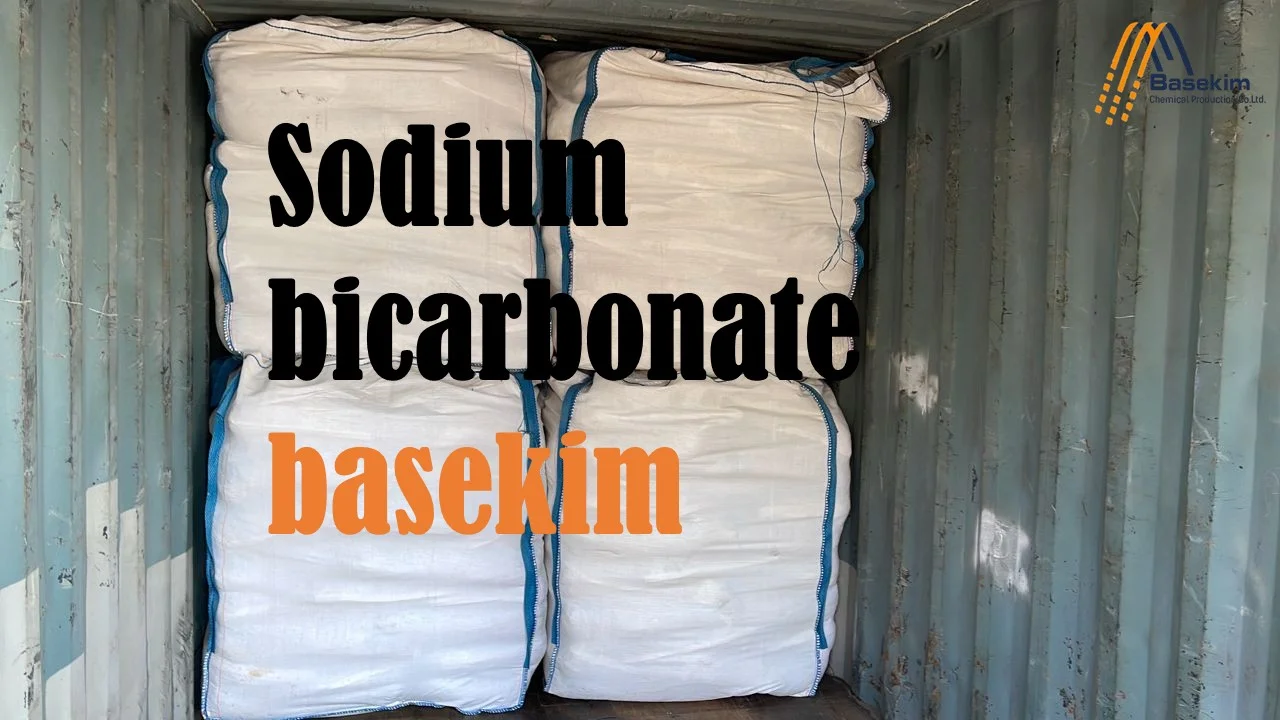
Big bags for industrial dosing systems
Bulk supply for large-scale users
Basekim supplies sodium bicarbonate to international markets with packaging adapted to industrial logistics and storage needs, supporting consistent delivery for ongoing operations.
Common buyer questions answered
Buyers frequently ask whether sodium bicarbonate can replace stronger alkalis. In practice, it depends on process goals. If buffering and safety matter more than speed, it often fits better. If rapid pH change is required, alternatives may perform better.
Another frequent concern involves moisture sensitivity. While stable, it performs best when stored dry and handled properly, especially in humid climates.
Conclusion: when sodium bicarbonate is the right choice
Sodium bicarbonate fits applications where controlled alkalinity, safety, and process stability matter more than aggressive reaction speed. It supports water treatment, emissions control, food production, pharmaceuticals, and cleaning systems with predictable performance and low handling risk. For engineers and procurement teams, the right grade and quality documentation make the real difference. Reviewing specifications and matching them to your application is the next logical step before sourcing or trial use.