- About Us
- Contact Us
- English


Solvent 403 – A Versatile Choice for Industrial Performance
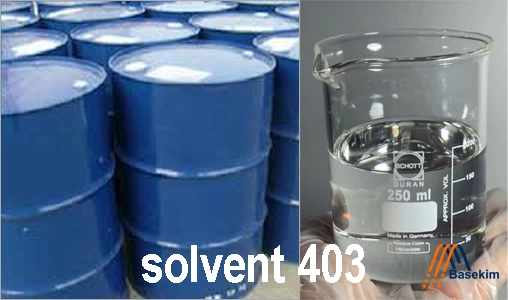
Solvent 403 is a petroleum-derived industrial hydrocarbon solvent used for cleaning, thinning, and degreasing in professional applications. It matters because it delivers strong oil-dissolving power, controlled evaporation, and consistent performance across manufacturing, coating, and maintenance operations. Industries that need reliable surface preparation and equipment cleaning choose this solvent for daily use. As a result, Solvent 403 remains a practical solution for buyers who demand stability, safety, and efficiency.
What Is Solvent 403?
Solvent 403 is a refined aliphatic hydrocarbon solvent produced through controlled petroleum distillation. Manufacturers design it with a defined boiling range, low impurities, and predictable behavior during use.
Unlike aggressive aromatic solvents, Refined petroleum solvent provides effective solvency without damaging sensitive surfaces. Therefore, operators rely on it when they need strong cleaning performance with controlled evaporation.
Because of its stable composition, it performs consistently in both industrial plants and workshop environments.
Key Physical and Chemical Characteristics
Solvent 403 combines solvency strength with balanced evaporation. As a result, it supports efficient workflows while reducing residue and rework.
Key characteristics include:
Clear and colorless appearance
Low sulfur content
Controlled aromatic level
Moderate evaporation rate
Stable flash point
Predictable drying behavior
Because of these features, many industries select this solvent for routine and large-scale operations.
Industrial Applications of Solvent 403
Surface Cleaning and Degreasing
Solvent 403 removes oil, grease, wax, and processing residues from metal and equipment surfaces. Therefore, it prepares parts for coating, assembly, or inspection.
It evaporates evenly, which helps maintain clean and dry surfaces.
Paint and Coating Thinner
Many coating systems use Solvent 403 to adjust viscosity and improve flow. As a result, applicators achieve smooth films and uniform drying.
It performs especially well in alkyd and protective coating formulations.
Equipment and Tool Maintenance
Manufacturing facilities use Refined petroleum solvent to clean spray guns, pumps, mixers, and mechanical components. Because it dissolves oils efficiently, maintenance teams reduce downtime.
Adhesives and Sealants
Certain adhesive systems require hydrocarbon solvents for dilution and processing. Therefore, Solvent 403 supports controlled application and consistent curing.
General Industrial Cleaning
Workshops, shipyards, and construction sites use this solvent for routine cleaning tasks. It provides reliable performance without excessive fumes.
Benefits for Industrial Buyers
Solvent 403 offers clear advantages for manufacturers, distributors, and bulk buyers.
Main benefits include:
Stable and repeatable quality
Balanced solvency power
Controlled evaporation rate
Compatibility with multiple systems
Easy handling and storage
Because of these advantages, procurement teams often select it for long-term supply agreements.
Technical Specifications of Solvent 403
Below is a typical technical data range. Actual values may vary by specification and production batch.
| Property | Typical Range |
|---|---|
| Appearance | Clear, colorless |
| Density @ 15°C | 0.78 – 0.82 g/cm³ |
| Distillation Range | 150 – 200°C |
| Flash Point (Closed Cup) | ≥ 38°C |
| Aromatic Content | < 20% |
| Sulfur Content | Low |
| Evaporation Rate | Moderate |
| Water Solubility | Insoluble |
These properties align with common ASTM D86, ASTM D93, and relevant ISO hydrocarbon solvent standards.
Quality Control and Compliance
Producers test Solvent 403 under controlled laboratory conditions. Each batch undergoes checks for density, flash point, and distillation behavior.
Quality systems typically follow:
ASTM testing procedures
ISO-based quality management
Internal batch traceability
Certificate of Analysis verification
Therefore, buyers receive consistent material that meets industrial expectations.
Packaging Options
Suppliers offer Solvent 403 in several packaging formats to match logistics and storage requirements.
Common packaging includes:
Steel drums (160–200 liters)
Plastic drums
IBC containers
Bulk ISO tanks
Packaging selection depends on shipment volume and destination.
Storage and Handling Guidelines
Store Solvent 403 in a cool, dry, and well-ventilated area. Keep containers tightly closed and away from ignition sources.
Operators should use basic personal protective equipment during handling. Proper ventilation ensures safe daily use.
Global Supply and Export Logistics
International buyers source Solvent 403 through established petrochemical supply chains. Shipments follow standard HS classifications for petroleum solvents.
Export documents usually include:
Certificate of Analysis
Safety Data Sheet
Commercial invoice and packing list
Basekim supplies Refined petroleum solvent to international markets with consistent specifications and bulk export capability.
Buyer Tips: Selecting the Right Specification
Before purchasing, buyers should confirm:
Required flash point
Acceptable aromatic limits
Compatibility with end-use systems
Local regulatory requirements
As a result, procurement teams avoid performance issues and compliance risks.
Commercial Use by Industry
| Industry | Typical Application |
|---|---|
| Paint & Coatings | Viscosity adjustment |
| Manufacturing | Parts cleaning |
| Construction | Tool maintenance |
| Marine | Equipment degreasing |
| Automotive | Surface preparation |
This wide applicability supports steady global demand.
Conclusion
Solvent 403 provides dependable performance for cleaning, coating, and maintenance across multiple industries. Its balanced solvency, controlled evaporation, and consistent quality make it a reliable choice for professional users. Basekim delivers this solvent with export-ready packaging, stable specifications, and supply reliability for global buyers.
Q1: What is Solvent 403 used for?
It is used for industrial cleaning, degreasing, and coating formulation where controlled evaporation is required.
Q2: Is Solvent 403 suitable for paint thinning?
Yes, it is commonly used to adjust viscosity and flow in compatible coating systems.
Q3: Can Solvent 403 be used in manufacturing plants?
Yes, with proper ventilation, it performs well in industrial environments.
WIKI
Share On
Contact Info
Turkey office:No.6 of Fahrettin Pasa Sokak , Galip Erdem steet, Ilkbahar Mah. Turan Gunes Ave. Çankaya Ankara
Phone:00903125147055
Dubai office: 3509 of the Burligton tower, business bay, Dubai-UAE
Phone:0097142369830