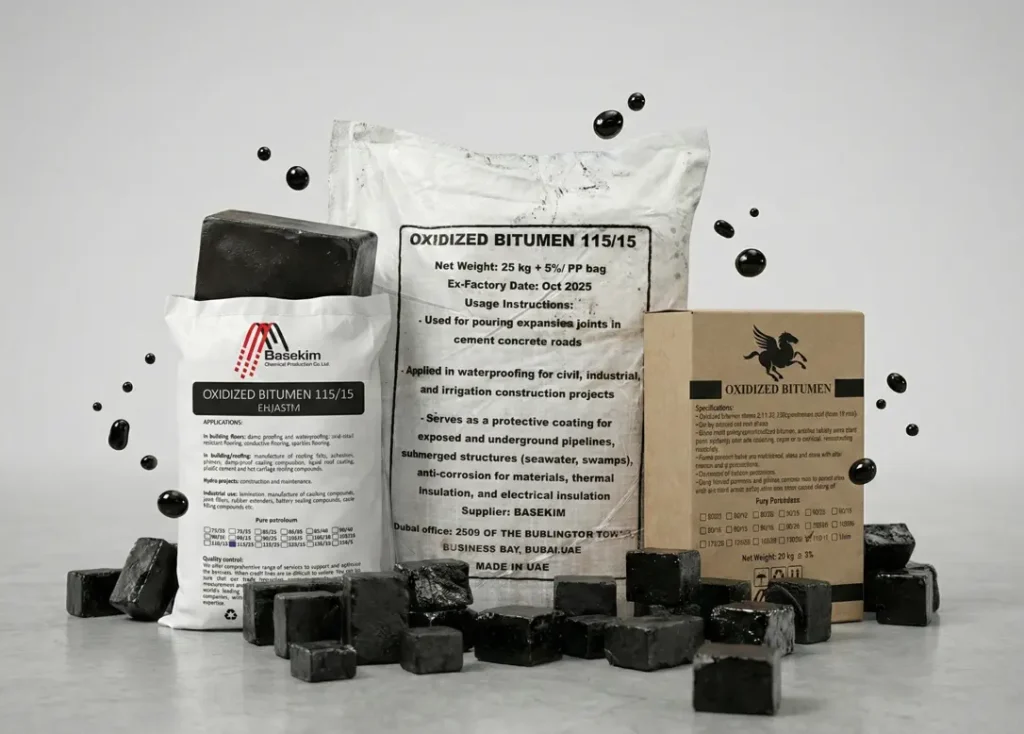
Oxidized bitumen demand in 2026 is being shaped by a clear shift toward performance-driven material selection across global infrastructure and industrial projects. As operating conditions become harsher and project lifecycles extend, traditional penetration-grade bitumen is no longer sufficient for many applications.
Rising ambient temperatures, increased thermal stress, and stricter durability requirements have pushed engineers and contractors to seek materials with higher softening points and long-term structural stability. In this environment, oxidized bitumen—produced through controlled air-blowing to modify bitumen structure has moved from a secondary option to a strategic material choice across multiple industries.
Oxidized Bitumen Market Demand in 2026: Which Grades Lead?
Market growth in 2026 is not evenly distributed across all oxidized bitumen grades. Demand is strongly application-driven, with specific grades gaining traction based on thermal performance, mechanical stability, and processing behavior.
Oxidized Bitumen 115/15: The Dominant Grade in 2026
Among all oxidized bitumen grades, Oxidized Bitumen 115/15 shows the strongest demand growth in 2026.
Its high softening point and excellent resistance to deformation under heat make it particularly suitable for projects exposed to extreme temperatures and continuous mechanical stress. Unlike conventional bitumen, 115/15 maintains structural integrity in conditions where material failure would otherwise occur.
Key applications driving demand for Oxidized Bitumen 115/15 include industrial waterproofing systems, roofing membranes, hot climate construction projects, and heavy duty insulation layers. Large scale infrastructure and industrial developments increasingly prioritize lifecycle performance over initial material cost, positioning 115/15 as the preferred grade for project-based consumption.
Oxidized Bitumen 95/25: Consistent Demand in Protective Applications
Oxidized Bitumen 95/25 maintains stable and consistent demand in 2026, particularly in applications requiring a balance between flexibility and thermal resistance.
This grade is widely used in protective coatings, pipe wrapping systems, corrosion protection, and industrial sealants. Its workability and adhesion characteristics make it suitable for controlled application environments where moderate thermal performance is sufficient.
While overall volume demand is lower than for 115/15, Oxidized Bitumen 95/25 remains essential for manufacturers and contractors focused on precision performance rather than bulk infrastructure use.
Oxidized Bitumen 85/40: Specialized but Necessary
Oxidized Bitumen 85/40 continues to serve niche, formulation-based applications in 2026. Its higher penetration value makes it suitable for blending and customized industrial compounds.
Demand for this grade is typically driven by manufacturers rather than large construction projects. In specific formulations, 85/40 offers processing advantages and flexibility that cannot be replicated by harder grades, ensuring steady—though limited—market demand.
Key Applications Driving Oxidized Bitumen Growth in 2026
Industrial Waterproofing Systems
Industrial waterproofing increasingly requires materials capable of withstanding prolonged exposure to heat, pressure, and environmental stress. High softening point oxidized bitumen grades, particularly 115/15, deliver superior resistance compared to conventional alternatives.
This has resulted in increased adoption across industrial facilities, storage terminals, and heavy-duty infrastructure projects.
Energy and Infrastructure Assets
Energy facilities, pipelines, and transport infrastructure are designed for extended operational lifespans. Materials selected for these assets must provide consistent performance over time with minimal maintenance.
Oxidized bitumen has become a reliable solution due to its resistance to thermal deformation and aging, supporting long-term protection and structural stability.
Protective and Anti Corrosion Coatings
In coating applications, oxidized bitumen provides strong adhesion and resistance to environmental exposure. Medium grade oxidized bitumen such as 95/25 is commonly selected to achieve the required balance between viscosity, flexibility, and durability.
Market Direction in 2026: From Price-Based to Performance-Based Selection
One of the most significant shifts in the oxidized bitumen market is the change in purchasing behavior. In 2026, buyers increasingly prioritize material consistency, quality control, and performance under extreme conditions rather than short-term pricing advantages.
As a result, reliable supply chains and technical understanding have become as important as product specifications. Suppliers capable of delivering consistent grades for export-oriented projects—particularly those operating across strategic hubs such as Turkey and the UAE—are increasingly positioned as long-term partners rather than transactional vendors.
Conclusion: Why Oxidized Bitumen Remains Strategic in 2026
The oxidized bitumen market in 2026 clearly reflects a shift toward application-specific demand and performance-driven material selection. While different grades serve distinct purposes, Oxidized Bitumen 115/15 stands out as the leading grade for high-temperature and project-based applications.
As industrial requirements continue to evolve, oxidized bitumen plays a critical role in bridging traditional bitumen technology with modern performance expectations—making it a strategic material across infrastructure, energy, and industrial sectors worldwide.