- About Us
- Contact Us
- English


Bitumen C600 | Heavy-Duty Bitumen for High Traffic & Hot Climate Projects
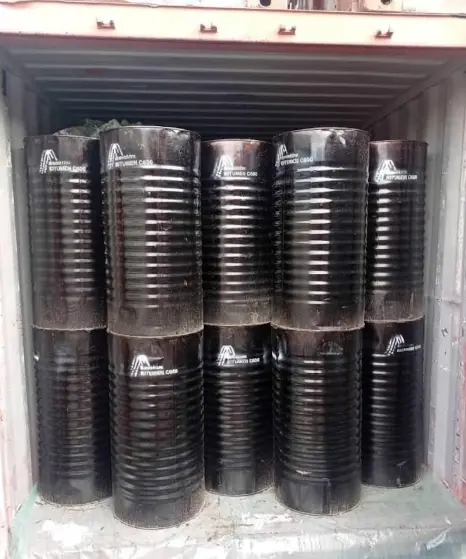
Bitumen C600 is an Australian high-viscosity paving bitumen designed for projects where standard penetration grades do not perform well. Because of its high stiffness and stability, engineers use this grade in heavy traffic and hot climate conditions.
As a result, Bitumen C600 is widely selected for large infrastructure projects that require long service life and low maintenance.
What Is Bitumen C600?
Bitumen C600 is a hard paving grade bitumen classified under Australian viscosity standards. Unlike common grades such as 60/70 or 80/100, this bitumen offers much higher viscosity and lower penetration.
Therefore, it keeps its shape under high temperatures and continuous heavy loads. Engineers choose C600 when pavement deformation must be avoided.
Why Engineers Choose Bitumen C600
Several factors make Bitumen C600 suitable for demanding projects.
Moreover, these characteristics directly improve pavement durability.
Very high viscosity at working temperatures
Strong resistance to shape change under load
Stable performance in hot climates
Reduced rutting and surface damage
Longer pavement life with less maintenance
For this reason, C600 is not recommended for light or residential roads.
Typical Applications of Bitumen C600
Bitumen C600 performs best in environments with constant pressure and high temperatures.
Heavy Traffic Roads and Highways
Contractors use Bitumen C600 on major highways and freight corridors. As a result, pavements remain stable even under continuous truck traffic.
Ports and Container Terminals
Ports require strong pavement to handle container loads and heavy machinery. Therefore, engineers often specify C600 for container yards and access roads.
Airports (Runways and Aprons)
Aircraft loads and heat stress demand stiff binders. Because of this, Bitumen C600 is commonly used in runways, taxiways, and apron areas.
Industrial and Logistics Areas
Factories and logistics hubs experience nonstop heavy movement. In such conditions, C600 provides reliable and long-lasting pavement performance.
Performance in Hot Climate Conditions
Hot climates present serious challenges for asphalt pavements. Softer bitumen grades may soften and deform over time.
However, C600 maintains its structure at elevated temperatures. As a result, it reduces rutting, surface waves, and early pavement failure. This makes it a practical solution for regions with long, hot summers.
Bitumen C600 vs 60/70 Bitumen
Although both grades are widely used, they serve very different purposes.
| Feature | Bitumen 60/70 | Bitumen C600 |
|---|---|---|
| Viscosity | Medium | Very high |
| Penetration | Medium | Very low |
| Hot Climate Use | Limited | Excellent |
| Heavy Traffic | Moderate | Very high |
| Typical Use | Urban roads | Ports & highways |
Therefore, engineers should select C600 only for heavy-duty applications.
Common Technical Questions
Is C600 suitable for cold climates?
Generally, no. Because it is very hard, it may crack in cold environments. Softer or modified binders work better in low temperatures.
Can C600 replace polymer modified bitumen?
In many hot climate and heavy-load projects, yes. However, final selection depends on project design and local standards.
Why does C600 cost more?
The higher price reflects its performance and durability. Over time, it often reduces repair and maintenance costs.
Global Demand and Export Markets
Demand for Bitumen C600 is strongest in:
Australia
Middle East countries
India
African infrastructure markets
Southeast Asia
These regions combine hot climates, heavy traffic, and large-scale projects.
Reliable Supply for International Projects
Consistent quality and correct documentation play a key role in heavy infrastructure projects. For this reason, many buyers work with experienced exporters that understand both technical requirements and logistics.
Suppliers such as Basekim support international projects by providing Bitumen C600 with stable quality, technical documentation, and export-ready supply—without changing project specifications.
WIKI
Q1:Bitumen C600 exactly means what?
Bitumen C600 is a high-viscosity, hard paving grade bitumen classified under Australian viscosity grading standards. The “600” refers to its very high viscosity level, making it suitable for heavy-duty and high-temperature applications.
Q2:What makes Bitumen C600 different from 60/70 bitumen?
The main difference is hardness and performance.
60/70 is designed for normal roads, while C600 is engineered for:
Heavy traffic
High loads
Hot climates
C600 has much higher viscosity and much lower penetration, meaning it resists deformation far better.
Q3:Where is Bitumen C600 commonly used?
C600 is typically used in:
Ports and container terminals
Airport runways and aprons
Heavy traffic highways
Industrial and logistics areas
It is not recommended for residential or light-traffic roads.
Q4:Is Bitumen C600 suitable for hot climate countries?
Yes. This is one of its main advantages.
C600 maintains its structure at high pavement temperatures and significantly reduces rutting and surface deformation in hot regions.
Q5:Can Bitumen C600 replace polymer modified bitumen (PMB)?
In many heavy-load and high-temperature projects, yes.
C600 offers excellent stiffness and durability without polymer modification. However, final selection depends on project design, climate, and local standards.

Contact Info
Ankara Office
No: 6, Fahrettin Paşa Sokak, Galip Erdem Sokak İlkbahar Mahallesi, Çankaya – Ankara, Türkiye
Tel: +90 312 514 70 55
Istanbul Office
Maslak Mahallesi, Söğüt Sokak No: 20 T4A Blok, Daire: 219 Sarıyer – İstanbul, Türkiye
Tel: +90 212 807 22 33
Dubai Office
The Burlington Tower, Office 3509 Business Bay, Dubai, UAE
Tel: +971 4 236 98 30