- About Us
- Contact Us
- English


Humic Acid
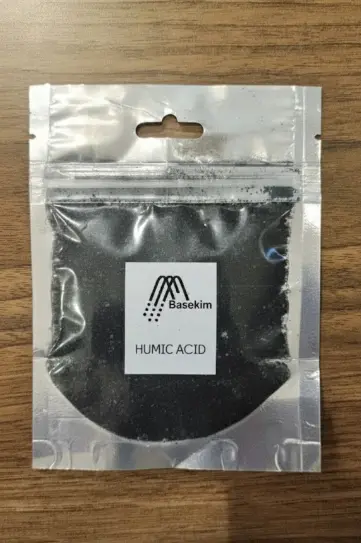
Humic Acid is a natural organic compound widely used in agriculture, soil conditioning, fertilizer production and several industrial processes. It is formed through the long term decomposition of plant material and organic matter, creating complex organic molecules that play an important role in soil fertility and mineral interaction.
As a Humic Acid manufacturer and exporter in Turkey, Basekim supplies high quality humic acid products to international markets. Our production and export network allows us to deliver stable quality materials suitable for agricultural use, fertilizer manufacturing and industrial applications.
Humic Acid products are available in multiple forms including powder, granular and liquid grades to support different agricultural systems and industrial processes.
What Is Humic Acid
Humic Acid belongs to a group of natural organic substances known as humic substances. These substances are formed naturally in soil over thousands of years as plants, microorganisms and organic materials gradually decompose.
Humic Acid contains a high concentration of carbon based organic molecules that interact with soil minerals, nutrients and microorganisms. These interactions help improve soil structure, increase nutrient retention and enhance biological activity within soil environments.
Because of its chemical structure and functional groups, humic acid has the ability to bind nutrients, improve soil physical properties and influence plant growth.
Humic Acid Production Process
Industrial humic acid is commonly produced from Leonardite, a natural organic mineral rich in humic substances.
The production process begins with the extraction of Leonardite from natural deposits. The raw material is crushed and processed into fine particles to increase surface area. The material is then treated with alkaline solutions such as potassium hydroxide or sodium hydroxide to extract humic compounds.
During this process humic substances dissolve into the alkaline solution and form potassium humate or sodium humate solutions. The solution is filtered to remove impurities and processed further depending on the desired product form.
The final product may be processed into powder, granular or liquid humic acid products for agricultural and industrial use.
Forms of Humic Acid We Supply
Our humic acid products are available in three main forms.
Humic Acid Powder is commonly used for fertilizer blending and soil applications. It can be easily mixed with other agricultural inputs or applied directly to soil.
Granular Humic Acid is designed for soil conditioning and long term soil improvement. Granules dissolve gradually in soil and provide extended release benefits.
Liquid Humic Acid is used in fertigation systems, drip irrigation and foliar application where rapid distribution and absorption are required.
Agricultural Applications of Humic Acid
Agriculture represents the largest market for humic acid worldwide. Farmers use humic acid to improve soil fertility, increase nutrient availability and enhance plant growth.
Humic acid improves soil structure by binding soil particles together, which creates a more stable soil environment with better aeration and water retention. This improved soil structure allows plant roots to grow more effectively and access nutrients more easily.
Another important benefit is the increase of cation exchange capacity in soil. Humic acid molecules hold essential nutrients such as nitrogen, potassium, calcium and magnesium and prevent them from being washed away by irrigation or rainfall.
potassium humate products also stimulates root development and improves microbial activity in soil. Beneficial microorganisms thrive in humic rich environments and help convert nutrients into forms that plants can absorb.
Because of these benefits humic acid is widely used in crop production, greenhouse farming, horticulture and organic agriculture.
Humic Acid in Fertilizer Production
Humic Acid is widely used as a raw material in the fertilizer industry. Fertilizer manufacturers combine humic substances with nutrient fertilizers to improve nutrient efficiency and soil performance.
Products such as humic NPK fertilizers, potassium humate fertilizers and organic soil conditioners are widely used in modern agriculture.
When humic acid is combined with fertilizers it helps reduce nutrient loss, improves nutrient uptake and supports long term soil health.
Humic Acid in Oil and Gas Drilling
Humic substances can also be used as additives in drilling fluids within the oil and gas industry.
In drilling operations, humic based additives may help control fluid loss, stabilize drilling mud and improve the rheological properties of drilling fluids. The organic structure of humic molecules allows them to interact with clay particles and minerals within drilling mud systems.
These properties help maintain fluid stability during drilling operations and improve the performance of drilling mud under varying pressure and temperature conditions.
potassium humate products in Environmental and Soil Remediation
potassium humate products plays an important role in environmental protection and soil remediation. Its natural chelating ability allows it to bind with heavy metals and pollutants in soil and water.
This property helps reduce the mobility of harmful contaminants and supports environmental restoration projects. Humic substances are often used in land rehabilitation, mining area restoration and soil recovery programs.
By improving soil biological activity and increasing organic matter levels, humic acid helps restore degraded land and improve long term soil stability.
Humic Acid in Animal Feed and Nutritional Applications
In some regions humic substances are used as additives in animal nutrition. Humic based feed supplements are believed to support digestive health, improve nutrient absorption and enhance overall metabolic performance in livestock.
These supplements are sometimes used in poultry, cattle farming and aquaculture systems to support animal health and improve feed efficiency.
Humic Acid in Water Treatment
Humic substances can also be used in water treatment and environmental purification processes. Due to their ability to bind metals and organic compounds, humic materials may help capture contaminants and assist in filtration systems.
These properties make humic substances useful in certain industrial water treatment and environmental management applications.
Why potassium humate products Is Important for Sustainable Agriculture
Modern agriculture faces challenges such as soil degradation, nutrient loss and declining organic matter levels. potassium humate products helps address these challenges by improving soil organic content, increasing nutrient efficiency and enhancing soil biological activity.
By supporting soil health and improving nutrient management, humic acid contributes to sustainable agricultural production and long term crop productivity.
Global Demand for potassium humate products
The global demand for humic acid continues to grow as agriculture shifts toward more sustainable and efficient farming practices. Countries with large agricultural sectors increasingly rely on soil conditioning products to maintain soil fertility and improve crop yields.
potassium humate products products are widely traded across international markets including Europe, Africa, the Middle East and Asia. Exporters located in strategic regions such as Turkey are able to supply these markets efficiently due to strong logistics networks and proximity to major agricultural regions.
Humic Acid Export from Turkey
Turkey has become an important supplier of agricultural inputs and soil improvement products for international markets. With strong logistics connections to Europe, Africa and the Middle East, Turkish exporters are able to provide reliable humic acid supply to global agricultural distributors and fertilizer manufacturers.
Basekim supplies bulk humic acid products from Turkey to international customers with consistent quality control, flexible packaging options and reliable export logistics.
Q1:What is Humic Acid used for in agriculture?
Humic Acid is mainly used to improve soil fertility, increase nutrient absorption and stimulate plant root growth. It helps soil retain essential nutrients such as nitrogen, phosphorus and potassium, making fertilizers more efficient and improving crop productivity.
Q2:What is the difference between Humic Acid and Fulvic Acid?
Humic Acid and Fulvic Acid are both natural organic compounds found in soil. Humic Acid works mainly as a soil conditioner that improves soil structure, while Fulvic Acid is more easily absorbed by plants and helps transport nutrients into plant cells.
Q3:Is Humic Acid a fertilizer or soil conditioner?
Humic Acid is primarily considered a soil conditioner rather than a fertilizer. It does not directly provide large amounts of nutrients but improves the soil’s ability to hold nutrients and makes fertilizers more effective for plant growth.
Q4:How is Humic Acid produced industrially?
Industrial potassium humate products is commonly produced from Leonardite, a naturally oxidized organic mineral. The material is processed using alkaline extraction to obtain humic substances, which are then filtered and processed into powder, granular or liquid products.
Q5:Can Humic Acid improve crop yield?
Yes. potassium humate products can significantly improve crop yield by enhancing root development, improving nutrient uptake and increasing microbial activity in the soil. These effects lead to healthier plants and more productive agricultural systems.

Contact Info
Ankara Office
No: 6, Fahrettin Paşa Sokak, Galip Erdem Sokak İlkbahar Mahallesi, Çankaya – Ankara, Türkiye
Tel: +90 312 514 70 55
Istanbul Office
Maslak Mahallesi, Söğüt Sokak No: 20 T4A Blok, Daire: 219 Sarıyer – İstanbul, Türkiye
Tel: +90 212 807 22 33
Dubai Office
The Burlington Tower, Office 3509 Business Bay, Dubai, UAE
Tel: +971 4 236 98 30