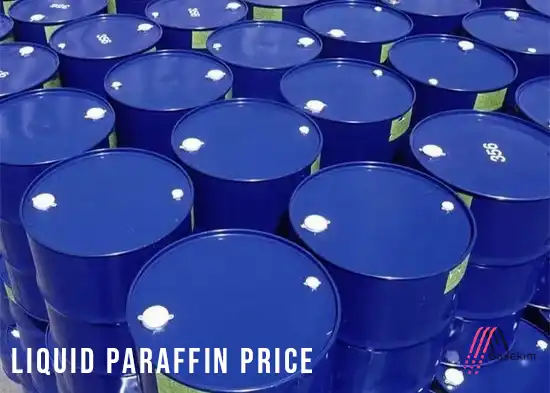
Liquid paraffin price is not a fixed market number. It is a result of grade selection, regulatory scope, volume, packaging, and supplier discipline. Buyers who treat liquid paraffin as a commodity often face re-quoting, quality disputes, or hidden costs after delivery. Buyers who understand how pricing really works lock stable contracts and avoid surprises.
This article focuses only on pricing reality — not product theory.
| Product | Grade | Price (USD/MT) | Price Basis | Packaging |
|---|---|---|---|---|
| Liquid Paraffin (White Oil) | Cosmetic | 980 | FOB | Drum |
| Liquid Paraffin (White Oil) | Industrial | 900 | FOB | Drum |
Liquid Paraffin Price per Kg — The Most Common Trade Reference
Most industrial and export contracts are negotiated based on liquid paraffin price per kg.
What influences the per-kg price in real trade:
Refinery source and consistency
Allowed viscosity tolerance
Regulatory scope (industrial vs cosmetic vs pharma)
Batch-to-batch testing frequency
Export documentation and destination country requirements
In practice, liquid paraffin price per kg increases sharply when buyers request:
Narrow viscosity range
Odor neutrality guarantee
Long-term batch consistency
Full compliance statements
Cheap per-kg offers usually mean wider specs and less control, not efficiency.
Liquid Paraffin Price per Litre, Why It’s Higher Than Buyers Expect
Liquid paraffin price per litre is mainly used in:
Cosmetic manufacturing
Pharmaceutical supply
Small-volume regional distribution
Per-litre pricing looks higher because:
Density variations must be tightly controlled
Packaging standards are stricter
Rejection risk is higher for suppliers
Buyers comparing per-litre offers often miss that two suppliers quoting the same litre price may deliver different usable yield once temperature and density corrections apply.
Liquid Paraffin Price per Ton — Bulk Buying Reality
Liquid paraffin price per ton applies to:
Drum pallets
IBCs
Flexitank and ISO tank shipments
Bulk pricing looks attractive, but buyers must account for:
Minimum order volume
Storage conditions at destination
Transit temperature exposure
Cleaning standards of tanks or flexitanks
In real operations, the lowest liquid paraffin price per ton often comes with:
Longer lead times
Limited quality claims
Reduced supplier liability
That may work for some industrial uses, and fail completely for others.
Liquid Paraffin for Skin Price, Why It’s Never “Cheap”
Liquid paraffin for skin price is consistently higher than industrial grades.
Not because of branding — because of risk control.
Pricing includes:
Deep refining
Aromatic control
Odor and color stability
Compliance verification
Higher rejection exposure for suppliers
Buyers trying to push cosmetic or skin-contact applications into industrial price ranges usually end up changing suppliers repeatedly, which costs more than paying the correct liquid paraffin for skin price from the start.
Price Differences by Application (What Buyers Don’t Like to Hear)
In the real market:
Industrial users pay less but accept variability
Cosmetic users pay more to eliminate formulation risk
Pharmaceutical buyers pay for documentation, not volume
Trying to merge these categories to chase a lower liquid paraffin price almost always fails during scale-up or audit.
Hidden Cost Factors That Change Liquid Paraffin Price After Quotation
Experienced buyers look beyond the initial quote.
Common hidden cost triggers:
Re-testing after arrival
Product haze in cold storage
Odor complaints during heating
Inconsistent viscosity in different batches
Rejected drums due to contamination
These issues do not show up on the invoice — but they redefine the real liquid paraffin price over time.
BASEKIM’s Position on Liquid Paraffin Pricing
BASEKIM structures liquid paraffin price based on:
Defined grade scope
Consistent sourcing
Export-ready documentation
Realistic logistics planning
Pricing is not designed to win one shipment. It is structured for repeat buyers who value predictability over headline numbers.
Final Buyer Takeaway
Liquid paraffin price is not about finding the lowest number.
It is about choosing which risks you are paying to eliminate.
Buyers who understand this negotiate better, switch suppliers less, and protect their operations.