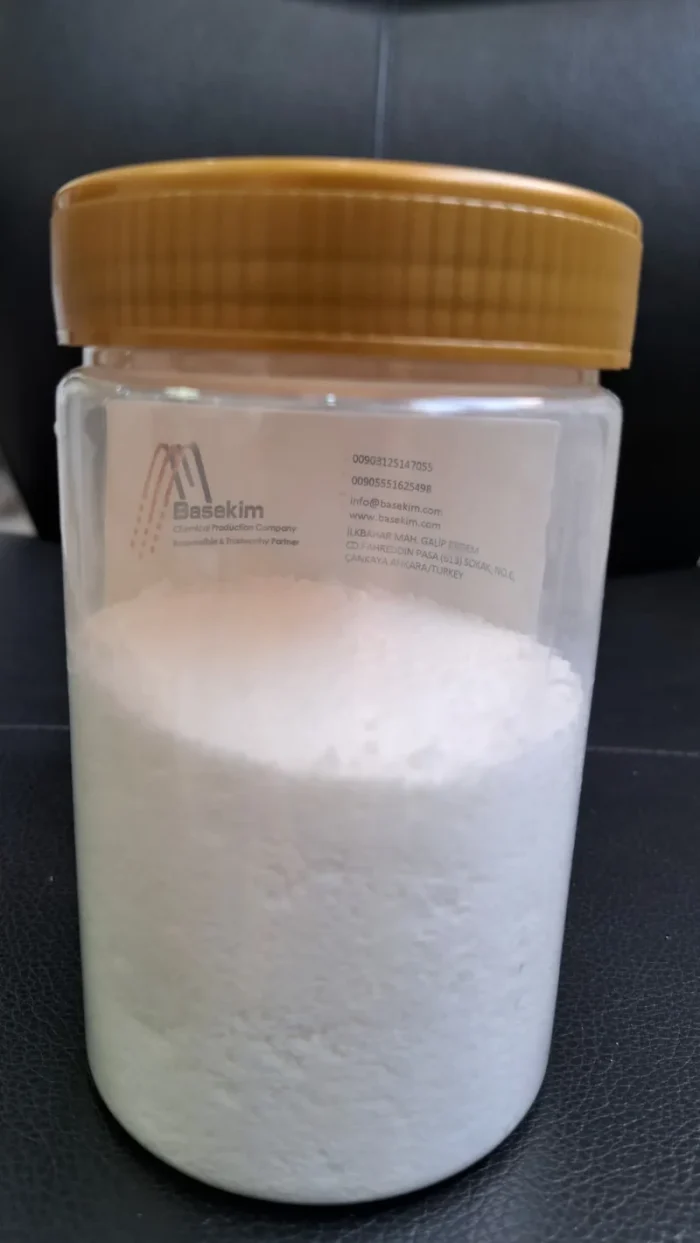
Sodium sulfite is an inorganic salt widely used as an oxygen scavenger, preservative, and reducing agent in water treatment, pulp and paper, textiles, food processing, and chemical manufacturing. It matters because it protects products and processes from oxidation, improves process stability, and reduces unwanted side reactions. Engineers, procurement teams, and plant operators choose sodium sulfite when they need controlled deoxygenation, bleaching support, or antioxidant performance at an industrial scale.
What Sodium Sulfite Is and Why Industry Uses It
Sodium sulfite (Na₂SO₃) appears as a white, free-flowing powder or crystals. In practice, buyers value it for one main reason: it reacts quickly and predictably with dissolved oxygen and oxidizing agents. That single property explains most of its industrial uses.
From a production standpoint, manufacturers typically produce sodium sulfite by absorbing sulfur dioxide into sodium carbonate or sodium hydroxide solutions, then crystallizing and drying the product. The result is a stable material with a known assay, low insoluble content, and controlled moisture—factors that directly affect performance in real processes.
In day-to-day operations, engineers care less about the textbook definition and more about how reliably the product behaves in tanks, pipelines, reactors, or formulations. Consistent particle size, fast solubility, and predictable reaction rates matter more than theoretical purity.
Industrial Grades and Typical Specifications
Sodium sulfite is available in several grades, and choosing the right one prevents costly problems later.
Common grades include:
Industrial grade – Used in water treatment, paper, textiles, and mining
Food grade – Controlled impurities for food processing and preservation
Photographic / specialty grade – Tighter limits on metals and insolubles
Typical industrial specifications buyers ask for include:
Assay: 95–99% Na₂SO₃
Appearance: white powder or crystals
Insoluble matter: low, usually <0.05%
Iron (Fe): tightly controlled for pulp, paper, and textiles
Moisture: limited to prevent caking and oxidation during storage
In procurement discussions, quality control documents such as COA, TDS, and MSDS carry more weight than marketing claims. Reputable suppliers test every batch and match the grade to the application instead of pushing a one-size-fits-all product.
Key Industrial Applications Explained from Experience
Water Treatment and Boiler Systems
In water treatment, sodium sulfite acts as a chemical deoxygenator. Operators inject it into feedwater to remove dissolved oxygen before it reaches boilers or heat exchangers.
From experience, improper dosing causes two common problems:
Under-dosing leaves residual oxygen, which accelerates corrosion
Over-dosing increases sulfate levels and operating costs
Engineers typically calculate dosage based on oxygen concentration and system volume, then fine-tune during operation. Fast dissolution and clean solubility matter here, especially in automated dosing systems.
Pulp and Paper Manufacturing
Paper mills use sodium sulfite in pulping, bleaching, and wastewater treatment. It helps control oxidation reactions and supports lignin removal in certain processes.
Mill managers often focus on:
Low metal content to avoid paper discoloration
Consistent reactivity to maintain brightness targets
Reliable bulk supply to avoid production interruptions
In this sector, inconsistent quality quickly shows up as off-spec paper or unstable bleaching performance.
Textile Processing and Dyeing
In textile plants, sodium sulfite functions as a reducing agent and chlorine neutralizer after bleaching. Operators rely on it to protect fibers and stabilize dyes.
Practical considerations include:
Rapid solubility in process water
Minimal residue to avoid fabric spotting
Predictable reaction with residual oxidants
Suppliers with textile experience usually recommend specific dissolution methods to avoid lump formation in mixing tanks.
Food Processing and Preservation
Food-grade sodium sulfite serves as an antioxidant and preservative, especially in dried fruits, starches, and some beverage processes.
Here, buyers pay close attention to:
Compliance with food safety regulations
Trace impurity limits
Batch-to-batch consistency
Even small deviations can trigger regulatory or quality issues, so food processors rarely compromise on supplier reliability.
Mining and Flotation Processes
In mining, sodium sulfite modifies surface chemistry during flotation. Operators use it to depress unwanted minerals and improve separation efficiency.
From field experience:
Particle size affects dissolution speed in cold process water
Moisture pickup during storage reduces effectiveness
Inconsistent assay leads to unstable flotation behavior
These factors explain why mining companies often qualify suppliers through trial batches before committing to long-term contracts.
Handling, Storage, and Safety in Real Operations
Sodium sulfite is relatively safe to handle compared to many industrial chemicals, but poor handling still creates issues.
Best practices include:
Store in dry, well-ventilated warehouses
Keep packaging tightly sealed to limit oxidation to sulfate
Avoid prolonged exposure to air and humidity
Use dust control measures during bulk handling
When exposed to moisture and air, sodium sulfite slowly oxidizes to sodium sulfate. While this reaction is not hazardous, it reduces product effectiveness—something operators notice when performance drops despite correct dosing.
Packaging and Logistics Considerations
Industrial buyers rarely focus on packaging until something goes wrong. In reality, packaging directly affects usability and losses.
Common options include:
25 kg multi-layer bags for flexible handling
1-ton jumbo bags for high-volume users
Palletized loads for containerized exports
For exporters like Basekim, matching packaging to the customer’s handling system reduces waste, improves safety, and lowers total cost—not just purchase price.
Standards, Quality Control, and Buyer Confidence
While sodium sulfite itself does not always fall under a single global ASTM standard, suppliers typically align internal quality systems with ISO 9001 and application-specific norms.
Experienced buyers usually request:
Material Safety Data Sheet compliant with GHS
Clear specification sheets tied to actual test methods
These documents matter more than brand names. They show whether the supplier understands industrial accountability.
Where Sodium Sulfite Fits—and Where It Doesn’t
Sodium sulfite works best where controlled reduction or oxygen removal matters. It does not replace stronger reducing agents in aggressive chemical reactions, and it does not function as a universal preservative.
Understanding these limits saves time, money, and operational frustration.
Conclusion: Making the Right Decision
Sodium sulfite remains a workhorse chemical across multiple industries because it delivers reliable, predictable performance when quality and handling match the application. For buyers, the real decision lies not in choosing sodium sulfite itself, but in selecting the right grade, packaging, and supplier support for their process.
Companies like Basekim supply sodium sulfite with clear specifications, proper documentation, and export-ready logistics, helping industrial customers match the product to real operational needs. The next logical step for any buyer is to review technical data, confirm grade suitability, and align supply terms with actual consumption patterns—before scaling up or locking in long-term contracts.