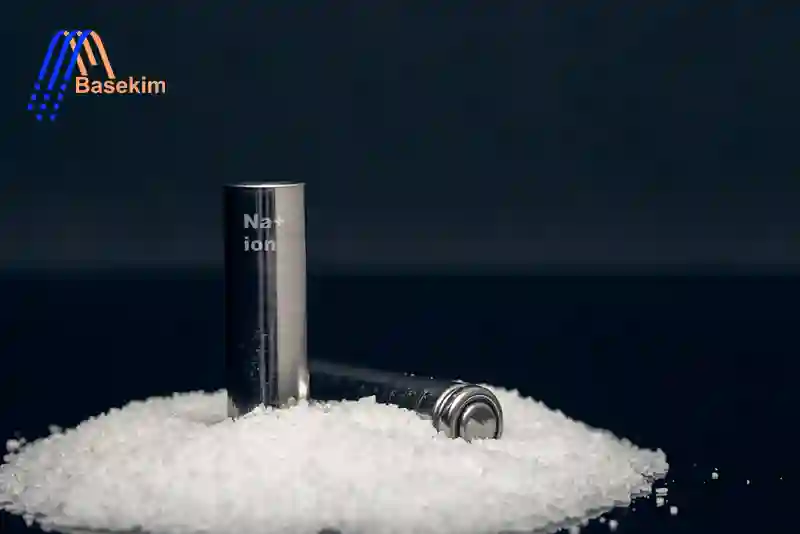
The role of soda ash in lithium battery manufacturing has become increasingly important as global demand for electric vehicles and energy storage systems continues to grow. Soda ash, also known as sodium carbonate, plays a critical role in lithium extraction and processing. Without it, producing high-purity lithium compounds for batteries would be far more difficult, expensive, and inefficient.
Understanding Soda Ash and Its Properties
Soda ash is a naturally occurring or synthetically produced chemical compound with the formula Na₂CO₃. Industries widely use it in glass manufacturing, detergents, and chemical processing. In the lithium battery supply chain, soda ash acts as a key reagent in refining lithium from raw materials.
Manufacturers value soda ash for its alkaline nature, high solubility in water, and ability to react with various metal ions. These properties make it especially useful in separating lithium from impurities during chemical processing.
Why Lithium Batteries Need High-Purity Materials
Lithium-ion batteries require extremely pure lithium compounds to function efficiently. Even small impurities can reduce battery performance, shorten lifespan, and create safety risks. Producers must therefore refine lithium into battery-grade materials such as lithium carbonate or lithium hydroxide.
This requirement highlights the importance of the role of soda ash in lithium battery production. Soda ash helps convert raw lithium sources into usable, high-purity compounds that meet strict industry standards.
The Role of Soda Ash in Lithium Extraction
Lithium extraction typically begins with either brine deposits or hard rock ores like spodumene. In both cases, soda ash plays a crucial role during the refining stage.
From Brine Sources
In brine extraction, companies pump lithium-rich saltwater into evaporation ponds. Over time, water evaporates and leaves behind concentrated lithium solutions. Producers then treat this solution with soda ash.
Soda ash reacts with lithium ions in the brine to form lithium carbonate, which precipitates out of the solution as a solid. This step represents one of the most direct examples of the role of soda ash in lithium battery production. Without soda ash, isolating lithium in this form would require more complex and costly processes.
From Hard Rock Sources
When extracting lithium from spodumene ore, producers first heat and process the mineral to release lithium. They then use chemical treatments to convert it into a soluble form. At this stage, soda ash again plays a vital role.
By adding soda ash to the processed solution, manufacturers precipitate lithium carbonate. This compound serves as a primary raw material for lithium-ion batteries. The consistency and efficiency of this reaction make soda ash indispensable in large-scale production.
Conversion to Battery-Grade Lithium Compounds
After forming lithium carbonate, manufacturers may further process it into lithium hydroxide, depending on the battery type. High-nickel cathodes, commonly used in electric vehicles, often require lithium hydroxide.
Even in this conversion stage, the role of soda ash in lithium battery production remains significant. It ensures the initial lithium carbonate reaches the purity levels necessary for further refinement. A high-quality starting material leads to better final products and more reliable batteries.
Advantages of Using Soda Ash
Soda ash offers several advantages that make it ideal for lithium processing:
Cost-effectiveness: Soda ash is relatively inexpensive and widely available.
Efficiency: It enables quick and reliable precipitation of lithium carbonate.
Scalability: Manufacturers can easily use it in large-scale operations.
Purity control: It helps remove impurities and improve the quality of lithium compounds.
These benefits reinforce the central role of soda ash in lithium battery manufacturing and explain why producers continue to rely on it.
Environmental Considerations
As lithium demand rises, environmental concerns around extraction and processing also grow. The use of soda ash introduces both advantages and challenges.
On the positive side, soda ash allows for more efficient lithium recovery, which can reduce waste. However, its production and use still require energy and generate emissions. Companies now explore cleaner production methods and recycling strategies to minimize environmental impact.
Understanding the role of soda ash in lithium battery production also involves recognizing these sustainability challenges. Manufacturers must balance efficiency with environmental responsibility.
Future Outlook of Soda Ash in Battery Technology
The future of lithium batteries looks promising, with innovations in chemistry and manufacturing processes. Despite ongoing research into alternative extraction methods, soda ash remains a cornerstone of current lithium processing techniques.
As battery demand continues to rise, the need for reliable and efficient refining methods will grow as well. This trend ensures that the role of soda ash in lithium battery production will remain highly relevant in the coming years.
Researchers may improve how industries use soda ash, making processes more sustainable and energy-efficient. However, replacing it entirely would require significant technological breakthroughs.
Conclusion
The role of soda ash in lithium battery production is both fundamental and indispensable. It enables the efficient extraction, purification, and conversion of lithium into battery-grade materials. From brine evaporation ponds to hard rock processing facilities, soda ash supports nearly every stage of lithium refinement.
Its affordability, effectiveness, and scalability make it a preferred choice for manufacturers worldwide. As the global transition to clean energy accelerates, soda ash will continue to play a vital role in powering the batteries that drive this change.
Understanding this role provides valuable insight into the complex processes behind lithium-ion batteries and highlights the importance of chemical innovation in modern energy solutions.