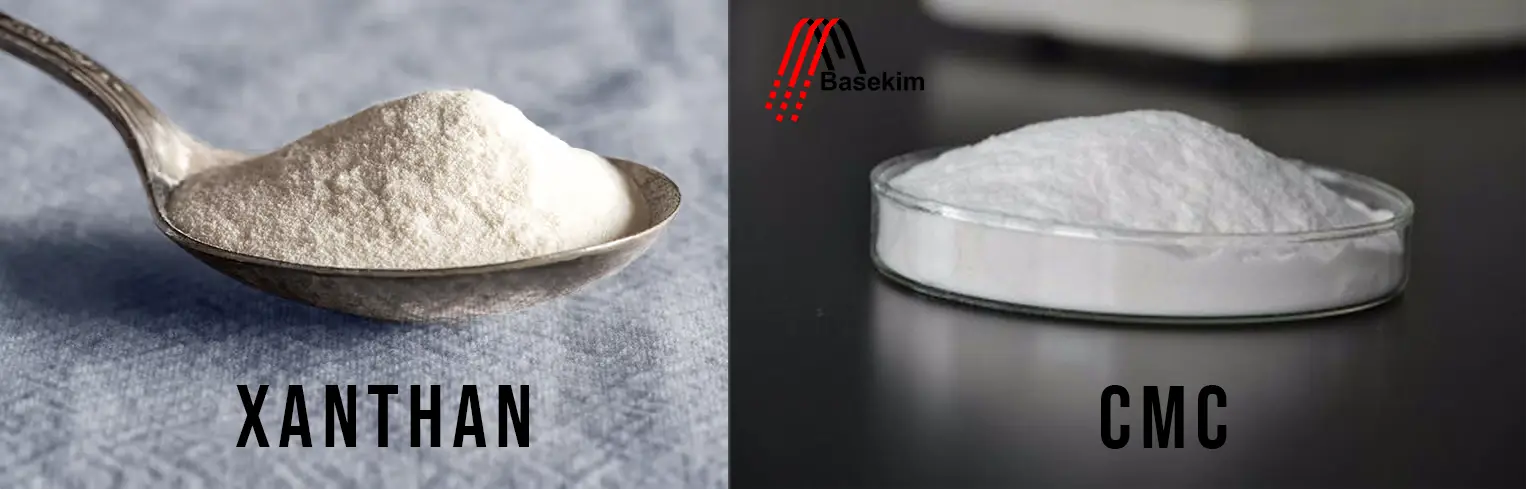
Introduction to CMC vs Xanthan Gum
When comparing CMC vs Xanthan Gum, many industries and home users often wonder which one performs better. Both ingredients act as thickeners, stabilizers, and emulsifiers, but they behave differently depending on the application.
Understanding how each works helps you choose the right option for food, cosmetics, or industrial use. Whether you’re formulating a product or improving texture, knowing these differences saves time and improves results.
What is Xanthan Gum Used For?
Food Applications
Xanthan gum is widely used in gluten-free cooking. It mimics the elasticity that gluten provides, making it essential for baking. It also thickens dressings, sauces, and beverages without altering flavor.
Its ability to stabilize mixtures makes it popular in processed foods.
Cosmetic and Pharmaceutical Uses
In cosmetics, xanthan gum helps create smooth textures in creams and lotions. It stabilizes emulsions and prevents ingredients from separating. Pharmaceutical products also use it as a suspension agent.
Key Differences Between CMC vs Xanthan Gum
Texture and Consistency
CMC creates a smoother and more uniform texture. It produces a softer feel in food and industrial mixtures. Xanthan gum, on the other hand, delivers a thicker and sometimes slightly gel-like consistency.
Stability in Different Conditions
Xanthan gum performs better under extreme temperatures and varying pH levels. It remains stable in both acidic and alkaline environments. CMC works well in controlled conditions but may lose efficiency in highly acidic solutions.
Solubility and Mixing Behavior
CMC dissolves easily in water and forms a clear solution. Xanthan gum hydrates quickly but may clump if not mixed properly. Proper dispersion techniques are essential for achieving the best results with xanthan gum.
Benefits of Using CMC
CMC offers several advantages that make it a preferred choice in many industries:
-
Provides smooth texture without stickiness
-
Enhances moisture retention
-
Works well in low-temperature applications
-
Improves shelf life of products
-
Easy to handle and mix
Companies often source it from reliable suppliers like Basekim to ensure consistent performance.
Benefits of Using Xanthan Gum
Xanthan gum also delivers strong performance benefits:
-
High stability across temperatures
-
Excellent thickening ability at low concentrations
-
Works in both hot and cold systems
-
Ideal for gluten-free formulations
-
Maintains structure in complex mixtures
Its versatility makes it a go-to option in many formulations.
When to Choose CMC Over Xanthan Gum
Choose CMC when you need a smoother texture and a lighter consistency. It works best in dairy products, beverages, and applications where clarity matters.
It also suits products that require moisture retention and a soft finish. If your formula doesn’t face extreme pH or temperature conditions, CMC is a reliable option.
When to Choose Xanthan Gum Over CMC
Xanthan gum becomes the better choice when stability is critical. It performs well in sauces, dressings, and gluten-free recipes.
If your product must withstand heat, acidity, or long storage periods, xanthan gum offers superior performance. It also works better in complex formulations that require strong thickening power.
Common Industries Using Both
Both ingredients serve a wide range of industries:
-
Food and beverage
-
Cosmetics and personal care
-
Pharmaceuticals
-
Oil and gas
-
Textile and paper
Each industry selects the ingredient based on specific performance needs.
Cost and Availability Comparison
CMC vs Xanthan Gum
CMC generally costs less than xanthan gum, making it attractive for large-scale production. Xanthan gum, however, offers higher efficiency, so smaller quantities may achieve similar results.
Availability for both remains strong globally, especially through established suppliers.
Environmental and Safety Considerations
Both CMC and xanthan gum are considered safe for use in food and industrial applications. They are non-toxic and biodegradable.
Manufacturers continue to improve production methods to reduce environmental impact, making both options more sustainable.
FAQs About CMC vs Xanthan Gum
1. Is CMC better than xanthan gum?
It depends on the application. CMC works better for smooth textures, while xanthan gum excels in stability.
2. Can I substitute CMC for xanthan gum?
Yes, but results may vary. Adjust quantities to achieve the desired consistency.
3. Which is better for gluten-free baking?
Xanthan gum is usually the better choice due to its elasticity.
4. Do both have the same thickening power?
No, xanthan gum typically provides stronger thickening at lower amounts.
5. Are they safe to consume?
Yes, both are widely approved for food use and considered safe.
6. Which one is more cost-effective?
CMC is often cheaper, but xanthan gum may require less quantity.
Conclusion
CMC vs Xanthan Gum
The debate around CMC vs Xanthan Gum comes down to your specific needs. CMC delivers smooth texture and moisture retention, while xanthan gum offers unmatched stability and thickening power.
By understanding their roles and differences, you can choose the right ingredient for your product. Whether you prioritize cost, performance, or application type, both options provide reliable solutions when used correctly.