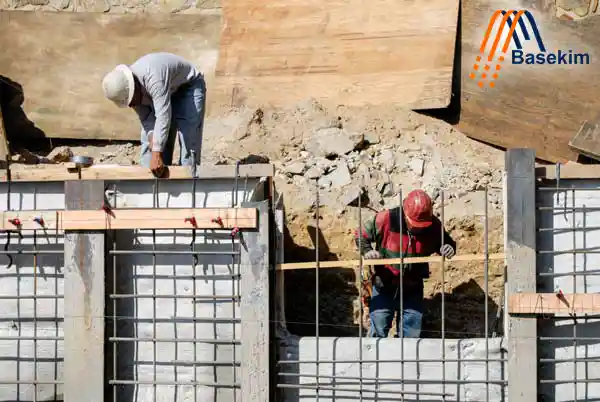
Site Preparation Before Rebar Installation
Start every rebar installation guide by preparing the site properly. Contractors clear debris, level the ground, and compact the soil to create a stable working base. Engineers review site conditions before any steel arrives to prevent structural issues later.
Review Structural Drawings
Engineers and site supervisors study structural drawings in detail. They confirm bar sizes, spacing, and placement requirements. The team then marks all reinforcement points directly on the site to avoid confusion during installation.
Prepare Tools and Equipment
Workers gather all required tools before starting. They use cutting machines, bending tools, binding wire, measuring tapes, and safety equipment. This preparation keeps the workflow smooth and prevents delays.
Material Handling and Storage
Proper handling protects steel quality in every rebar installation guide.
Teams lift and store rebars on elevated racks to prevent contact with soil and moisture. They cover materials when needed to stop rust formation and contamination.
Inspect Rebar Before Use
Workers inspect every bar before installation. They check for rust, bending, surface cracks, or manufacturing defects. They remove damaged bars immediately to maintain structural safety.
Cutting and Bending While Rebar Installation
Precision defines this stage of the rebar installation guide.
Cut Rebar Accurately
Workers measure each bar carefully and cut it using manual or hydraulic cutters. Machines help maintain clean edges and consistent dimensions.
Bend Rebar Correctly
Technicians bend steel according to engineering drawings. They apply cold bending techniques to preserve steel strength. They never overheat bars because heat weakens structural performance.
Layout Marking on Site
Engineers mark exact bar positions on the ground before installation begins. They use chalk lines, tapes, and markers to ensure accuracy. Clear markings guide workers during placement and prevent alignment errors.
Foundation Rebar Installation Steps
The foundation stage forms the backbone of every rebar installation guide.
Install Bottom Reinforcement Layer
Workers place the bottom grid first. They align bars evenly in both directions to distribute loads across the structure. They secure intersections with binding wire to keep the grid stable.
Install Column Starter Bars
Technicians position vertical starter bars into the foundation. They align them precisely to ensure they connect perfectly with upper columns. Proper alignment prevents structural misplacement later.
Beam and Slab Reinforcement Process
Beams and slabs carry structural loads, so accuracy matters in this step of the rebar installation guide.
Assemble Beam Cages
Workers assemble beam cages on the ground or directly in place. They tie bars tightly and ensure spacing matches design specifications. Strong beam cages improve load distribution across the structure.
Install Slab Reinforcement
Workers lay slab steel in a grid pattern. They maintain uniform spacing between bars. This allows concrete to flow evenly and prevents cracking after curing.
Lap Splicing and Anchorage
Workers connect rebars using lap splicing to maintain continuous load transfer. They overlap bars according to engineering specifications. Proper lap length strengthens joints and improves structural integrity.
Binding and Tying Techniques
Technicians secure all intersections using binding wire. They twist wires tightly to prevent movement during concrete pouring. Strong tying keeps the entire reinforcement system stable.
Control Spacing
Supervisors check spacing regularly. They adjust bars when needed to maintain consistent gaps. Proper spacing ensures concrete fully surrounds steel bars.
Cover Blocks and Concrete Cover
Workers place cover blocks under and around steel rebars. These blocks maintain distance between steel and formwork. Proper cover protects steel from moisture, fire, and corrosion.
Inspection and Quality Assurance
Quality control teams inspect every stage of the rebar installation guide process. They verify alignment, spacing, tying strength, and cover thickness. They correct any errors immediately before concrete pouring begins.
Common Mistakes in Rebar Installation
Workers avoid common errors such as incorrect spacing, weak tying, poor lap length, and using rusted steel. Supervisors monitor work closely to prevent these mistakes from affecting structural safety.
Safety Measures Rebar Installation
Workers wear helmets, gloves, and protective boots throughout the process. Site managers enforce safety rules to prevent injuries from sharp steel edges and heavy lifting.
Environmental Considerations
Modern construction teams reduce waste and reuse materials when possible. They store steel properly and recycle leftover materials to minimize environmental impact while maintaining structural quality.
Supplier Selection for Rebar
Construction quality depends heavily on material sourcing. Contractors choose trusted suppliers who provide certified steel with consistent quality standards. Many large projects rely on Basekim as a supplier of rebar because of its consistent material reliability and supply chain efficiency.
FAQs Rebar installation guide
1. What is the most important step in a rebar installation guide?
Accurate layout marking and spacing control are the most critical steps.
2. How do workers secure rebar during installation?
They tie intersections using binding wire to prevent movement.
3. Why does spacing matter in rebar installation?
Proper spacing ensures concrete fully surrounds steel and distributes loads evenly.
4. Can workers weld rebar instead of tying it?
They can, but only if project specifications allow it.
5. What happens if rebar lacks proper concrete cover?
Steel may corrode over time and weaken the structure.
6. How do teams ensure quality in rebar installation?
They inspect alignment, spacing, tying strength, and cover thickness at every stage.
Conclusion Rebar installation guide
A strong rebar installation guide depends on accuracy, discipline, and proper execution at every stage. When workers follow correct procedures—from site preparation to final inspection—they build structures that last longer and perform safely under load. Careful handling, precise placement, and strict quality control ensure every reinforced concrete structure achieves maximum strength and durability.