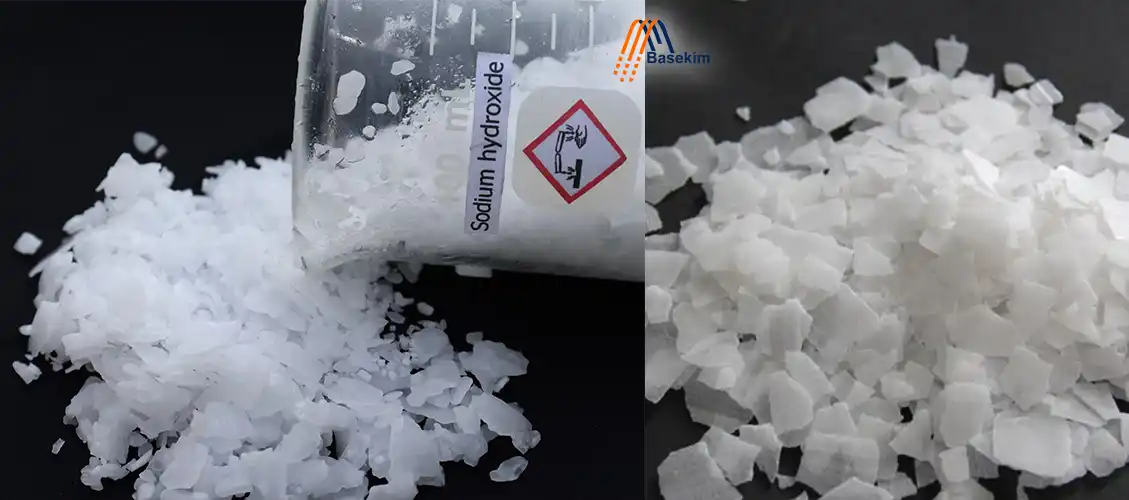
When comparing Sodium Hydroxide vs Potassium Hydroxide, industries often look beyond basic definitions and focus on performance, efficiency, cost, and application suitability. Both compounds belong to the strong alkali family and share similar chemical behaviors, yet they differ in key areas that impact industrial decisions.
This detailed comparison of caustic soda vs caustic potash, NaOH vs KOH, and alkali hydroxide differences explores their physical properties, chemical reactivity, solubility, industrial applications, safety considerations, and economic value.
Key Differences Between Sodium Hydroxide vs Potassium Hydroxide
| Feature | Sodium Hydroxide (NaOH) | Potassium Hydroxide (KOH) |
|---|---|---|
| Common Name | Caustic Soda | Caustic Potash |
| Molecular Weight | 40 g/mol | 56.11 g/mol |
| Solubility in Water | High | Very High |
| Hygroscopic Nature | Moderate | Highly Hygroscopic |
| Cost | Lower | Higher |
| Industrial Availability | Widely available | Less common |
| Conductivity | Lower | Higher |
| Soap Type Produced | Hard Soap | Liquid Soap |
| Absorption of CO₂ | Slower | Faster |
Chemical Reactivity Comparison
Alkalinity Strength
Both NaOH and KOH rank as strong bases, meaning they fully dissociate in water. However, in the Sodium Hydroxide vs Potassium Hydroxide debate, KOH shows slightly higher ionic mobility due to potassium ions, which enhances its reactivity in certain processes.
Reaction Speed
Potassium hydroxide reacts faster in liquid-phase reactions due to its higher solubility and mobility. Sodium hydroxide, on the other hand, provides more controlled and stable reactions, making it ideal for large-scale industrial use.
Carbon Dioxide Absorption
KOH absorbs CO₂ more efficiently than NaOH, making it more suitable for air purification systems and gas scrubbing applications.
Physical Properties Comparison
Solubility and Dissolution
In the comparison of NaOH vs KOH solubility, both dissolve in water exothermically. However:
KOH dissolves more readily and produces more heat.
NaOH offers stable dissolution with less aggressive heat generation.
Hygroscopic Behavior
Potassium hydroxide is more hygroscopic, meaning it absorbs moisture from the air quickly. This property makes KOH more suitable for desiccant applications, while NaOH remains easier to store and handle.
Industrial Application Comparison
Soap and Detergent Industry
Sodium Hydroxide: Produces hard soaps used in bars.
Potassium Hydroxide: Produces soft and liquid soaps.
This difference makes KOH essential in liquid cleaning products, while NaOH dominates traditional soap manufacturing.
Chemical Manufacturing
In industrial alkali comparison, sodium hydroxide serves as the backbone of multiple industries:
Paper and pulp processing
Textile manufacturing
Petroleum refining
Potassium hydroxide plays a specialized role in:
Battery electrolytes
Biodiesel production
Liquid fertilizers
Electrical Conductivity and Electrochemical Use
KOH exhibits higher electrical conductivity than NaOH due to the mobility of potassium ions. This property makes KOH the preferred choice in:
Alkaline batteries
Electrolyte solutions
Fuel cells
NaOH still finds use in electrochemical processes but remains less efficient in conductivity-driven applications.
Cost and Economic Comparison
Market Pricing
In the Sodium Hydroxide vs Potassium Hydroxide cost comparison, sodium hydroxide is significantly cheaper due to:
Abundant raw materials
Large-scale production
High global demand
Potassium hydroxide costs more because of:
Limited potassium resources
More complex production process
Supply Chain Advantage
Reliable suppliers like Basekim provide high-quality caustic soda (NaOH) for global industries, ensuring cost efficiency and consistent supply. This availability makes sodium hydroxide the preferred choice for bulk industrial operations.
Safety and Handling Differences
Corrosiveness
Both NaOH and KOH are highly corrosive and require proper handling. However:
KOH is slightly more aggressive due to higher reactivity
NaOH is easier to manage in controlled environments
Storage Requirements
Sodium hydroxide: Stable in solid form, less sensitive to air
Potassium hydroxide: Requires airtight containers due to moisture absorption
Environmental Impact Comparison
Biodegradability
Both compounds neutralize easily and do not persist in the environment when handled correctly.
Industrial Waste
NaOH produces more manageable waste streams due to its widespread treatment systems. KOH, while effective, may require specialized disposal methods depending on its application.
Performance Efficiency Comparison
Reaction Efficiency
KOH performs better in fast chemical reactions
NaOH provides consistent and controlled output
Application Suitability
Use NaOH for large-scale, cost-sensitive industries
Use KOH for high-performance, specialized applications
Advantages and Limitations
Sodium Hydroxide Advantages
Cost-effective
Widely available
Stable handling
Ideal for bulk industries
Sodium Hydroxide Limitations
Lower solubility than KOH
Less efficient in electrochemical applications
Potassium Hydroxide Advantages
Higher solubility
Better conductivity
Faster reaction rate
Ideal for liquid formulations
Potassium Hydroxide Limitations
Higher cost
Difficult storage
Limited availability
When to Choose Sodium Hydroxide vs Potassium Hydroxide
Choose Sodium Hydroxide (NaOH) when:
You need cost efficiency
You operate at industrial scale
You require stable and predictable reactions
Choose Potassium Hydroxide (KOH) when:
You need high solubility
You require faster reactions
Your process depends on conductivity
Frequently Asked Questions (FAQs) Caustic soda vs Caustic potash
1. What is the main difference in Sodium Hydroxide vs Potassium Hydroxide?
The main difference lies in solubility, cost, and application. KOH is more soluble and reactive, while NaOH is more economical and widely used.
2. Which is stronger: NaOH or KOH?
Both are strong bases, but KOH shows slightly higher reactivity due to better ion mobility.
3. Why is potassium hydroxide more expensive than sodium hydroxide?
KOH costs more due to limited potassium resources and higher production complexity.
4. Which is better for soap making?
NaOH works best for hard soaps, while KOH is ideal for liquid soaps.
5. Which chemical is safer to handle?
Both require strict safety measures, but NaOH is generally easier to handle due to lower hygroscopic behavior.
6. Where can I buy high-quality sodium hydroxide?
Trusted suppliers like Basekim offer reliable and industrial-grade caustic soda for various applications.
Conclusion caustic soda vs caustic potash
The comparison of Sodium Hydroxide vs Potassium Hydroxide highlights that both alkalis serve critical roles across industries. While they share similar chemical foundations, their differences in cost, solubility, conductivity, and application define their unique value.
Sodium hydroxide stands out as the dominant industrial alkali due to affordability and availability, especially when sourced from trusted suppliers like Basekim. Potassium hydroxide, on the other hand, excels in specialized applications requiring high performance and efficiency.
Choosing between NaOH vs KOH ultimately depends on your operational needs, budget, and process requirements. Understanding these differences ensures better performance, safety, and cost optimization in any industrial setting