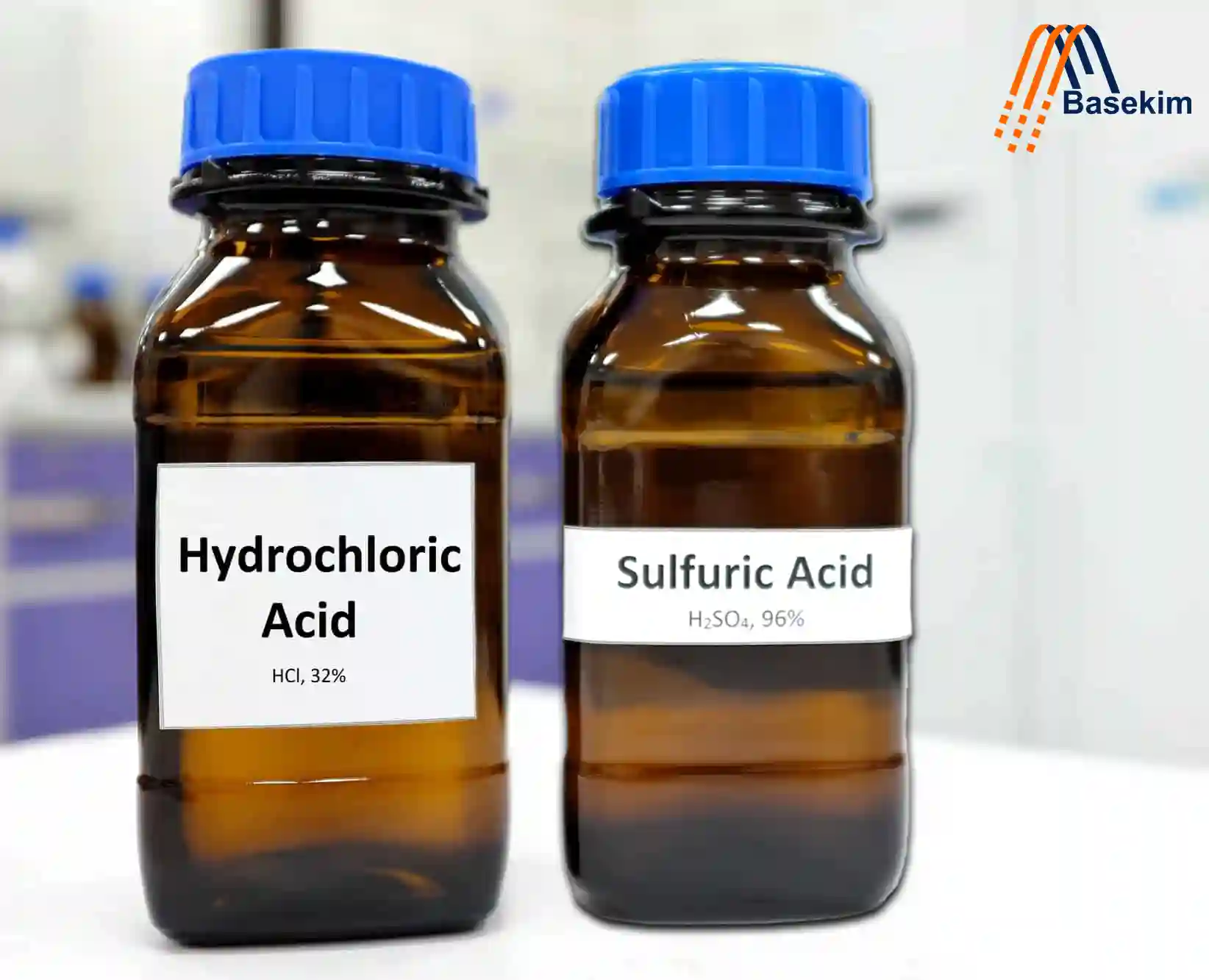
When comparing sulphuric acid vs hydrochloric acid, understanding their differences goes far beyond simple chemistry definitions. These two powerful acids play essential roles in industrial processes, laboratories, and manufacturing systems worldwide. Despite both being strong acids, they behave very differently in terms of strength, reactivity, and applications.
This guide breaks down everything you need to know about sulphuric acid vs hydrochloric acid, focusing on practical insights, industrial relevance, and real-world performance.
Chemical Composition Differences of Sulphuric Acid vs Hydrochloric Acid
Molecular Formula Comparison
Sulphuric acid carries the formula H₂SO₄, while hydrochloric acid is represented as HCl. This difference in composition directly impacts their behavior.
Sulphuric acid contains sulfur, oxygen, and hydrogen, making it a polyprotic acid. In contrast, hydrochloric acid contains only hydrogen and chlorine, making it monoprotic.
Physical Properties Comparison
Sulphuric acid appears as a thick, oily liquid, whereas hydrochloric acid is a clear, watery solution. The density of sulphuric acid is significantly higher, giving it a heavier feel and stronger corrosive nature.
Boiling and Melting Points
Sulphuric acid has a much higher boiling point, making it more stable under heat. Hydrochloric acid evaporates more easily, releasing fumes that can be hazardous.
Strength and Acidity Levels
pH Scale Comparison
Both acids rank as strong acids, but sulphuric acid often shows greater overall acidity due to its ability to release two protons.
Hydrochloric acid dissociates completely in water, making it highly effective in immediate reactions.
Dissociation Behavior
Sulphuric acid dissociates in two steps, while hydrochloric acid dissociates in one. This makes sulphuric acid more complex and often more reactive in multi-stage reactions.
Industrial Applications
Role in Manufacturing
Sulphuric acid dominates in fertilizer production, petroleum refining, and chemical synthesis. It serves as a backbone chemical in many industries.
Hydrochloric acid plays a key role in steel pickling, cleaning metal surfaces, and producing organic compounds.
Companies like Basekim, a trusted supplier of sulphuric acid, support industries that rely heavily on high-quality acid solutions for large-scale production.
Cleaning and Processing Uses
Hydrochloric acid excels in cleaning applications due to its ability to dissolve mineral deposits and rust quickly.
Sulphuric acid is often used in dehydration processes and chemical manufacturing rather than surface cleaning.
Reactivity and Chemical Behavior
Oxidizing vs Non-Oxidizing
Sulphuric acid can act as an oxidizing agent, especially when concentrated. This gives it an edge in complex chemical reactions.
Hydrochloric acid is a non-oxidizing acid, meaning it reacts differently and often more predictably.
Reactions with Metals
Hydrochloric acid reacts vigorously with many metals, producing hydrogen gas.
Sulphuric acid reacts more slowly with some metals but can produce different byproducts depending on concentration.
Safety and Handling
Corrosiveness
Both acids are highly corrosive, but sulphuric acid is particularly dangerous due to its dehydrating nature. It can cause severe burns upon contact.
Hydrochloric acid produces strong fumes that can irritate the respiratory system.
Storage Requirements
Sulphuric acid requires specialized containers resistant to corrosion and heat.
Hydrochloric acid must be stored in well-ventilated areas to prevent buildup of harmful vapors.
Environmental Impact
Pollution Potential
Both acids contribute to environmental damage if not handled properly. They play roles in acid rain formation when released into the atmosphere.
Disposal Considerations
Neutralization is required before disposal. Improper handling can contaminate water sources and harm ecosystems.
Cost and Availability
Production Methods
Sulphuric acid is produced using the contact process, making it widely available and cost-effective.
Hydrochloric acid is often produced as a byproduct in chemical manufacturing.
Global Demand
Sulphuric acid ranks among the most produced chemicals globally due to its industrial importance.
Hydrochloric acid also sees high demand but in more specialized applications.
Sulphuric Acid vs Hydrochloric Acid in Labs
Titration Applications
Hydrochloric acid is commonly used in titration because of its consistent dissociation.
Sulphuric acid is used when stronger acidity or multi-step reactions are required.
Experimental Roles
Both acids serve critical roles in experiments, but their selection depends on reaction requirements.
FAQs: Sulphuric Acid vs Hydrochloric Acid
1. Which acid is stronger, sulphuric acid or hydrochloric acid?
Sulphuric acid is generally stronger due to its ability to release two protons.
2. Which acid is more dangerous?
Sulphuric acid is more hazardous because of its dehydrating and oxidizing properties.
3. Can both acids be used for cleaning?
Yes, but hydrochloric acid is more commonly used for cleaning surfaces.
4. Why is sulphuric acid widely used in industry?
Its versatility and strong chemical properties make it essential for many processes.
5. Do both acids produce fumes?
Hydrochloric acid produces more noticeable fumes than sulphuric acid.
6. How should these acids be stored?
Both require corrosion-resistant containers and proper ventilation.
Conclusion (Sulphuric Acid vs Hydrochloric Acid)
The comparison of sulphuric acid vs hydrochloric acid reveals clear differences in strength, application, and behavior. While both acids are powerful and essential, their uses vary widely across industries and laboratories.
Sulphuric acid stands out for heavy industrial applications and complex reactions, while hydrochloric acid excels in cleaning and rapid chemical processes. Understanding these differences helps ensure proper usage, safety, and efficiency in any setting.