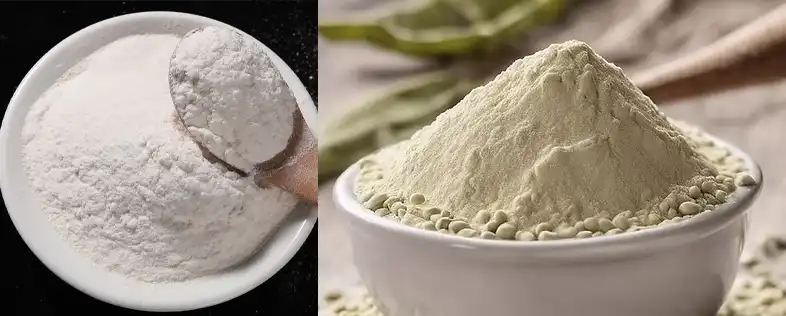
Food manufacturers constantly compare CMC vs guar gum when selecting the right thickener, stabilizer, or texture enhancer. Both ingredients improve viscosity, moisture retention, and product consistency. However, they perform differently depending on formulation, temperature, acidity, and processing conditions. Therefore, choosing the right hydrocolloid directly affects product quality, shelf life, and manufacturing efficiency.
Today, manufacturers use stabilizers in dairy products, bakery items, sauces, beverages, gluten-free foods, pharmaceuticals, cosmetics, and industrial applications. Consequently, understanding the strengths and limitations of each ingredient becomes essential for achieving consistent production results.
This guide explores the most important differences between Carboxymethyl Cellulose and guar gum while covering texture, viscosity, stability, processing performance, and industrial applications.
Understanding the Difference Between CMC and Guar Gum
When comparing CMC vs guar gum, manufacturers mainly focus on viscosity control, water binding, and texture stability. Although both ingredients function as hydrocolloids, their behavior differs significantly in formulations.
CMC offers excellent water solubility, controlled viscosity, film-forming ability, and superior stability under heat and acidic environments. On the other hand, guar gum provides rapid thickening and strong water-binding performance at lower concentrations.
Moreover, CMC performs more consistently in processed foods exposed to high temperatures, mechanical stress, or varying pH levels. As a result, many food processors prefer CMC in demanding industrial applications.
Guar gum, however, works exceptionally well in cold systems and applications requiring instant viscosity buildup. Therefore, manufacturers often select guar gum for products where quick hydration matters more than long-term stability.
In addition, CMC creates smoother textures in beverages and dairy products. Meanwhile, guar gum can sometimes create a heavier or slightly slimy mouthfeel if manufacturers use excessive concentrations.
CMC vs Guar Gum in Food Industry Applications
The food industry heavily relies on both ingredients. Nevertheless, different applications demand different functional properties.
Performance in Dairy Products
CMC performs exceptionally well in yogurt, flavored milk, chocolate milk, processed cheese, and ice cream. It improves emulsion stability while preventing protein separation during storage.
Furthermore, CMC helps dairy products maintain smooth textures even after temperature fluctuations. Therefore, manufacturers often prefer it for frozen desserts and shelf-stable beverages.
Guar gum also thickens dairy systems effectively. However, excessive use may create gummy textures that consumers dislike. Consequently, manufacturers carefully optimize dosage levels.
Performance in Bakery Products
Bakery manufacturers compare CMC vs guar gum frequently because both improve moisture retention and dough handling.
CMC strengthens dough structure while improving softness and extending shelf life. Additionally, it reduces staling in bread and cakes.
Meanwhile, guar gum improves water absorption and dough elasticity. Therefore, gluten-free bakery manufacturers commonly use guar gum in combination with other hydrocolloids.
However, CMC often provides better consistency in industrial-scale baking operations because it tolerates heat and mechanical processing more effectively.
Use in Sauces and Dressings
Sauces and salad dressings require stable viscosity and smooth flow behavior. CMC excels in these formulations because it maintains uniform consistency over time.
Moreover, CMC prevents ingredient separation during storage. As a result, manufacturers achieve improved shelf stability.
Guar gum thickens sauces rapidly, yet it sometimes loses stability under acidic conditions. Therefore, acidic dressings and processed sauces often benefit more from CMC stabilization systems.
Thickening Power Comparison: CMC vs guar gum
One of the biggest discussions surrounding CMC vs guar gum involves thickening efficiency.
Guar gum delivers very high viscosity at low concentrations. Consequently, manufacturers use smaller amounts to achieve thick textures.
However, high viscosity alone does not guarantee superior product performance. CMC provides controlled and predictable viscosity, which many industrial processors prefer.
Additionally, CMC allows manufacturers to adjust texture more precisely. Therefore, processors gain better formulation flexibility across multiple product categories.
In beverages, for example, excessive guar gum can create unpleasant heaviness. In contrast, CMC maintains smooth drinkability while still improving suspension stability.
Stability Under Heat and Acidic Conditions
Heat stability represents another major difference between CMC and guar gum.
CMC maintains excellent performance under pasteurization, sterilization, and high-temperature processing conditions. Therefore, manufacturers use it widely in processed foods and industrial products.
Furthermore, CMC remains stable in acidic formulations such as fruit beverages, tomato sauces, and flavored dairy drinks.
Guar gum, however, may lose viscosity under prolonged heat exposure or low pH conditions. Consequently, its performance becomes less predictable in harsh processing environments.
For this reason, many manufacturers prefer CMC in commercial-scale production systems where process stability remains critical.
Texture and Mouthfeel Differences
Texture directly influences consumer satisfaction. Therefore, selecting the right stabilizer matters significantly.
CMC creates smooth, clean, and creamy textures in beverages, sauces, and dairy products. In addition, it improves mouthfeel without producing excessive thickness.
Guar gum generates fuller body and strong viscosity. However, high concentrations may create sticky or slimy textures.
As a result, formulators frequently choose CMC for premium beverages, flavored milk, and modern low-fat products where clean mouthfeel improves consumer appeal.
Shelf Life and Moisture Retention
Manufacturers also compare CMC vs guar gum based on shelf-life performance.
CMC controls water migration effectively while maintaining texture consistency during storage. Consequently, products stay fresher for longer periods.
Bakery products containing CMC retain softness and moisture while resisting staling. Likewise, frozen desserts maintain smoother textures with reduced ice crystal formation.
Guar gum also improves water retention. Nevertheless, its long-term stability may decline under changing storage conditions.
Therefore, many processors rely on CMC when targeting extended shelf life and product consistency.
Solubility and Processing Efficiency
Processing efficiency affects production speed, labor costs, and product consistency.
CMC dissolves uniformly in water while supporting efficient large-scale manufacturing. Furthermore, it performs reliably across different mixing systems.
Guar gum hydrates rapidly, which helps manufacturers achieve fast thickening. However, it may form lumps if processors do not disperse it correctly.
As a result, manufacturers often favor CMC in automated industrial systems where process control and consistency remain essential.
Cost Efficiency for Manufacturers
Cost always influences ingredient selection. Therefore, manufacturers carefully analyze overall formulation economics.
Guar gum sometimes offers lower initial cost depending on global agricultural supply conditions. However, price fluctuations can affect budgeting stability.
CMC, meanwhile, provides highly consistent functionality, improved processing efficiency, and better long-term product stability. Consequently, many manufacturers consider it more cost-effective overall.
In addition, CMC reduces formulation risks and minimizes production inconsistencies, which ultimately lowers operational costs.
CMC vs Guar Gum for Ice Cream Production
Ice cream manufacturers frequently debate CMC vs guar gum because texture and freeze-thaw stability remain crucial.
CMC controls ice crystal growth effectively while improving creaminess and meltdown resistance. Moreover, it supports smooth texture throughout frozen storage.
Guar gum contributes body and viscosity. However, excessive use may create chewy or gummy textures.
Therefore, many ice cream formulations combine stabilizers strategically. Still, CMC often serves as the primary stabilizer because of its superior freeze-thaw performance.
Industrial Applications Beyond Food
Beyond food processing, both ingredients support numerous industrial sectors.
CMC appears extensively in:
Pharmaceuticals
Toothpaste
Paper manufacturing
Textile printing
Detergents
Paint formulations
Ceramics
Its exceptional film-forming and water-control properties make it highly versatile across industries.
Guar gum also supports oil drilling, mining, cosmetics, and textile applications. Nevertheless, CMC generally delivers better chemical stability and broader industrial compatibility.
Why Many Manufacturers Prefer CMC
Several important advantages explain why many companies prefer CMC over guar gum:
Better heat stability
Improved acid resistance
Smoother mouthfeel
Longer shelf life
Superior freeze-thaw stability
More predictable viscosity
Better industrial processing performance
Enhanced formulation flexibility
Therefore, food manufacturers increasingly rely on CMC in demanding commercial applications.
Basekim as a Reliable CMC Carboxymethyl Cellulose Supplier
Manufacturers searching for high-quality CMC suppliers often choose Basekim for reliable product consistency and industrial expertise.
Basekim supplies premium-grade CMC Carboxymethyl Cellulose for food, pharmaceutical, detergent, textile, and industrial applications. Furthermore, the company focuses on quality control, stable supply chains, and customized viscosity solutions for manufacturers worldwide.
Additionally, Basekim supports businesses with technical guidance and consistent product performance, helping manufacturers optimize production efficiency and final product quality.
Frequently Asked Questions
CMC vs guar gum
Is CMC better than guar gum?
CMC performs better in high-heat, acidic, and industrial processing conditions. Meanwhile, guar gum provides stronger instant thickening in cold systems.
Which thickener works best for ice cream?
CMC generally works better because it controls ice crystal formation and improves freeze-thaw stability.
Can manufacturers use CMC and guar gum together?
Yes. Many formulations combine both ingredients to balance viscosity, texture, and stability.
Which ingredient provides smoother texture?
CMC usually creates smoother and cleaner mouthfeel compared to guar gum.
Is guar gum cheaper than CMC?
Guar gum may sometimes cost less initially. However, CMC often provides better long-term value due to processing stability and performance consistency.
Why do beverage manufacturers prefer CMC?
CMC improves suspension stability and smooth texture without creating excessive thickness.
Conclusion: CMC vs guar gum
The comparison between CMC vs guar gum depends heavily on formulation goals, processing conditions, and final product requirements. Although guar gum delivers rapid thickening and strong water-binding properties, CMC offers superior stability, smoother texture, better acid resistance, and more reliable industrial performance.
Consequently, many food and industrial manufacturers prefer CMC for products requiring long shelf life, controlled viscosity, and consistent processing behavior.
Companies seeking dependable CMC solutions can rely on Basekim for high-quality CMC Carboxymethyl Cellulose products tailored to modern industrial applications.