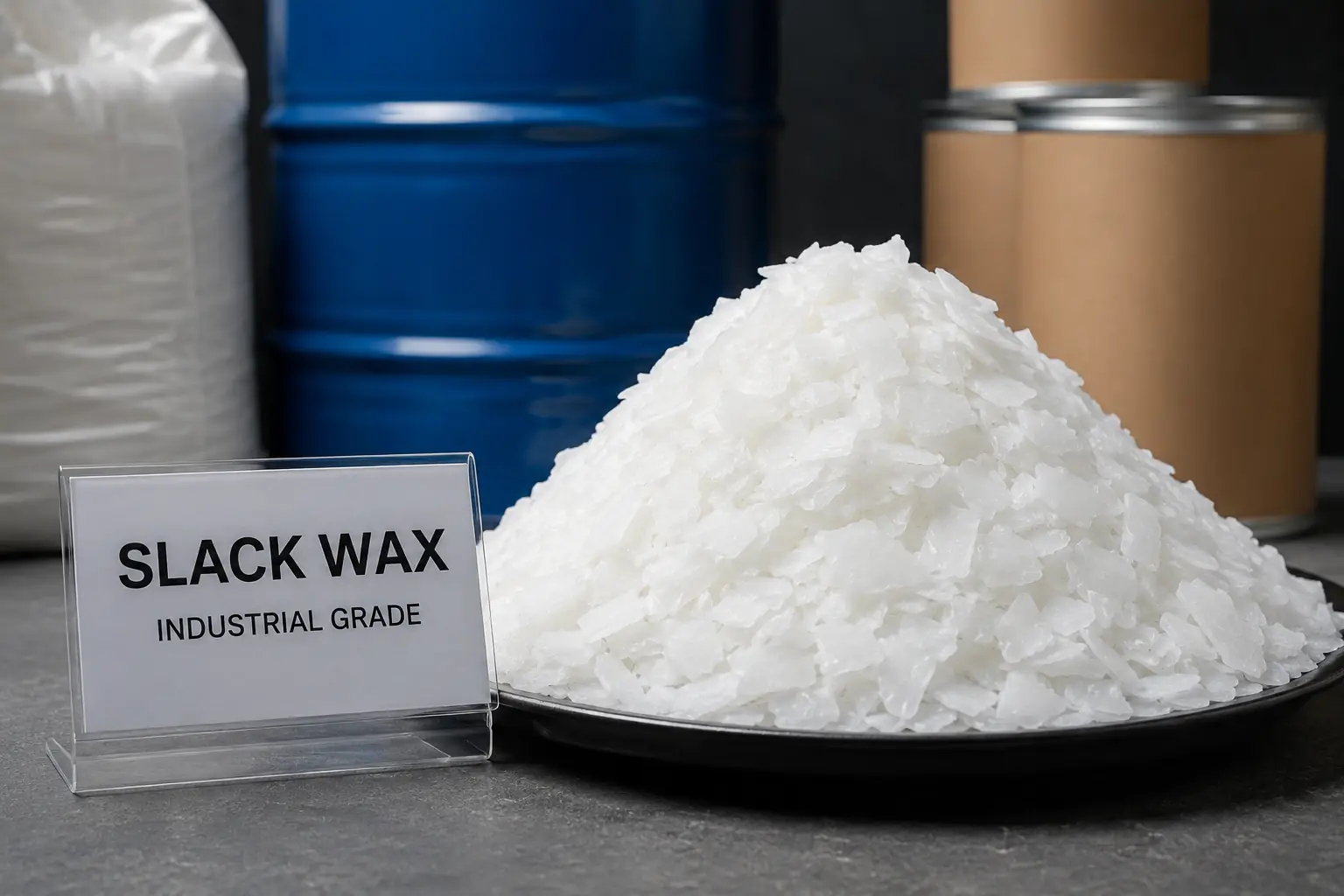
For buyers, importers, distributors, and procurement managers, understanding the Slack Wax Price is essential for making profitable purchasing decisions. Prices can fluctuate significantly due to refinery production levels, crude oil movements, transportation costs, regional demand, and export market conditions.
In today’s competitive wax industry, buyers seek accurate information on Slack Wax Price Per Ton, Bulk Slack Wax Price, Industrial Slack Wax Price, and Slack Wax Export Price before committing to large-volume purchases. Moreover, global supply chain disruptions and changing refinery outputs continue to influence wax market dynamics.
This comprehensive guide examines current pricing structures, major cost drivers, regional market conditions, supplier evaluation strategies, and future outlooks to help buyers secure the best possible commercial terms.
Current Slack Wax Price Overview
The global Slack Wax Market Price varies according to grade, oil content, packaging method, order volume, and delivery terms.
Most international transactions are quoted on a metric ton basis under FOB or CIF terms. Prices may differ considerably between producing regions and destination markets.
Typical Market Price Ranges
| Product Type | Estimated Price Range (USD/MT) |
|---|---|
| Light Slack Wax | $550 – $850 |
| Heavy Slack Wax | $500 – $800 |
| Bulk Slack Wax Price | $480 – $780 |
| Slack Wax Wholesale Price | $500 – $850 |
| Slack Wax Export Price | $520 – $900 |
These ranges serve as market references. However, actual transaction values depend on contract size, refinery availability, and shipping conditions.
Furthermore, buyers should monitor slack wax price today through active supplier quotations because market conditions can change rapidly.
What Influences Slack Wax Prices?
Several factors directly affect the Slack Wax Cost across international markets.
Crude Oil Market Impact
Slack wax originates from petroleum refining processes. Therefore, crude oil remains one of the most influential pricing drivers.
When crude oil prices rise:
Refinery operating costs increase
Petroleum wax values usually rise
Paraffin wax production costs increase
Industrial wax prices become more expensive
Conversely, declining oil prices often create downward pressure on slack wax quotations.
Moreover, volatility in global energy markets can cause sudden pricing changes. Buyers who track benchmark crude indices often gain better purchasing timing.
Refinery Production Levels
Refinery output significantly affects Industrial Slack Wax Price.
Slack wax is a refinery by-product generated during lubricant base oil production. Consequently, supply depends heavily on refinery production schedules.
Several conditions may reduce supply:
Planned maintenance shutdowns
Reduced lubricant demand
Feedstock limitations
Production optimization strategies
As a result, lower refinery output typically leads to tighter availability and higher prices.
Meanwhile, increased refinery production often improves supply and stabilizes pricing.
Oil Content and Grade Differences
The amount of oil content within slack wax has a direct impact on pricing.
Generally:
| Grade | Oil Content | Price Impact |
|---|---|---|
| Lower Oil Content | Lower | Higher Price |
| Medium Oil Content | Moderate | Moderate Price |
| Higher Oil Content | Higher | Lower Price |
Refineries produce different wax grades depending on processing conditions and feedstock characteristics.
Therefore, buyers must compare specifications carefully when evaluating supplier offers.
Packaging and Logistics Costs
Packaging contributes significantly to final procurement costs.
Common packing options include:
Drum packing
Jumbo bag packing
Bulk shipment
Flexitank transportation
Drum packing usually costs more due to labor and material expenses.
In contrast, bulk shipment often delivers lower per-ton transportation costs for large-volume buyers.
Additionally, freight rates, fuel costs, port congestion, and container availability influence total landed costs.
Slack Wax Price Per Ton by Grade
Different grades command different prices due to processing requirements and market demand.
Light Slack Wax Price
Light Slack Wax Price generally remains higher than heavy grades because of its lower oil content and greater suitability for downstream processing.
Typical export pricing:
| Grade | Price Range (USD/MT) |
|---|---|
| Light Slack Wax | $550 – $850 |
Factors affecting pricing include:
Refinery feedstock quality
Oil percentage
Regional demand
Export availability
Shipment volume
Furthermore, manufacturers producing semi refined and fully refined paraffin wax often prefer lighter grades due to improved refining efficiency.
Heavy Slack Wax Price
Heavy Slack Wax Price usually trades at a discount compared to light grades.
Typical market range:
| Grade | Price Range (USD/MT) |
|---|---|
| Heavy Slack Wax | $500 – $800 |
Heavy grades contain different hydrocarbon compositions and often show greater oil content.
However, heavy slack wax remains an important raw material for many industrial wax production processes.
Consequently, demand remains stable across multiple manufacturing sectors.
Regional Slack Wax Market Prices
Regional supply conditions create significant price differences throughout the global market.
Asia
Asia represents one of the largest consuming regions for industrial wax products.
Major importing countries include:
China
India
Vietnam
Indonesia
South Korea
Prices in Asia often reflect:
Strong manufacturing demand
Active wax processing industries
Import dependency in several markets
Shipping costs from producing regions
Furthermore, Asian buyers frequently negotiate long-term supply contracts to secure stable pricing.
Middle East
The Middle East remains an important production and export hub.
Several refineries benefit from:
Competitive feedstock costs
Strong refinery infrastructure
Strategic export locations
As a result, Middle Eastern suppliers often provide highly competitive Slack Wax Supplier Price quotations.
The region also plays a growing role in the global wax export market.
Europe
European pricing tends to remain above global averages.
Key factors include:
Higher energy costs
Environmental compliance expenses
Logistics costs
Refinery operating expenditures
Nevertheless, European buyers continue to demand premium-quality wax products.
Therefore, suppliers targeting Europe often focus on consistent quality and supply reliability.
Africa
African demand continues to grow due to expanding manufacturing sectors.
Many countries depend on imported wax products.
As a result:
Import logistics affect pricing
Currency fluctuations impact costs
Regional distribution networks influence final market values
Consequently, procurement planning becomes especially important for African importers.
Slack Wax vs Paraffin Wax Price Comparison
Many buyers compare slack wax vs paraffin wax price before making purchasing decisions.
The primary difference lies in processing requirements.
| Product | Typical Price Level |
|---|---|
| Slack Wax | Lower |
| Semi Refined Paraffin Wax | Medium |
| Fully Refined Paraffin Wax | Higher |
Slack wax serves as a raw material for paraffin wax production.
Therefore, additional refining costs increase the final price of paraffin products.
Typical pricing hierarchy:
Slack wax
Semi refined paraffin wax
Moreover, paraffin wax raw material cost calculations often begin with prevailing slack wax market values.
When slack wax prices rise, downstream wax products frequently experience corresponding price increases.
How Bulk Orders Affect Slack Wax Pricing
Volume remains one of the most important pricing factors.
Large buyers often receive more favorable Bulk Slack Wax Price offers because suppliers benefit from:
Reduced administrative costs
Lower packaging expenses
Efficient logistics planning
Long-term customer relationships
Typical Bulk Purchase Benefits
| Order Size | Pricing Impact |
|---|---|
| 20–50 MT | Standard Pricing |
| 50–200 MT | Moderate Discount |
| 200–500 MT | Significant Discount |
| 500+ MT | Strategic Pricing |
Furthermore, long-term contracts often provide additional commercial advantages.
Buyers who commit to annual volumes frequently secure better pricing than spot-market purchasers.
FOB vs CIF Slack Wax Export Prices
Understanding export pricing terms helps buyers compare quotations accurately.
FOB Price
FOB Price (Free on Board) includes:
Product cost
Inland transport
Port handling
Export clearance
However, buyers arrange ocean freight and insurance separately.
Advantages include:
Greater freight control
Flexible logistics selection
Improved shipping negotiation opportunities
CIF Price
CIF Price (Cost, Insurance and Freight) includes:
Product cost
Ocean freight
Marine insurance
Export logistics
Consequently, CIF quotations provide easier budgeting for importers.
Example Comparison
| Term | Price Example |
|---|---|
| FOB Price | $650/MT |
| CIF Price | $720/MT |
The difference depends on destination, freight market conditions, and insurance costs.
Therefore, procurement teams should compare both structures before finalizing contracts.
How to Evaluate a Slack Wax Supplier
Selecting the right supplier affects both cost and supply reliability.
While pricing matters, buyers should evaluate additional criteria.
Key Evaluation Factors
Production Capability
Assess:
Refinery relationships
Available inventory
Export experience
Annual production capacity
Quality Consistency
Verify:
Product testing procedures
Quality documentation
Batch consistency
Traceability systems
Logistics Performance
Review:
Delivery reliability
Export documentation
Shipping experience
Global supply chain capabilities
Commercial Terms
Compare:
Payment conditions
Contract flexibility
Volume discounts
Credit support
Several international suppliers, including Basekim, provide Slack Wax for export markets across different regions.
However, buyers should evaluate each supplier based on performance, quality, and long-term reliability rather than price alone.
Global Slack Wax Market Trends
The global wax sector continues to evolve.
Several trends currently influence wax industry pricing.
Increasing Demand from Emerging Markets
Manufacturing growth across developing economies supports steady demand.
Consequently, imports continue expanding in:
Asia
Africa
Latin America
Refinery Optimization
Many refineries focus on maximizing higher-value products.
As a result, slack wax supply may tighten in some markets.
Freight Market Volatility
Shipping rates continue affecting global pricing.
Therefore, buyers increasingly seek regional sourcing alternatives.
Supply Chain Diversification
Importers now work with multiple suppliers to reduce risk.
This strategy improves supply security and increases negotiating leverage.
Moreover, procurement teams increasingly prioritize supply stability alongside pricing.
Future Outlook for Slack Wax Prices
Market analysts expect several factors to shape future pricing.
Key Bullish Factors
Potential price increases may result from:
Higher crude oil prices
Reduced refinery production
Growing industrial demand
Supply chain disruptions
Key Bearish Factors
Potential price decreases may result from:
Increased refinery output
Lower energy costs
Weaker industrial activity
Improved logistics efficiency
Overall, most industry observers expect moderate price fluctuations rather than extreme volatility.
Furthermore, demand from paraffin wax production and industrial sectors should continue supporting market fundamentals.
Buyers who monitor refinery feedstock availability and global energy markets will likely make better purchasing decisions.
1. What is the average Slack Wax Price Per Ton?
The average Slack Wax Price Per Ton typically ranges from $500 to $850 per metric ton, depending on grade, oil content, packaging, and delivery terms.
2. Why does Slack Wax Price change frequently?
Prices change because of crude oil fluctuations, refinery production levels, freight costs, regional demand, and export market conditions.
3. Is light slack wax more expensive than heavy slack wax?
Yes. In most markets, Light Slack Wax Price is higher because lower oil content often increases refining value.
4. What affects Bulk Slack Wax Price the most?
Order volume, contract duration, packaging method, and shipping requirements usually have the greatest impact on bulk pricing.
5. How can buyers reduce Slack Wax Cost?
Buyers can reduce costs by purchasing larger volumes, negotiating annual contracts, optimizing logistics, and sourcing from competitive export regions.