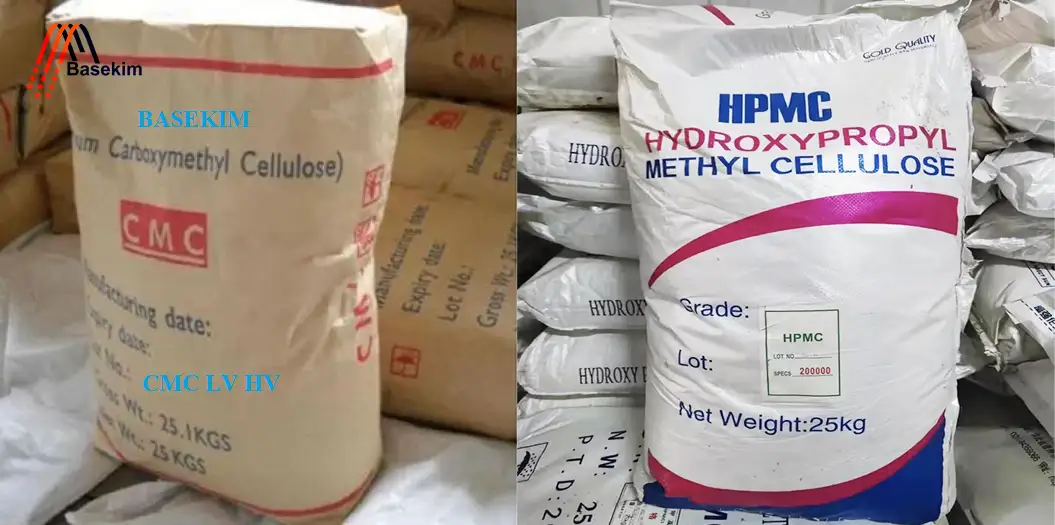
Choosing the right additive can shape the performance, stability, and quality of a final product. When comparing CMC vs HPMC, many industries look beyond basic functionality and focus on efficiency, consistency, and adaptability. Both materials play critical roles in formulations, yet they serve different purposes depending on the application.
This article explores how each performs, where they excel, and how to decide between them.
What Defines CMC and HPMC in Practice?
CMC works as a highly effective thickener and stabilizer in water-based systems. It dissolves quickly and creates a smooth, consistent texture. Manufacturers rely on it to control viscosity and improve suspension.
HPMC, on the other hand, acts as a versatile polymer with strong film-forming and water-retention properties. It performs well under varying temperatures and supports structure in both liquid and semi-solid systems.
While both enhance texture and stability, they differ in how they react to heat, water, and processing conditions.
Key Differences Between CMC vs HPMC
1. Water Interaction and Solubility
CMC dissolves rapidly in cold water and produces immediate viscosity. This makes it ideal for applications that require quick hydration and uniform mixing.
HPMC hydrates differently. It disperses in cold water but fully dissolves after heating and cooling cycles. This unique behavior allows it to control texture during processing and final use.
2. Thermal Behavior
HPMC stands out for its thermal gelation properties. It forms a gel when heated and returns to a liquid state when cooled. This feature proves useful in construction materials and food processing where heat stability matters.
CMC does not gel with heat. Instead, it maintains a stable viscosity across a wide temperature range, which benefits products that must remain consistent under varying conditions.
3. Film-Forming Ability
HPMC creates strong, flexible films. This makes it suitable for coatings, pharmaceuticals, and personal care products.
CMC forms films as well, but they tend to be more brittle. For applications that require elasticity and durability, HPMC often becomes the preferred choice.
4. Thickening Efficiency
CMC delivers excellent thickening performance at low concentrations. It provides smooth flow and enhances mouthfeel in food and beverage products.
HPMC also thickens effectively, but it offers additional structure. It works especially well in systems that need both viscosity and shape retention.
5. Stability in Different Environments
CMC performs best in neutral to slightly alkaline environments. High acidity can reduce its effectiveness.
HPMC shows greater stability across a wider pH range. This flexibility allows manufacturers to use it in more diverse formulations without compromising performance.
Applications Across Industries
Food Industry
In food production, both materials improve texture and consistency. CMC enhances beverages, sauces, and dairy alternatives by preventing separation and creating a smooth feel.
HPMC plays a larger role in baked goods and gluten-free formulations. It mimics the structure of gluten, helping products maintain shape and softness.
Pharmaceutical Sector
HPMC dominates in pharmaceutical applications due to its film-forming and controlled-release properties. It supports tablet coatings and ensures consistent drug delivery.
CMC still finds use as a binder and stabilizer in liquid medications, but it plays a more limited role compared to HPMC.
Construction Materials
HPMC performs exceptionally well in construction. It improves water retention, workability, and adhesion in cement-based products. Builders rely on it for tile adhesives, plasters, and mortars.
CMC contributes as a rheology modifier, but it does not match the performance of HPMC in demanding construction environments.
Personal Care and Cosmetics
Both materials enhance texture and stability in personal care products. CMC provides a smooth, gel-like consistency in shampoos and lotions.
HPMC offers superior film formation and moisture retention, making it ideal for creams, gels, and styling products.
Choosing Between CMC vs HPMC
Selecting the right material depends on your formulation goals.
Choose CMC when you need:
Fast hydration
Cost-effective thickening
Smooth texture in water-based systems
Choose HPMC when you need:
Thermal gelation
Strong film formation
Stability across varying conditions
Structural support in complex formulations
Many manufacturers evaluate performance through testing before finalizing their choice. A reliable supplier like Basekim can help ensure consistent quality and technical support during this process.
Supply and Quality Considerations
Consistency matters as much as performance. Variations in quality can affect viscosity, stability, and final product behavior.
Working with an experienced supplier such as Basekim helps maintain reliable production standards. High-quality sourcing ensures that both CMC and HPMC deliver predictable results across batches.
Final Thoughts
The comparison of CMC vs HPMC highlights how each serves distinct roles across industries. CMC offers simplicity, fast hydration, and efficient thickening. HPMC provides advanced functionality, including thermal behavior and film formation.
Instead of viewing them as interchangeable, it makes more sense to treat them as complementary tools. Each solves specific formulation challenges and supports different product goals.
Understanding their strengths allows manufacturers to improve quality, optimize performance, and create products that meet modern expectations.
FAQ: CMC vs HPMC
1. What is the main difference between CMC vs HPMC?
CMC mainly acts as a fast-acting thickener, while HPMC provides additional properties like thermal gelation and film formation.
2. Which is better for food applications?
Both work well, but CMC suits beverages and sauces, while HPMC performs better in baking and gluten-free products.
3. Is HPMC more stable than CMC?
Yes, HPMC remains stable across a wider range of temperatures and pH levels.
4. Can CMC replace HPMC in construction materials?
CMC can modify viscosity, but it cannot fully replace HPMC’s performance in water retention and adhesion.
5. How do I choose the right option?
Focus on your application needs, processing conditions, and desired final properties. Testing both options often leads to the best decision.