- About Us
- Contact Us
- English


PG 64-16 Bitumen: Specifications, Uses and Technical Guide
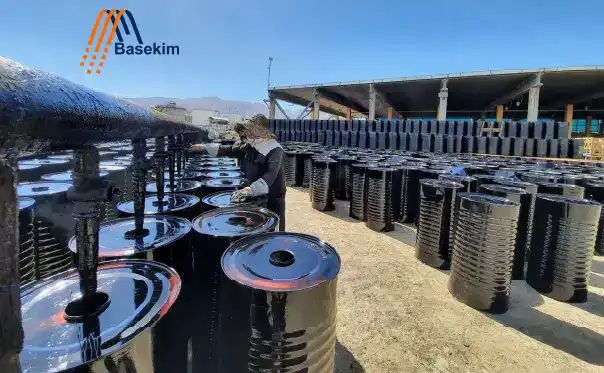
PG 64-16 Bitumen plays an important role in modern asphalt pavement and highway paving projects. Today, engineers, contractors, and asphalt producers choose this performance-grade asphalt binder because it delivers reliable pavement performance under moderate to high pavement temperatures. In addition, it helps reduce rutting issues during hot weather while maintaining flexibility during colder conditions.
As traffic loads continue to increase, road construction projects now require stronger and longer-lasting asphalt materials. Therefore, conventional paving grades often fail to meet modern performance expectations. For this reason, the industry increasingly relies on the PG grading system and Superpave asphalt binder technology to improve pavement durability and service life.
Most importantly, performance grading matters because climate directly affects asphalt pavement behavior. For example, high temperatures can soften asphalt binder and create rutting, while low temperatures can lead to thermal cracking and fatigue cracking. Consequently, the Performance Grade Bitumen PG 64-16 system classifies binders according to pavement temperature performance instead of simple penetration values.
Furthermore, PG64-16 asphalt offers balanced rheological properties for many urban roads, highways, and infrastructure developments. As a result, it performs well in regions that experience warm summers and moderate winter temperatures. Therefore, transportation authorities and paving contractors frequently specify this grade for long-term pavement stability and cost efficiency.
In this guide, you will learn about the specifications, properties, applications, advantages, storage requirements, and technical details of PG 64-16 asphalt binder in a clear and practical way.
What is PG 64-16 Bitumen?
PG 64-16 bitumen refers to a performance-graded asphalt binder designed according to the Superpave grading system. In simple terms, the term “PG” stands for “Performance Grade,” which identifies how the asphalt binder performs under specific temperature conditions.
Unlike traditional penetration-grade bitumen, the Superpave system evaluates asphalt performance using engineering-based testing methods. Consequently, contractors and pavement designers can select the correct binder according to climate and traffic conditions.
Definition of PG 64-16 Asphalt Binder
PG 64-16 asphalt binder can resist pavement temperatures up to 64°C without excessive deformation. At the same time, it can tolerate temperatures down to -16°C before significant thermal cracking occurs.
Because of these characteristics, this binder suits regions with:
-
Moderate winters
-
Warm to hot summers
-
Medium to heavy traffic loads
-
Urban and highway paving conditions
Understanding the Superpave Grading System
The Superpave asphalt binder system originated through the Strategic Highway Research Program (SHRP). Initially, engineers developed this grading method to improve asphalt pavement performance across different climates.
Previously, traditional asphalt specifications mainly focused on penetration and viscosity. However, Superpave grading evaluates actual pavement behavior, including:
-
Rutting resistance
-
Thermal cracking resistance
-
Fatigue cracking performance
-
Asphalt rheology
-
Aging characteristics
As a result, road authorities now prefer PG binders for modern infrastructure projects.
How Performance Grading Works
Performance grading uses temperature-based classification. First, engineers determine the highest and lowest pavement temperatures expected during service life. Then, they select the appropriate asphalt performance grade.
For example:
-
“64” represents the maximum pavement temperature
-
“-16” represents the minimum pavement temperature
Because of this scientific approach, pavement designers can improve pavement reliability and minimize premature failures.
What Does PG 64-16 Mean?
The designation “PG 64-16” contains valuable performance information. Specifically, each number describes how the asphalt binder behaves under specific environmental conditions.
High-Temperature Grade
The number “64” indicates the binder can perform effectively at pavement temperatures up to 64°C.
During hot weather, asphalt pavement often faces severe stress from:
-
Heavy truck traffic
-
High solar radiation
-
Slow-moving vehicles
-
Urban congestion
Nevertheless, PG 64-16 maintains sufficient stiffness to resist rutting and permanent deformation. Consequently, roads remain smoother and more stable during hot weather.
Low-Temperature Grade
Meanwhile, the “-16” rating means the binder can tolerate pavement temperatures as low as -16°C.
Cold weather can make asphalt brittle. Therefore, thermal cracking may appear across the pavement surface. However, PG 64-16 retains enough flexibility to reduce cracking risks in moderate winter climates.
Climate Suitability
Generally, PG 64-16 works best in regions with:
-
Moderate cold conditions
-
Warm summers
-
Seasonal temperature variation
-
Heavy urban traffic
Because of its balanced performance, many transportation agencies use this grade for highways, arterial roads, airports, and industrial zones.
Pavement Performance Benefits
This asphalt binder improves overall pavement performance because it balances stiffness and flexibility. In other words, contractors achieve:
-
Better rutting resistance
-
Reduced fatigue cracking
-
Longer pavement life
-
Lower maintenance costs
-
Improved road safety
PG 64-16 Specifications
The PG 64-16 specifications define the engineering and rheological requirements necessary for pavement durability. More importantly, these specifications ensure the binder performs consistently under real traffic and environmental conditions.
Key Technical Properties
PG 64-16 asphalt binder must meet strict performance criteria during laboratory testing. Therefore, engineers evaluate several critical characteristics.
Viscosity
Viscosity measures the binder’s flow resistance at elevated temperatures. As a result, proper viscosity helps contractors achieve:
-
Good workability
-
Proper aggregate coating
-
Uniform hot mix asphalt production
-
Efficient compaction
Flash Point
The flash point determines the temperature at which asphalt vapors ignite. Therefore, a higher flash point improves safety during storage, mixing, and transportation.
Rutting Resistance
Rutting resistance indicates the binder’s ability to resist permanent deformation under repeated traffic loading.
For this reason, strong rutting resistance becomes essential for:
-
Highways
-
Intersections
-
Bus lanes
-
Industrial pavements
Thermal Cracking Resistance
Likewise, low-temperature flexibility helps reduce thermal cracking. Consequently, this property protects asphalt pavement during cold weather cycles.
Fatigue Cracking Resistance
Repeated traffic loading creates stress within asphalt layers. However, good fatigue resistance delays crack formation and extends pavement service life.
Aging Resistance
Oxidation and weather exposure gradually harden asphalt binder over time. Even so, PG 64-16 includes performance requirements that help maintain flexibility after aging.
PG 64-16 Technical Data Table
| Property | Test Method | Typical Value |
|---|---|---|
| Performance Grade | AASHTO M320 | PG 64-16 |
| Rotational Viscosity at 135°C | ASTM D4402 | Max 3 Pa·s |
| Flash Point | ASTM D92 | Min 230°C |
| Dynamic Shear (Original Binder) | AASHTO T315 | Min 1.00 kPa |
| Dynamic Shear (RTFO Residue) | AASHTO T315 | Min 2.20 kPa |
| BBR Stiffness at -16°C | AASHTO T313 | Max 300 MPa |
| BBR m-value | AASHTO T313 | Min 0.300 |
| Elastic Recovery | ASTM D6084 | Typical compliant |
| Density at 25°C | ASTM D70 | Approx. 1.01–1.06 g/cm³ |
| Solubility | ASTM D2042 | Min 99% |
| Mixing Temperature | Industry Standard | 150–170°C |
| Compaction Temperature | Industry Standard | 140–160°C |
Although values may vary slightly depending on refinery source and project requirements, these figures represent common industry standards.
Applications of PG 64-16 Bitumen
PG 64-16 bitumen supports a wide range of road construction and infrastructure applications. Because it balances flexibility and stiffness, contractors use it in both urban and heavy-duty pavement projects.
Highway Construction
Highway paving demands durable asphalt binders that can withstand continuous traffic stress. Therefore, PG 64-16 performs effectively under heavy vehicle loads while minimizing rutting and pavement deformation.
As a result, highway agencies commonly specify this grade for:
-
Expressways
-
National highways
-
Ring roads
-
Freight corridors
Heavy Traffic Roads
Urban roads often experience stop-and-go traffic, braking forces, and turning movements. Consequently, these conditions increase pavement stress significantly.
Fortunately, PG64-16 asphalt offers improved rutting resistance and fatigue performance, making it suitable for:
-
Bus lanes
-
Industrial access roads
-
Commercial zones
-
Container terminals
Urban Roads
Municipal road networks require smooth pavement surfaces and long service life. Therefore, PG 64-16 asphalt binder helps cities reduce maintenance frequency and improve driving quality.
Airport and Infrastructure Projects
In addition, infrastructure projects demand reliable pavement materials for long operational life. For this reason, engineers often use PG 64-16 in:
-
Airport taxiways
-
Parking facilities
-
Logistic centers
-
Bridge deck paving
-
Industrial pavements
Hot Mix Asphalt Production
PG 64-16 works efficiently in hot mix asphalt production because it coats aggregates uniformly and supports proper compaction during paving operations.
Advantages of PG 64-16 Asphalt Binder
PG 64-16 asphalt binder offers several operational and performance advantages for contractors and pavement designers.
Excellent Durability
First of all, durability remains one of the biggest advantages of this binder. Roads built with PG 64-16 generally maintain structural integrity longer than conventional asphalt grades.
Strong Rutting Resistance
Hot climates and heavy traffic can deform asphalt pavement rapidly. However, PG 64-16 maintains sufficient stiffness at high temperatures and minimizes rut formation.
Improved Thermal Cracking Resistance
Similarly, cold weather often creates thermal stress inside asphalt layers. Nevertheless, PG 64-16 reduces cracking risks because it retains flexibility at lower temperatures.
Longer Service Life
Long-lasting pavements lower maintenance costs and reduce traffic disruptions. Consequently, many agencies select PG 64-16 for high-value infrastructure investments.
Better Pavement Performance
The Superpave grading system improves pavement performance by matching asphalt binders to local climate conditions. Therefore, this scientific approach delivers more predictable road behavior.
Enhanced Asphalt Rheology
Finally, asphalt rheology determines how binder responds to stress and temperature changes. Because of its balanced viscoelastic behavior, PG 64-16 performs consistently across different operating conditions.
PG 64-16 vs Other Bitumen Grades
Choosing the correct asphalt binder requires understanding the differences between grades.
PG 64-16 vs PG 58-28
PG 58-28 performs better in colder climates because it offers greater low-temperature flexibility. However, PG 64-16 handles warmer conditions and heavier traffic more effectively.
PG 64-16 vs PG 70-22
PG 70-22 works better in extremely hot climates and severe traffic conditions. On the other hand, PG 64-16 provides a cost-effective balance for many standard paving projects.
PG 64-16 vs Bitumen 60/70
Traditional penetration grades classify asphalt differently. While PG 64-16 uses a performance-based grading system focused on pavement behavior and climate conditions, 60/70 bitumen relies mainly on penetration testing.
Consequently, many modern projects now prefer performance-grade binders.
Storage and Handling
Proper handling maintains binder quality and improves operational safety.
Storage Temperature
Operators should maintain storage temperatures between 150°C and 170°C. Otherwise, excessive heating can accelerate oxidation and damage asphalt properties.
Transportation
Insulated tankers help maintain stable temperatures during transportation. In addition, operators should avoid contamination from water or foreign materials.
Safety Tips
Workers should always:
-
Wear heat-resistant protective equipment
-
Avoid direct skin contact
-
Maintain proper ventilation
-
Follow local safety regulations
-
Monitor tank temperatures regularly
By following these practices, companies can preserve asphalt performance and reduce operational risks.
PG 64-16 Supplier and Availability
Global demand for performance-grade asphalt binders continues to grow because infrastructure investment remains strong worldwide.
Today, refineries and asphalt suppliers produce PG 64-16 for domestic and export markets across:
-
North America
-
Europe
-
Asia
-
Middle East
-
Africa
Before purchasing, importers and contractors usually request technical documentation. Therefore, suppliers commonly provide:
-
PG 64-16 technical data sheet
-
Quality certificates
-
Laboratory test reports
-
Safety data sheets
-
Export packaging details
Several international companies supply this material for road construction projects. For example, Basekim offers various asphalt and bitumen products for infrastructure applications.
In general, buyers should evaluate suppliers based on:
-
Product consistency
-
Compliance with standards
-
Export capability
-
Technical support
-
Delivery reliability
Q1:What is PG 64-16 bitumen?
PG 64-16 bitumen is a performance-grade asphalt binder designed according to the Superpave grading system. Specifically, it performs effectively at high pavement temperatures up to 64°C and low temperatures down to -16°C.
Q2:What does PG 64-16 mean?
The “64” indicates maximum pavement temperature performance, while “-16” represents minimum pavement temperature resistance before thermal cracking occurs.
Q3:Where is PG 64-16 used?
Contractors use PG 64-16 in highways, urban roads, industrial pavements, airport surfaces, and infrastructure projects with moderate to high traffic loads.
Q4:What is the temperature range of PG 64-16?
Generally, PG 64-16 performs within pavement temperatures ranging from approximately 64°C to -16°C.
Q5:What is the difference between PG 64-16 and 60/70 bitumen?
PG 64-16 uses a performance-based grading system focused on pavement behavior and climate conditions. In contrast, 60/70 bitumen relies mainly on penetration testing.

Contact Info
Ankara Office
No.6, Fahrettin Pasa St. (613), Ilkbahar, Cankaya – Ankara
Tel: +90 312 514 70 55
Istanbul Office
No. 219, Sogut St., No.20, T4A Block, Maslak, Sariyer – Istanbul
Tel: +90 212 807 22 33
Dubai Office
No.3509, The Burlington Tower, Business Bay, Dubai – UAE
Tel: +971 4 236 98 30