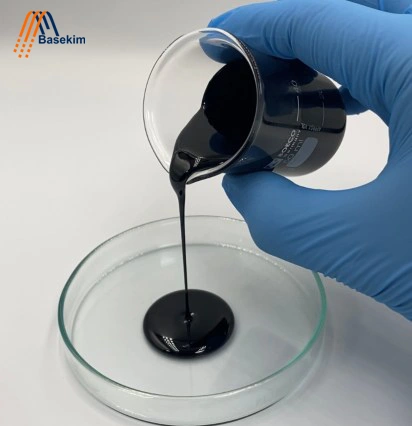
Specific gravity of bitumen shows how dense bitumen is compared to water. In simple terms, it tells engineers, buyers, and producers how heavy bitumen is for a given volume. This value directly affects asphalt mix design, pavement performance, quality control, and Bitumen Price. Therefore, contractors, refineries, laboratories, and bulk bitumen buyers rely on specific gravity to select the right grade and ensure consistent results.
What Is Specific Gravity of Bitumen?
Specific gravity of bitumen is the ratio between the weight of bitumen and the weight of an equal volume of water at a specified temperature, usually 25°C. Because water has a reference value of 1.0, bitumen always shows a specific gravity greater than 1.
As a result, bitumen sinks in water and behaves as a dense binding material in asphalt mixtures. This simple ratio helps professionals compare different grades and sources without complex calculations.
Why Specific Gravity of Bitumen Matters
Specific gravity plays a critical role in both laboratory testing and real construction projects. Without this value, engineers cannot accurately design asphalt mixes or estimate material quantities.
More importantly, it influences pavement durability, binder distribution, and overall performance.
Key reasons it matters include:
Accurate asphalt mix design
Correct volume-to-weight conversion
Quality control during production
Comparison of different bitumen grades
Fair pricing in bulk and export contracts
Because of these reasons, most international standards require this test as a basic specification.
Typical Specific Gravity Range of Bitumen
Most petroleum bitumen grades fall within a narrow range. However, the exact value depends on crude source, refining process, and oxidation level.
| Bitumen Type | Typical Specific Gravity |
|---|---|
| Penetration grade bitumen | 1.01 – 1.06 |
| Oxidized bitumen | 1.03 – 1.08 |
| Polymer modified bitumen | 1.01 – 1.05 |
| Cutback bitumen | 0.95 – 1.02 |
| Bitumen emulsion (residue) | 1.02 – 1.06 |
Therefore, even small differences can affect performance and calculations.
How Specific Gravity of Bitumen Is Measured
Laboratories measure specific gravity using standardized test methods. The most common reference comes from ASTM and EN standards.
Common Test Standards
ASTM D70 – Density of Semi-Solid Bituminous Materials
EN 15326 – Density and Specific Gravity of Bitumen
AASHTO T 228 – Specific Gravity of Bituminous Materials
These methods use a pycnometer or density bottle to ensure precision.
Step-by-Step Test Overview
The process remains simple but requires accuracy.
Heat bitumen to remove air bubbles
Fill the pycnometer with bitumen
Record weight at controlled temperature
Fill with water and reweigh
Calculate the ratio

Relationship Between Specific Gravity and Bitumen Composition
Specific gravity directly reflects bitumen’s chemical makeup. Heavier aromatic and resin components increase density, while lighter saturates reduce it.
Therefore:
Harder bitumen usually shows higher values
Oxidation increases specific gravity
Polymer modification may slightly change density
This relationship helps refiners monitor consistency during production.
Role in Asphalt Mix Design
Specific gravity strongly influences asphalt concrete design. Engineers use it to calculate voids, binder content, and aggregate-binder balance.
Key Mix Design Impacts
Determines volume of binder in mix
Affects air void calculations
Influences VMA and VFA values
Controls durability and rutting resistance
As a result, inaccurate values can lead to premature pavement failure.
Specific Gravity vs Density of Bitumen
Although many people use these terms interchangeably, they are not identical.
Specific gravity is a ratio with no unit
Density is mass per unit volume, usually kg/m³
However, you can easily convert between them.
Density = Specific Gravity × Density of Water
Since water density is about 1000 kg/m³, a bitumen with specific gravity 1.03 has a density of roughly 1030 kg/m³.
Effect on Transportation and Pricing
Specific gravity directly affects logistics and cost calculations. Bulk buyers often purchase bitumen by weight, while storage tanks measure volume.
Therefore, correct conversion becomes essential.
Practical Example
If a supplier loads bitumen into a tanker based on volume, specific gravity ensures the correct tonnage reaches the buyer. This accuracy prevents disputes and financial losses.
Because of this, export contracts often specify acceptable density ranges.
Specific Gravity of Bitumen in Quality Control
Quality control teams use specific gravity as an early indicator of consistency. Any unexpected change may signal:
Crude source variation
Processing issues
Contamination or overheating
Thus, refineries and suppliers track this value batch by batch.
Differences Between Bitumen Grades
Each grade shows slightly different behavior.
Bitumen 60/70 usually ranges around 1.01–1.06
Bitumen 80/100 often sits closer to 1.01–1.04
Bitumen 115/15 tends to show higher values due to oxidation
Therefore, buyers should always check the specification sheet before use.
Buyer Considerations When Evaluating Specific Gravity
Professional buyers and contractors should never ignore this parameter.
Before purchasing, consider:
Project climate and traffic load
Compatibility with aggregates
Mixing temperature and workability
Supplier consistency and testing reports
At BASEKIM, every shipment includes laboratory data to ensure transparency and trust.
Common Myths About Specific Gravity of Bitumen
Some misunderstandings still exist in the market.
Higher specific gravity does not always mean better quality
Lower values do not automatically indicate weakness
One “ideal” value does not fit all applications
Instead, suitability depends on application, climate, and design method.
Environmental and Performance Implications
Specific gravity indirectly affects sustainability. Correct binder proportion reduces overuse, minimizes waste, and improves pavement life.
As a result, proper testing supports cost-effective and environmentally responsible construction.
How Basekim Ensures Accurate Specific Gravity
BASEKIM controls specific gravity through:
Controlled sourcing of crude materials
Standardized refining processes
Continuous lab testing under ASTM and EN standards
Batch-wise certification and documentation
This approach helps contractors and distributors rely on consistent quality.
Frequently Asked Questions (FAQs)
What is the standard specific gravity of bitumen?
Most penetration grade bitumen falls between 1.01 and 1.06 at 25°C.
Does specific gravity change with temperature?
Yes. As temperature increases, density decreases. Therefore, tests always specify temperature.
Is higher specific gravity better for roads?
Not always. The best value depends on climate, traffic, and mix design requirements.
How does oxidation affect specific gravity?
Oxidation increases density, which raises specific gravity values.
Why do suppliers include specific gravity in COA?
It confirms consistency, supports mix calculations, and prevents disputes in bulk supply.
Can specific gravity help detect bitumen adulteration?
Yes. Unexpected changes may indicate contamination or improper processing.