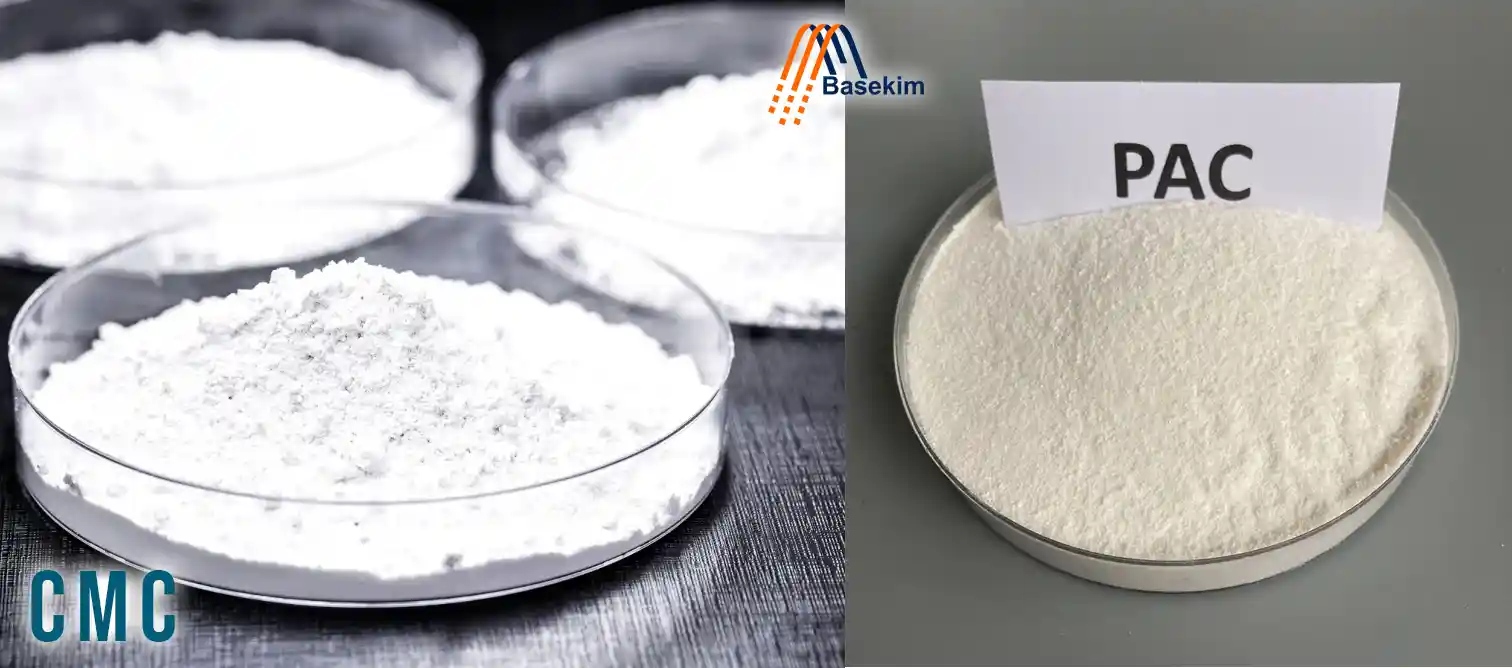
Understanding the Difference Between CMC and PAC is essential for industries that rely on cellulose-based polymers. These two materials, Carboxymethyl Cellulose (CMC) and Polyanionic Cellulose (PAC)—may look similar at first glance, but their performance, structure, and applications vary significantly.
This article delivers a complete comparison, not just a basic explanation. You’ll explore how CMC vs PAC differ across production, physical properties, industrial performance, and cost efficiency.
Why Comparing CMC vs PAC Matters in Industry
Industries like oil drilling, food processing, and pharmaceuticals depend heavily on choosing the right polymer. A small difference in viscosity or stability can lead to major changes in performance.
When comparing polyanionic cellulose vs carboxymethyl cellulose, decision-makers focus on:
Efficiency under pressure
Stability in extreme environments
Cost-effectiveness
Regulatory compliance
Choosing the wrong material can increase costs or reduce product quality.
Overview of CMC vs PAC
Key Structural Characteristics
CMC and PAC both originate from cellulose, but their degree of substitution (DS) and purity levels differ.
CMC: Lower substitution level, broader variability
PAC: Higher substitution level, more uniform structure
This structural difference directly affects performance.
Chemical Composition Differences
| Feature | CMC | PAC |
|---|---|---|
| Purity | Moderate | High |
| Degree of Substitution | 0.4 – 1.2 | 0.9 – 1.5 |
| Ionic Nature | Anionic | Highly anionic |
| Polymer Uniformity | Variable | Consistent |
PAC shows stronger ionic behavior, which enhances its stability and efficiency.
Production Process Difference Between CMC and PAC
Manufacturing of Carboxymethyl Cellulose
CMC production involves:
Cellulose alkalization
Reaction with monochloroacetic acid
Neutralization and drying
The process allows flexibility but creates variability in quality.
Production of Polyanionic Cellulose
PAC undergoes a more refined modification process, resulting in:
Higher purity
Controlled substitution
Better consistency
This explains why PAC often performs better in demanding environments.
Physical Properties Comparison Table
Solubility and Appearance
| Property | CMC | PAC |
|---|---|---|
| Solubility | Good | Excellent |
| Appearance | Off-white powder | White powder |
| Hydration Speed | Moderate | Fast |
PAC hydrates faster and dissolves more efficiently.
Viscosity Behavior
| Factor | CMC | PAC |
|---|---|---|
| Viscosity Stability | Moderate | High |
| Salt Resistance | Low | High |
| Temperature Stability | Moderate | Strong |
PAC maintains viscosity even under harsh conditions.
Functional Performance Differences
Stability in Harsh Conditions
PAC performs better in:
High salinity
Elevated temperatures
Extreme pH levels
CMC tends to lose stability under these conditions.
Filtration Control Capabilities
PAC offers:
Superior fluid loss control
Better filtration efficiency
CMC provides acceptable performance but lacks consistency.
Industrial Applications Difference Between CMC and PAC
Oil Drilling Usage
In drilling fluids, the Difference Between CMC and PAC becomes very clear:
| Application | CMC | PAC |
|---|---|---|
| Fluid Loss Control | Moderate | Excellent |
| Shale Stability | Limited | Strong |
| Salt Resistance | Weak | High |
PAC dominates in oilfield applications due to reliability.
Food and Pharmaceutical Uses
| Industry | CMC | PAC |
|---|---|---|
| Food Additive | Common | Rare |
| Pharmaceutical Binder | Widely Used | Limited |
| Thickening Agent | Effective | Less common |
CMC is preferred in food-grade applications because of regulatory acceptance.
Cost and Efficiency Analysis
Price Differences
CMC: Lower cost
PAC: Higher price due to refinement
Performance-to-Cost Ratio
Although PAC costs more, it often delivers:
Longer-lasting performance
Reduced material usage
Better efficiency
Companies like Basekim recommend PAC for high-performance environments where reliability outweighs cost.
Environmental and Safety Differences
Biodegradability
Both materials are biodegradable, but:
CMC degrades faster
PAC remains stable longer
Regulatory Compliance
| Factor | CMC | PAC |
|---|---|---|
| Food Safety Approval | Yes | Limited |
| Industrial Compliance | Yes | Yes |
CMC meets stricter food regulations.
Advantages and Limitations Table
Strengths of CMC
Lower cost
Widely available
Approved for food use
Easy to process
Strengths of PAC
High stability
Strong salt resistance
Better filtration control
Consistent quality
Choosing Between Polyanionic Cellulose vs Carboxymethyl Cellulose
Key Decision Factors
When deciding between CMC vs PAC, consider:
Application type
Environmental conditions
Budget constraints
Required performance level
For high-demand industries, suppliers like Basekim often recommend PAC due to its superior consistency and durability.
FAQs About Difference Between CMC and PAC
1. What is the main Difference Between CMC and PAC?
The main difference lies in purity and performance. PAC has higher purity and performs better in harsh conditions.
2. Is PAC more expensive than CMC?
Yes, PAC generally costs more due to its refined production process.
3. Which is better for oil drilling, CMC or PAC?
PAC is better because it offers superior filtration control and stability.
4. Can CMC replace PAC in all applications?
No, CMC cannot fully replace PAC in high-performance environments.
5. Why is PAC more stable than CMC?
PAC has a higher degree of substitution and better molecular uniformity.
6. Is CMC safe for food use?
Yes, CMC is widely approved for food and pharmaceutical applications.
Conclusion
The Difference Between CMC and PAC goes far beyond basic chemistry. While both materials come from cellulose, their performance, cost, and industrial applications differ significantly.
CMC excels in cost-sensitive and food-grade applications
PAC dominates in demanding industrial environments
Understanding polyanionic cellulose vs carboxymethyl cellulose helps businesses make smarter decisions, improve efficiency, and reduce long-term costs.
For reliable sourcing and expert guidance, trusted suppliers like Basekim continue to play a key role in delivering high-quality cellulose solutions tailored to industry needs.