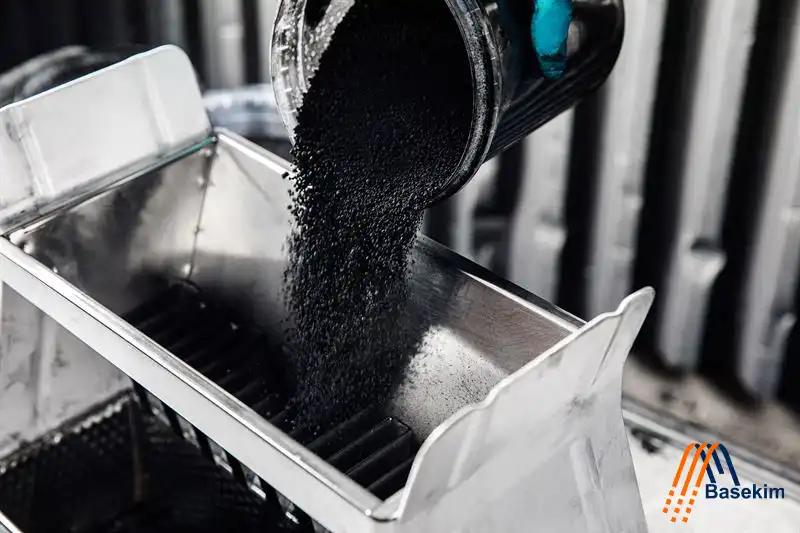
Carbon black plays a major role in modern manufacturing. For example, tires, plastics, coatings, and rubber products use this material to improve strength, durability, UV resistance, and conductivity. Today, many industries compare recovered vs. virgin carbon black to find the best balance between performance, sustainability, and cost.
As environmental regulations become stricter and companies focus more on eco-friendly production, recovered carbon black is gaining attention worldwide. At the same time, virgin carbon black continues to dominate high-performance industrial applications because of its purity, consistency, and reliable quality.
Therefore, understanding the differences between these two materials helps manufacturers make smarter purchasing decisions. In this guide, we explain their production methods, applications, advantages, disadvantages, and market trends.
Recovered vs Virgin Carbon Black: Key Differences
Production Process Comparison
The biggest difference between recovered and virgin carbon black lies in production.
Virgin carbon black comes from petroleum feedstocks through controlled combustion. Recovered carbon black comes from recycled tires through pyrolysis.
Virgin production depends heavily on fossil fuels, while recovered carbon black supports recycling and sustainability goals.
Performance and Quality
Virgin carbon black generally offers:
Better consistency
Lower ash content
Higher reinforcement
Controlled particle structure
Recovered carbon black may show variations because waste tire compositions differ.
However, modern processing technologies continue improving recovered carbon black quality significantly.
Environmental Impact
Environmental performance is one of the most important topics in the Recovered vs Virgin Carbon Black discussion.
Recovered carbon black delivers major sustainability benefits:
Reduced landfill waste
Lower CO₂ emissions
Reduced fossil fuel dependency
Improved circular economy performance
Many manufacturers now include recycled carbon black in ESG and sustainability programs.
Cost Efficiency
Recovered carbon black often costs less than virgin carbon black because it uses recycled feedstock materials.
Manufacturers looking to reduce production costs may blend recovered and virgin grades to balance price and performance.
Availability and Supply Chain
Virgin carbon black production relies on oil markets and petrochemical supply chains. As a result, market fluctuations can affect pricing and availability.
On the other hand, recovered carbon black supply depends on tire recycling capacity and pyrolysis infrastructure.
As sustainability initiatives expand globally, recovered carbon black availability continues growing.
Advantages of Virgin Carbon Black
High Purity and Consistency
First, virgin carbon black offers excellent batch consistency. As a result, manufacturers can maintain strict quality standards for sensitive applications.
Therefore, industries requiring precise mechanical properties often prefer virgin grades.
Superior Reinforcement Properties
In addition, virgin carbon black delivers stronger reinforcement in rubber compounds. Tire manufacturers especially value this characteristic.
Applications needing:
High abrasion resistance
Maximum durability
Long service life
often rely on virgin carbon black.
Advantages of Recovered Carbon Black
Sustainable Manufacturing Benefits
On the other hand, recovered carbon black helps manufacturers reduce environmental impact while supporting green manufacturing initiatives.
For this reason, companies seeking eco-friendly production increasingly use recycled carbon black materials.
Lower Carbon Footprint
Moreover, studies show recovered carbon black production generates significantly lower carbon emissions compared to virgin carbon black manufacturing.
This benefit supports global sustainability goals and carbon reduction targets.
Circular Economy Contribution
Furthermore, recovered carbon black transforms waste tires into valuable industrial raw materials.
Instead of disposing of used tires, manufacturers recover resources and reuse them in new products.
Consequently, this circular approach reduces environmental pressure and improves resource efficiency.
Applications of Recovered and Virgin Carbon Black
Tire Manufacturing
To begin with, tire producers remain the largest consumers of carbon black.
Virgin carbon black dominates high-performance tire applications because of its superior reinforcement characteristics.
Meanwhile, recovered carbon black increasingly appears in:
Inner liners
Sidewalls
Commercial tires
Rubber blends
Plastics and Polymer Compounds
In plastics, carbon black improves UV resistance and pigmentation.
Manufacturers use carbon black in:
Agricultural films
Pipes
Packaging
Automotive plastics
However, recovered carbon black works well in many plastic applications where ultra-high purity is less critical.
Coatings, Inks, and Paints
Similarly, carbon black provides deep black pigmentation and conductivity.
Industries use it in:
Printing inks
Industrial coatings
Paint formulations
Toners
In contrast, virgin grades usually provide stronger color consistency for premium coatings.
Rubber Products
Additionally, rubber manufacturers use carbon black in:
Conveyor belts
Hoses
Gaskets
Seals
Industrial rubber goods
Overall, both virgin and recovered carbon black can serve these applications depending on performance requirements.
Challenges of Recovered Carbon Black
Particle Size Variability
However, one challenge of recovered carbon black is inconsistent particle structure.
Different tire sources create variations that may affect performance.
Nevertheless, advanced refining technologies continue improving product consistency.
Ash Content Concerns
Another challenge is that recovered carbon black usually contains higher ash levels compared to virgin carbon black.
Excess ash may affect:
Dispersion
Conductivity
Reinforcement performance
Therefore, manufacturers carefully evaluate quality specifications before selecting rCB materials.
How to Choose Between Recovered and Virgin Carbon Black
Factors Manufacturers Should Consider
Ultimately, choosing between recovered and virgin carbon black depends on several factors:
| Factor | Virgin Carbon Black | Recovered Carbon Black |
|---|---|---|
| Performance | Excellent | Moderate to High |
| Sustainability | Lower | Excellent |
| Cost | Higher | Lower |
| Consistency | Very High | Improving |
| Carbon Footprint | Higher | Lower |
Performance vs. Sustainability Balance
In many cases, some manufacturers choose blended solutions that combine virgin and recovered carbon black.
This approach helps companies:
Reduce costs
Improve sustainability
Maintain acceptable performance levels
Therefore, the best option depends on the final application requirements.
Why Basekim Is a Reliable Carbon Black Supplier
Carbon Black Grades Offered by Basekim
Basekim supplies high-quality carbon black products for various industrial sectors.
The company offers several commonly used grades, including:
Carbon Black N220
Carbon Black N330
Carbon Black N660
These grades support applications in tires, plastics, coatings, and industrial rubber products.
Quality Assurance and Global Supply
Basekim focuses on:
Consistent product quality
Reliable global logistics
Competitive pricing
Technical support
Manufacturers seeking dependable carbon black suppliers often prioritize suppliers with strong quality control and stable international distribution capabilities.
FAQ: Recovered vs. Virgin Carbon Black
What is the main difference between recovered and virgin carbon black?
In general, virgin carbon black is produced from petroleum feedstocks, while recovered carbon black comes from recycled tires through pyrolysis.
Is recovered carbon black environmentally friendly?
Yes. Recovered carbon black helps reduce landfill waste and lowers carbon emissions compared to virgin carbon black production.
Can recovered carbon black replace virgin carbon black completely?
Not always. High-performance applications may still require virgin carbon black because of its superior consistency and reinforcement properties.
Which industries use recovered carbon black?
Today, industries such as tire manufacturing, plastics, rubber goods, and coatings increasingly use recovered carbon black.
Why are carbon black grades important?
Because different grades provide different reinforcement, conductivity, and processing characteristics. Common grades include N220, N330, N550, and N660.
Where can manufacturers buy quality carbon black products?
For example, companies such as Basekim supply multiple carbon black grades for industrial applications worldwide.
Conclusion: Recovered vs. Virgin Carbon Black
Overall, the discussion around recovered vs. virgin carbon black continues growing as industries focus on sustainability, cost efficiency, and high performance.
Virgin carbon black remains the preferred choice for applications requiring premium reinforcement, purity, and consistency. However, recovered carbon black offers substantial environmental benefits and growing commercial potential.
As a result, modern manufacturers increasingly combine both materials to balance sustainability goals with technical performance requirements.
Furthermore, as recycling technologies improve, recovered carbon black will likely play an even larger role in the future of industrial manufacturing.
Finally, businesses looking for dependable carbon black supply solutions can explore trusted suppliers like Basekim for industrial-grade carbon black products and technical support.