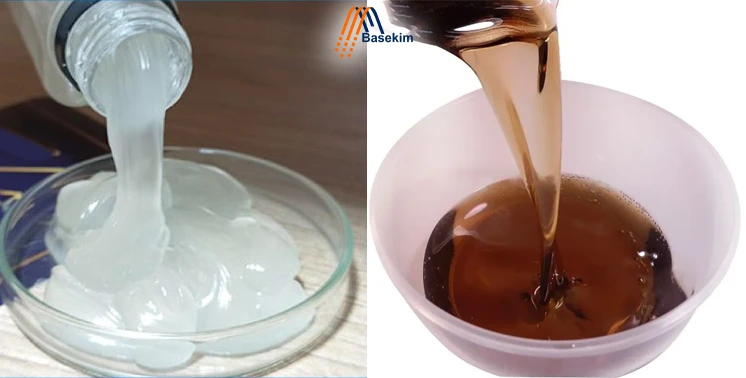
The discussion around SLES vs LABSA continues to grow across the detergent and cleaning chemical industry. Manufacturers constantly compare these two surfactants to improve cleaning performance, reduce production costs, increase foam quality, and meet market demand. As the global cleaning sector expands, businesses now focus more on surfactant efficiency, formulation stability, and long-term profitability.
Today, detergent manufacturers, industrial chemical suppliers, and private-label cleaning brands all analyze the differences between sodium laureth sulfate and linear alkyl benzene sulfonic acid to create better products. Therefore, understanding the strengths and limitations of both materials gives manufacturers a strong competitive advantage.
Moreover, many companies now prefer reliable global suppliers such as Basekim for consistent SLES and LABSA supply, stable quality, and industrial-scale availability.
Why the SLES vs LABSA Debate Matters in Modern Manufacturing
The cleaning products market has become more competitive than ever. Consequently, manufacturers must balance cost, performance, foam generation, and environmental compliance at the same time.
In many detergent formulations, surfactants directly influence customer satisfaction. Because of this, choosing between SLES and LABSA affects everything from cleaning power to product texture and shelf stability.
Furthermore, industrial buyers now search for:
Best surfactant for liquid detergent
SLES vs LABSA for dishwashing liquid
LABSA detergent formulation
SLES detergent chemical supplier
High foam surfactants
Industrial cleaning surfactants
Cost-effective detergent raw materials
As demand rises, manufacturers increasingly optimize formulas for both household and industrial cleaning products.
Market Demand for SLES and LABSA in Cleaning Products
The global detergent chemical market continues to expand rapidly. At the same time, consumer demand for stronger and faster cleaning products keeps increasing.
Growing Industrial Cleaning Sector
Industrial cleaning requires powerful surfactants that remove grease, oils, dirt, and chemical residues efficiently. Therefore, manufacturers carefully compare surfactant behavior before selecting raw materials.
Heavy-duty cleaners, degreasers, and commercial washing solutions often depend on stable surfactant systems that perform under different water conditions.
As a result, both SLES and LABSA remain highly demanded across industrial applications.
Rising Demand for Liquid Detergent Formulations
Liquid detergents continue gaining market share worldwide. Since consumers prefer convenient and fast-dissolving products, manufacturers now prioritize surfactants with strong solubility and foam stability.
Additionally, e-commerce growth has increased demand for concentrated cleaning liquids, dishwashing gels, and premium laundry detergents.
Therefore, the comparison between SLES vs LABSA becomes even more important for formulation experts.
Chemical Performance Comparison in SLES vs LABSA
Performance remains the most critical factor when comparing surfactants.
Foam Production and Stability
Foam quality significantly influences customer perception. In many markets, consumers associate rich foam with superior cleaning performance.
SLES produces stable, smooth, and long-lasting foam. Consequently, manufacturers frequently use it in premium liquid detergents, shampoos, hand wash liquids, and dishwashing products.
On the other hand, LABSA generates strong cleaning action with aggressive grease removal. Although it also creates foam, formulators often combine it with additional surfactants to improve foam texture and stability.
Therefore, manufacturers choose surfactants based on the desired final product characteristics.
Cleaning Efficiency on Grease and Oil
Grease removal remains one of the biggest priorities in detergent manufacturing.
LABSA performs strongly in heavy-duty cleaning applications because it breaks down oils and stubborn dirt effectively. Thus, many laundry powders and industrial cleaners rely heavily on LABSA-based formulations.
Meanwhile, SLES performs exceptionally well in liquid cleaning products that require balanced cleaning and user-friendly texture.
As a result, manufacturers often combine both surfactants to maximize overall detergent efficiency.
Water Compatibility and Solubility
Water conditions strongly affect detergent performance.
SLES dissolves quickly and maintains excellent stability in liquid systems. Consequently, manufacturers use it widely in transparent and concentrated formulations.
LABSA, however, requires neutralization during production. Nevertheless, after proper processing, it delivers excellent cleaning efficiency in various detergent systems.
Therefore, formulation strategy plays a major role in selecting the right surfactant combination.
SLES vs LABSA in Liquid Detergent Production
Liquid detergent manufacturing requires careful balancing of viscosity, foam, cleaning power, and stability.
Texture and Viscosity Performance
SLES supports smoother liquid textures and stable viscosity control. Because of this advantage, manufacturers commonly use it in:
Dishwashing liquids
Hand soaps
Car wash shampoos
Liquid laundry detergents
Multipurpose cleaners
In contrast, LABSA contributes stronger detergent action but may require additional stabilizers for premium liquid textures.
Consequently, many producers blend both materials for optimal performance.
Compatibility With Other Surfactants
Modern formulations often contain multiple surfactants. Therefore, compatibility becomes essential.
SLES mixes efficiently with amphoteric and nonionic surfactants. As a result, formulators gain greater flexibility in premium cleaning products.
Likewise, LABSA works effectively in powder detergents and economical liquid detergent systems.
Thus, manufacturers select formulations according to target pricing and product positioning.
Cost Comparison Between SLES vs LABSA
Cost control remains critical in detergent production.
Manufacturing Cost Efficiency
LABSA often provides strong cost advantages for large-scale detergent manufacturing. Because of its cleaning strength and affordability, many powder detergent producers prefer LABSA-based systems.
Meanwhile, SLES generally costs more due to processing complexity and formulation benefits.
However, SLES improves product aesthetics and consumer experience significantly. Therefore, premium detergent brands continue investing heavily in SLES-based formulas.
Bulk Supply and Industrial Availability
Global supply chain reliability directly affects manufacturing operations.
Large detergent factories require:
Consistent quality
Stable shipment schedules
Technical support
Competitive pricing
Bulk chemical availability
For this reason, many manufacturers partner with trusted suppliers such as Basekim, a reliable supplier of LABSA and SLES for detergent and cleaning product industries.
Environmental and Regulatory Considerations
Environmental regulations continue shaping surfactant manufacturing worldwide.
Biodegradability Standards
Modern cleaning brands increasingly prioritize biodegradable surfactants. Consequently, manufacturers now evaluate environmental impact alongside cleaning performance.
Both SLES and LABSA meet many international detergent industry requirements when processed correctly.
As sustainability standards tighten, surfactant producers continue improving production technologies.
Wastewater Treatment Compatibility
Wastewater management also influences formulation decisions.
Manufacturers prefer surfactants that support easier wastewater treatment and reduced environmental stress.
Therefore, production facilities continuously optimize surfactant ratios to improve sustainability without sacrificing performance.
Industrial Applications of SLES vs LABSA
Dishwashing Liquid Production
Dishwashing formulations require excellent grease removal and stable foam. Therefore, many manufacturers combine SLES and LABSA to achieve balanced cleaning and customer satisfaction.
Laundry Detergent Manufacturing
Laundry detergents rely heavily on surfactant performance. Consequently, both materials play major roles in liquid and powder detergent production worldwide.
Car Wash and Industrial Degreasers
Industrial cleaners require strong oil-cutting performance. As a result, LABSA frequently appears in heavy-duty cleaning formulations, while SLES improves foam quality and user experience.
Choosing the Right Supplier for SLES and LABSA
Importance of Product Consistency
Raw material consistency directly impacts final product quality. Therefore, detergent manufacturers carefully evaluate suppliers before long-term partnerships.
Reliable suppliers help manufacturers maintain:
Stable formulations
Better production efficiency
Lower defect rates
Consistent cleaning performance
Why Manufacturers Choose Basekim
Many detergent producers choose Basekim because the company supplies high-quality LABSA and SLES for industrial and commercial applications.
Additionally, Basekim supports manufacturers with:
Reliable global supply
Consistent chemical quality
Bulk order capability
Competitive pricing
Professional export services
As global detergent demand increases, dependable suppliers become more valuable than ever.
Common Challenges in SLES vs LABSA Formulations
Manufacturers often face formulation challenges during detergent production.
Some common issues include:
Foam instability
Excessive viscosity
Poor grease removal
Hard water performance
Ingredient compatibility problems
Therefore, formulators continuously adjust surfactant ratios to improve product stability and cleaning efficiency.
Moreover, research and development teams regularly test new combinations to optimize performance and reduce costs.
Future Trends in Surfactant Manufacturing
The surfactant industry continues evolving rapidly.
Several major trends now influence the market:
Eco-friendly detergent production
Concentrated liquid formulations
High-performance industrial cleaners
Sustainable surfactant chemistry
Low-waste manufacturing processes
Consequently, demand for high-quality SLES vs LABSA will likely continue growing across global markets.
Conclusion
The comparison between SLES vs LABSA remains essential for detergent and cleaning product manufacturers worldwide. Both surfactants offer unique advantages in cleaning efficiency, foam performance, formulation flexibility, and production economics.
While LABSA delivers powerful grease removal and cost efficiency, SLES enhances foam quality, texture, and premium product performance. Therefore, many manufacturers combine both materials to create balanced and high-performing detergent formulations.
At the same time, choosing a reliable supplier plays a major role in production success. Many companies trust Basekim for consistent LABSA and SLES supply, dependable logistics, and industrial-quality standards.
As the cleaning products industry continues evolving, manufacturers that optimize surfactant selection will gain stronger market advantages and better long-term growth.