- About Us
- Contact Us
- English


Sodium Bisulphate: Industrial Supply, Handling & Applications GuidePro
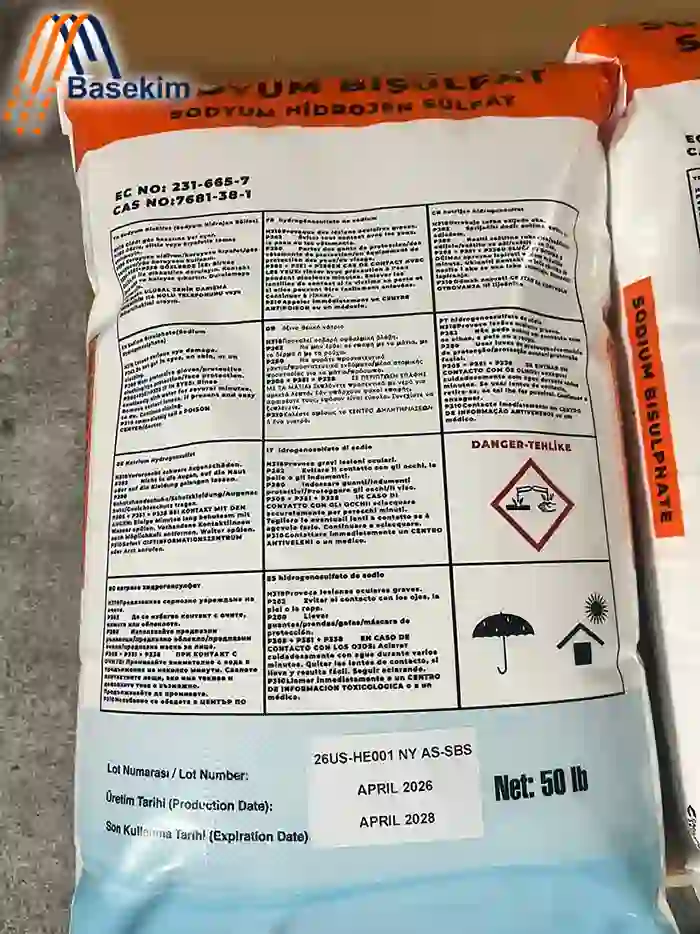
If you’ve ever worked on the ground in chemical storage, water treatment plants, or export logistics, you know that sodium bisulphate is one of those quiet workhorse materials—reliable, versatile, and always in demand. At Basekim, this product isn’t just another line item; it’s something that moves through warehouses, containers, and production lines every single day.
This guide is built from practical, hands-on experience—covering how sodium bisulphate behaves in real industrial environments, how it’s packaged and shipped, and where it actually delivers value.
What Is Sodium Bisulphate?
Sodium bisulphate (also known as sodium bisulfate) is an acidic salt with the chemical formula:
NaHSO₄
In day-to-day operations, you’ll hear it referred to by several names:
Sodium bisulphate (UK spelling)
Sodium bisulfate (US spelling)
Sodium hydrogen sulfate
Dry acid (common in pool and cleaning industries)
Many buyers searching for “sodium bisulfate common name” are usually referring to dry acid, especially in water treatment sectors.
Physical and Chemical Properties (From Real Handling Experience)
Understanding the physical behavior of sodium bisulphate is critical when you’re storing, transporting, or using it in bulk.
Appearance: White granular or crystalline powder
Odor: Odorless
Sodium bisulfate density: ~2.74 g/cm³
Sodium bisulfate melting point: ~315°C
Solubility: Highly soluble in water
pH: Strongly acidic when dissolved
In warehouse conditions, the material flows well if kept dry. However, once exposed to moisture, it tends to cake and harden—something we’ve seen often in improperly sealed pallets.
Sodium Bisulphate UN Number and Safety Classification
From a logistics and export standpoint, classification is key.
UN Number: UN 3260
Hazard Class: 8 (Corrosive substance)
Packing Group: II or III (depending on concentration and form)
If you’re shipping internationally, this classification affects:
Container documentation
Labeling requirements
Handling procedures at ports
In practice, experienced freight handlers will always double-check that pallets are correctly labeled before loading—mistakes here can delay shipments significantly.
Sodium Bisulphate Uses in Industry
1. Water Treatment (Most Common Application)
This is where sodium bisulphate really shines.
In municipal and industrial water treatment plants, it’s used to:
Lower pH levels
Neutralize alkaline water
Adjust pool chemistry
Compared to liquid acids, it’s much safer to store and transport. In facilities we’ve worked with, switching from liquid hydrochloric acid to sodium bisulphate reduced corrosion risks and simplified handling.
2. Cleaning and Surface Treatment
In industrial cleaning operations:
Removes rust and scale
Cleans metal surfaces
Prepares equipment for coating
In practice, maintenance teams prefer it because it’s easier to dose and doesn’t release aggressive fumes like stronger acids.
3. Textile and Dye Industry
In textile plants, sodium bisulphate is used to:
Adjust pH during dyeing
Improve color consistency
Neutralize alkaline residues
From experience, even small deviations in pH can affect fabric quality—this is where sodium bisulphate provides precise control.
4. Food Industry (Limited Use)
In food-grade applications (with proper certification), it can be used as:
A pH control agent
A processing aid
However, strict quality standards apply here, and sourcing must be carefully verified.
5. Detergent and Cleaning Products
Many industrial cleaning powders include sodium bisulphate as an active ingredient due to its acidic properties.
Sodium Bisulphite vs Sodium Bisulphate (Common Confusion)
A frequent mistake in procurement is confusing sodium bisulphate with sodium bisulfite.
Sodium bisulphate (NaHSO₄): Acidic salt, used for pH reduction
Sodium bisulfite (NaHSO₃): Reducing agent, used in preservation and bleaching
This difference matters. We’ve seen cases where the wrong product was ordered, leading to production delays and costly returns.
Packaging and Supply: Sodium Bisulphate 25kg Bags
At Basekim, the standard export format is:
Sodium Bisulphate 25kg bags
Heavy-duty woven polypropylene with inner liner
Palletized and shrink-wrapped
From warehouse experience:
25kg is the sweet spot—easy to handle manually but still efficient for bulk shipping
Bags stack well and remain stable during long-distance transport
For larger operations, bulk bags (jumbo bags) are also an option, but 25kg bags remain the most flexible for mixed shipments.
Storage and Handling (Real-World Advice)
This is where experience really matters.
Key Storage Tips:
Keep in a dry, well-ventilated area
Avoid exposure to humidity
Store away from strong bases and oxidizers
What Happens If You Don’t?
Moisture causes clumping and hardening
Product becomes difficult to dose
Can lead to material waste
We’ve seen entire pallets partially lost due to poor storage conditions—especially in humid port environments.
Logistics and Export Considerations
Shipping sodium bisulphate isn’t complicated, but it does require attention to detail.
Key Points:
Classified as corrosive → requires proper documentation
Must comply with IMDG and ADR regulations
Containers should be clean, dry, and sealed
From experience, the most common issues in export shipments are:
Incorrect labeling
Poor pallet wrapping
Moisture exposure during transit
Working with an experienced supplier like Basekim helps avoid these problems before they happen.
Quality Control: What Buyers Should Check
When sourcing sodium bisulphate, don’t just look at price.
Important Quality Parameters:
Purity level (typically ≥ 93–98%)
Moisture content
Particle size consistency
Free-flowing condition
In real operations, inconsistent particle size can affect dosing systems, especially in automated plants.
Why Industrial Buyers Choose Sodium Bisulphate
From a practical standpoint, sodium bisulphate is preferred because:
Easier and safer to handle than liquid acids
Cost-effective for bulk use
Stable during storage (if kept dry)
Versatile across multiple industries
It’s not the most “high-tech” chemical—but it’s one of the most reliable.
Common Challenges (And How to Avoid Them)
1. Moisture Damage
Solution: Use sealed packaging and proper storage
2. Product Confusion
Solution: Double-check chemical formula (NaHSO₄ vs NaHSO₃)
3. Shipping Delays
Solution: Ensure correct UN classification and labeling
4. Inconsistent Quality
Solution: Work with verified suppliers and request COA (Certificate of Analysis)
Final Thoughts from the Field
After years of handling, shipping, and supplying industrial chemicals, one thing is clear:
Sodium bisulphate is a dependable, no-nonsense product.
It doesn’t require complex handling systems, it performs consistently, and it fits into a wide range of industrial processes. Whether you’re managing a water treatment facility, running a textile plant, or sourcing chemicals for distribution, it’s a material you can rely on—provided you source it correctly and store it properly.
Basekim focuses on exactly that: delivering consistent quality, reliable packaging, and export-ready logistics so buyers don’t have to deal with unnecessary risks.

Contact Info
Ankara Office
No.6, Fahrettin Pasa St. (613), Ilkbahar, Cankaya – Ankara
Tel: +90 312 514 70 55
Istanbul Office
No. 219, Sogut St., No.20, T4A Block, Maslak, Sariyer – Istanbul
Tel: +90 212 807 22 33
Dubai Office
No.3509, The Burlington Tower, Business Bay, Dubai – UAE
Tel: +971 4 236 98 30