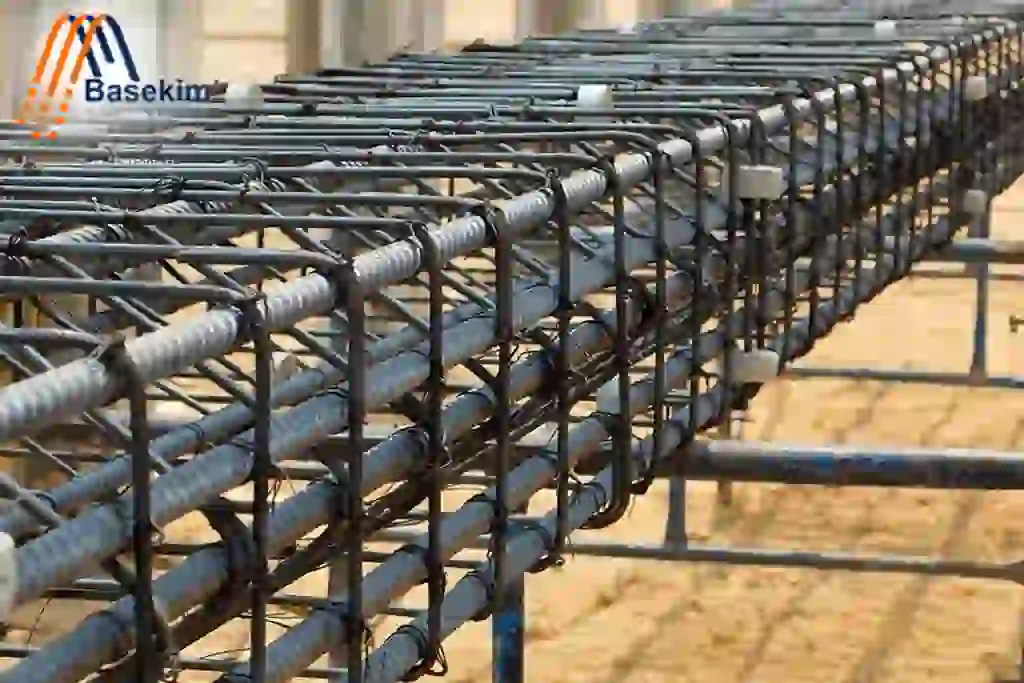
Reinforced concrete is one of the most widely used construction materials in the world. However, its durability depends heavily on the condition of the steel reinforcement inside it. Over time, exposure to moisture, oxygen, and aggressive chemicals can lead to corrosion, which weakens the structure and shortens its lifespan. That’s why understanding effective rebar corrosion protection methods is essential for engineers, contractors, and project owners who want to ensure long-term structural performance.
In this article, we explore the most reliable and widely used techniques to protect reinforcing steel from corrosion. We also highlight the importance of choosing high-quality rebar, such as those supplied by Basekim, and discuss commonly used rebar grades.
Why Rebar Corrosion Is a Serious Problem
Steel reinforcement provides tensile strength to concrete, which naturally performs well under compression but poorly under tension. When rebar corrodes, it expands. This expansion creates internal pressure within the concrete, leading to cracking, spalling, and eventual structural failure.
Corrosion typically begins when protective conditions around the steel break down. This can happen due to:
Chloride penetration (from seawater or de-icing salts)
Carbonation of concrete
Poor construction practices
Inadequate concrete cover
Once corrosion starts, it accelerates rapidly if left untreated. Therefore, preventive action is far more effective and cost-efficient than repair.
Key Factors That Influence Corrosion
Before diving into protection techniques, it’s important to understand what causes corrosion in rebar:
Moisture presence: Water acts as an electrolyte, enabling corrosion reactions.
Oxygen availability: Oxygen fuels the oxidation process.
Chlorides: These break down the passive layer protecting steel.
Concrete quality: Low-density or cracked concrete allows harmful agents to penetrate.
Effective rebar corrosion protection methods address these factors directly.
Top Rebar Corrosion Protection Methods
1. Epoxy-Coated Rebar
Epoxy coating is one of the most commonly used protection methods. It involves applying a thin layer of epoxy to the surface of the rebar, creating a barrier against moisture and chlorides.
Benefits:
Excellent resistance to chloride penetration
Cost-effective for many projects
Widely available and easy to install
Considerations:
Coating must remain intact; damage during handling reduces effectiveness
Requires careful quality control during installation
2. Galvanized Rebar
Galvanization involves coating steel with a layer of zinc. This zinc layer acts as a sacrificial anode, protecting the underlying steel from corrosion.
Benefits:
Long-lasting protection
Better performance in harsh environments compared to epoxy
Self-healing properties for minor scratches
Considerations:
Higher initial cost than epoxy-coated rebar
Requires proper handling to maintain coating integrity
3. Stainless Steel Rebar
Stainless steel rebar offers superior corrosion resistance due to its alloy composition, which includes chromium.
Benefits:
Extremely durable in aggressive environments
Minimal maintenance required
Long service life
Considerations:
High upfront cost
Typically used in critical structures such as bridges or marine environments
4. Cathodic Protection Systems
Cathodic protection works by reversing the electrochemical process that causes corrosion. It can be applied using sacrificial anodes or impressed current systems.
Benefits:
Highly effective for existing structures
Extends service life significantly
Suitable for severe exposure conditions
Considerations:
Requires ongoing monitoring and maintenance
Installation can be complex
5. Corrosion Inhibitors
Corrosion inhibitors are chemicals added to concrete during mixing. They slow down or prevent the corrosion process.
Benefits:
Easy to apply during construction
Cost-effective preventive measure
Works well in combination with other methods
Considerations:
Effectiveness depends on proper dosage
Not a standalone solution in highly aggressive environments
6. High-Quality Concrete and Proper Mix Design
One of the most overlooked but critical rebar corrosion protection methods is using high-quality concrete. Dense, low-permeability concrete prevents harmful substances from reaching the steel.
Best practices include:
Low water-cement ratio
Proper curing
Adequate compaction
Use of supplementary cementitious materials like fly ash or silica fume
7. Adequate Concrete Cover
Concrete cover refers to the thickness of concrete between the surface and the rebar. A thicker cover provides better protection.
Benefits:
Reduces exposure to moisture and chlorides
Improves durability
Simple and cost-effective
Considerations:
Must follow design standards
Too much cover can affect structural performance
8. Use of Sealers and Surface Coatings
Applying sealers or coatings to the concrete surface helps block the entry of water and harmful chemicals.
Benefits:
Extends lifespan of concrete structures
Reduces maintenance costs
Easy to apply on existing structures
9. Fiber Reinforcement and Crack Control
Cracks allow water and chemicals to reach rebar quickly. Fiber reinforcement helps reduce cracking and improves durability.
Benefits:
Enhances structural integrity
Reduces shrinkage cracks
Works well alongside traditional rebar
Importance of High-Quality Rebar Supply
Choosing reliable rebar is just as important as selecting the right protection method. Poor-quality steel corrodes faster and compromises structural integrity.
Basekim is a trusted supplier of rebar, offering high-quality products that meet international standards. Using premium rebar ensures better performance and compatibility with various corrosion protection techniques.
Best Practices for Long-Term Rebar Protection
To maximize the effectiveness of rebar corrosion protection methods, follow these best practices:
Use high-quality materials from trusted suppliers like Basekim
Combine multiple protection methods for better results
Ensure proper design and construction practices
Conduct regular inspections and maintenance
Address cracks and damage immediately
Future Trends in Rebar Protection
The construction industry continues to evolve, introducing innovative solutions to combat corrosion. Some emerging trends include:
Smart coatings with self-healing properties
Advanced corrosion monitoring systems
Use of composite and non-metallic reinforcement
Environmentally friendly inhibitors
These advancements promise longer-lasting structures with reduced maintenance costs.
Conclusion of Rebar Protection
Corrosion is one of the biggest threats to reinforced concrete structures, but it can be effectively managed with the right approach. By understanding and applying proven rebar corrosion protection methods, construction professionals can significantly extend the lifespan of their projects.
From epoxy coatings and galvanization to high-quality concrete and cathodic protection, each method plays a crucial role. Combining these techniques with premium materials such as rebar supplied by Basekim and selecting appropriate grades ensures optimal performance and durability.
Investing in corrosion protection is not just about preventing damage; it’s about building safer, stronger, and longer-lasting structures for the future.