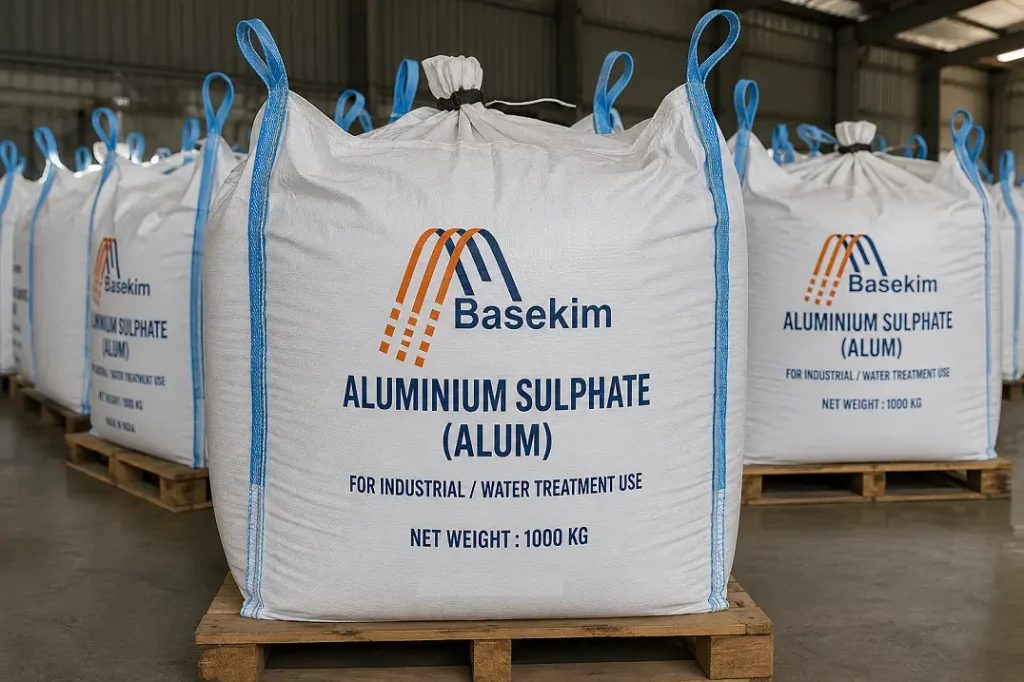
Aluminium sulphate Alum is one of the most widely used industrial coagulants in water treatment, paper manufacturing, and textile processing industries worldwide. However, many buyers, importers, and procurement teams still search for the product using the term “alum.” As a result, understanding the relationship between these two terms helps industrial buyers source the correct material faster and avoid specification errors.
In commercial and industrial markets, the term Aluminium Sulphate Alum usually refers to aluminium sulphate used in water treatment, paper production, textile processing, and wastewater clarification. Although “alum” can describe several sulphate salts in chemistry, industrial suppliers and buyers commonly use it as a simplified trade name for aluminium sulphate.
Featured Snippet Answer
Aluminium sulphate and alum often refer to the same industrial chemical in commercial trade. In water treatment, paper manufacturing, and textile industries, buyers frequently use the word “alum” when they actually mean aluminium sulphate. Nevertheless, technical specifications, purity, and form still vary between suppliers and applications.
What Is Aluminium Sulphate Alum?
Aluminium Sulphate Alum is an inorganic chemical compound commonly supplied as white flakes, granules, or powder. Manufacturers mainly produce it by reacting aluminium hydroxide or bauxite with sulfuric acid.
Industrially, the product serves as an effective coagulant and flocculant. Therefore, it plays a critical role in removing suspended particles from water systems.
The chemical formula is:
Al₂(SO₄)₃
Meanwhile, suppliers offer the product in both liquid and solid forms depending on the application requirements.
Why Do Buyers Call Aluminium Sulphate “Alum”?
The word “alum” originally described a group of double sulphate salts. However, industrial markets gradually adopted the term as a shorter commercial name for aluminium sulphate.
Consequently, many procurement managers search online using keywords such as:
- Alum supplier
- Industrial alum
- Water treatment alum
- Alum chemical
In most B2B situations, these searches actually target aluminium sulphate products.
Nevertheless, buyers should still verify technical specifications carefully. Some laboratory-grade alum products differ significantly from industrial-grade aluminium sulphate.
Industrial Applications of Aluminium Sulphate Alum
Industrial demand for Aluminium Sulphate Alum continues to grow across several sectors. Moreover, the product offers cost-effective performance in large-scale operations.
Water Treatment Plants
Municipal and industrial water treatment facilities use aluminium sulphate to remove turbidity and suspended solids. Accordingly, the chemical improves clarification efficiency and supports cleaner water output.
Additionally, wastewater treatment operators use the product for phosphate removal and sludge conditioning.
Paper Manufacturing
Paper mills use aluminium sulphate during paper sizing processes. As a result, manufacturers improve ink absorption and paper quality.
Furthermore, the product helps stabilize pulp chemistry during production.
Textile Industry
Textile manufacturers apply aluminium sulphate in dyeing and printing operations. Specifically, the chemical acts as a mordant that improves dye fixation on fabrics.
Consequently, producers achieve more consistent coloration and better process stability.
Construction and Cement
Some construction sectors use aluminium sulphate as a setting accelerator in cement applications. Meanwhile, refractory and specialty material producers also use the product in selected formulations.
Key Purchasing Considerations for B2B Buyers
Industrial buyers should evaluate several factors before sourcing Aluminium Sulphate Alum products.
First, buyers should confirm the aluminium oxide content. Higher purity grades often provide better treatment efficiency.
Second, moisture levels matter significantly for storage and handling. Low-moisture products generally improve shelf stability.
Third, packaging options affect logistics costs and operational efficiency.
Common industrial packaging includes:
- 25 kg PP bags
- 50 kg bags
- 1 MT jumbo bags
- Bulk liquid tankers
In addition, export buyers should request technical documentation before shipment.
Important documents typically include:
- Technical Data Sheet (TDS)
- Material Safety Data Sheet (MSDS/SDS)
- Certificate of Analysis (COA)
- Packing List
- Certificate of Origin
Aluminium Sulphate Alum in Global Export Markets
Global demand for aluminium sulphate remains strong, particularly in developing infrastructure and water treatment projects.
Countries in Africa, the Middle East, and Asia import large quantities for municipal treatment plants and industrial operations. Therefore, reliable export logistics become essential for international buyers.
Most exporters ship the product in containers using moisture-protected packaging. Furthermore, suppliers often palletize jumbo bags for safer handling during international transport.
Buyers should also verify:
- Product form (powder, granular, flake)
- Loading capacity per container
- HS code compliance
- Lead times
- Port availability
Accordingly, experienced exporters can reduce customs delays and handling risks.
How to Choose the Right Aluminium Sulphate Supplier
Selecting the correct supplier directly affects product consistency and operational reliability.
Professional buyers usually evaluate suppliers based on:
- Manufacturing capability
- Export experience
- Technical support
- Stable quality control
- Documentation availability
- Flexible packaging options
Moreover, responsive communication helps buyers manage urgent shipments and specification approvals more efficiently.
By comparison, inexperienced traders often struggle with documentation accuracy and shipment coordination.
Conclusion
Although the word “alum” has broader chemical meanings, industrial markets commonly use it to describe aluminium sulphate. Therefore, buyers searching for alum usually require industrial-grade aluminium sulphate for water treatment, paper manufacturing, textile processing, or related applications.
Understanding this terminology helps procurement teams source the correct material faster. Moreover, proper specification review reduces purchasing risks and improves operational performance.
Bulk Supply & Export Inquiry
Basekim supplies Aluminium Sulphate Alum for industrial and commercial applications worldwide. We support bulk export orders with flexible packaging solutions, technical documentation, and international logistics coordination.
Our supply options include:
- Industrial-grade aluminium sulphate
- Bulk export availability
- Jumbo bag and standard bag packaging
- Technical documents (TDS, MSDS, COA)
- Worldwide shipment support
- Fast quotation response
For pricing, technical specifications, or export inquiries, contact Basekim today.