- About Us
- Contact Us
- English


Refined Naphthalene Supplier – Pure, Technical & Crude Grades
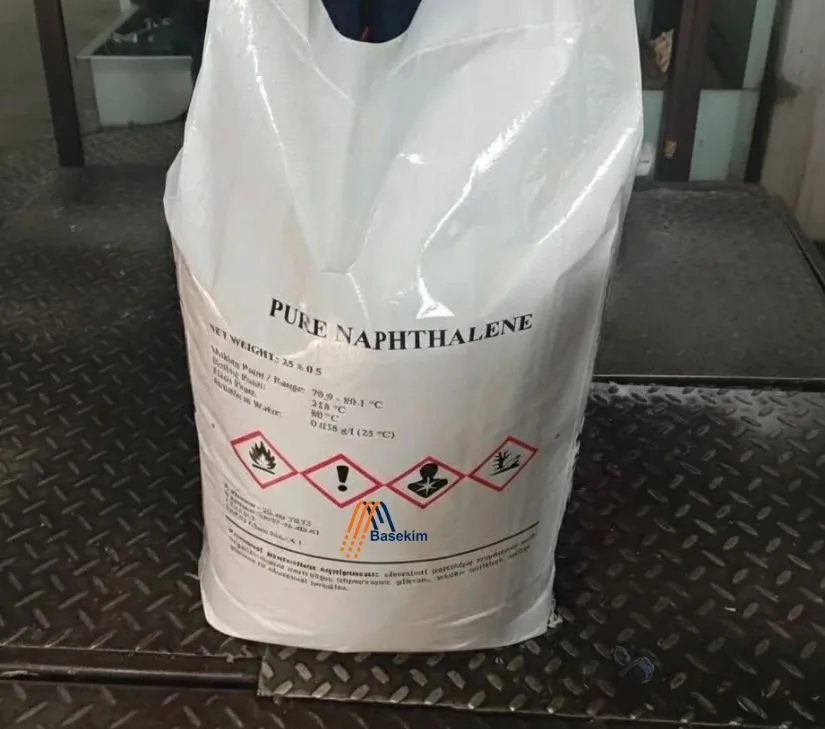
Naphthalene is an important aromatic hydrocarbon and industrial chemical raw material used in the production of Phthalic Anhydride, Naphthalene Sulfonates, SNF concrete superplasticizers, dyes, pigments, dispersing agents and various specialty chemical intermediates.
Its chemical formula is C10H8, and commercially it is available in different purity levels depending on the intended industrial application.
We supply and export Naphthalene in three main grades:
- Pure Grade Refined Naphthalene – 99.5% Min.
- Technical Grade Naphthalene – 97% Min.
- Crude Naphthalene – 95% Min.
Our Naphthalene is available through our Turkey and UAE supply channels, allowing us to serve manufacturers, distributors and industrial buyers across different regional and international markets.
CAS No.: 91-20-3
Molecular Formula: C10H8
Available Grades: 99.5%, 97%, 95%
Supply Locations: Turkey & UAE
COA & SDS: Available
UN Number: UN 1334
What Is Naphthalene?
Naphthalene is a polycyclic aromatic hydrocarbon composed of two fused benzene rings.
At normal ambient temperature, it is generally a crystalline solid with a characteristic aromatic odor and a melting point close to 80°C.
Commercial Naphthalene is commonly recovered during the processing and distillation of coal tar, although petroleum-derived Naphthalene is also available.
Crude Naphthalene contains Naphthalene together with other aromatic compounds and impurities. Through further refining and purification, the concentration of Naphthalene increases while impurity levels are reduced.
This produces different commercial grades suitable for different manufacturing processes.
For industrial buyers, the important parameters are not limited to purity alone. Depending on the application, manufacturers may also evaluate:
- Crystallization Point
- Thionaphthene Content
- Appearance
- Color
- Impurity Profile
- Physical Form
For this reason, selecting the correct Naphthalene grade should always be based on the actual production process and required technical specification.
We can provide the relevant COA for technical review before order confirmation, allowing customers to compare our available grades with their production requirements.
Refined Naphthalene vs Technical and Crude Naphthalene
Commercial Naphthalene can broadly be divided into Refined, Technical and Crude grades.
The main difference between these grades is the level of purification and the concentration of Naphthalene.
Refined Naphthalene
Refined or Pure Grade Naphthalene has the highest purity and the tightest impurity specifications.
It is generally selected for applications where consistent chemical quality and high Naphthalene concentration are important.
Our Pure Grade is available at:
Naphthalene Purity: Min. 99.5%
Technical Naphthalene
Technical Grade contains a slightly lower Naphthalene concentration and is suitable for many general industrial chemical processes.
It offers a practical balance between feedstock quality and commercial cost.
Our Technical Grade is available at:
Naphthalene Purity: Min. 97%
Crude Naphthalene
Crude Naphthalene contains more accompanying aromatic compounds and is mainly used where additional processing, refining or chemical conversion will take place.
Our Crude Grade is available at:
Naphthalene Purity: Min. 95%
Main Industrial Uses of Naphthalene
The primary commercial value of Naphthalene is as a chemical feedstock.
In most industrial applications, Naphthalene is chemically converted into another intermediate before becoming part of a finished product.
The main downstream industries include construction chemicals, resin manufacturing, dyes, pigments, textile chemicals and specialty chemicals.
Naphthalene for Phthalic Anhydride Production
One of the most established industrial applications of Naphthalene is the production of Phthalic Anhydride, commonly abbreviated as PA.
Naphthalene can be oxidized in an industrial process to produce Phthalic Anhydride.
The downstream production chain can be represented as:
Naphthalene → Phthalic Anhydride → Resins / Plasticizers / Coatings / Chemical Intermediates
Phthalic Anhydride is used in the manufacture of:
- Alkyd Resins
- Unsaturated Polyester Resins
- Plasticizer Intermediates
- Coating Raw Materials
- Dyes and Pigments
- Specialty Chemical Derivatives
For this type of production, feedstock purity and crystallization point can be important parameters.
For customers requiring high-purity material, we offer Pure Grade Refined Naphthalene 99.5% Min., with COA available for technical evaluation.
Naphthalene for SNF and Concrete Admixtures
Naphthalene is also a key raw material used in the production of Sulfonated Naphthalene Formaldehyde.
This material is commonly known as:
- SNF
- NSF
- PNS
- Polynaphthalene Sulfonate
- Naphthalene-Based Superplasticizer
The general production route involves the sulfonation of Naphthalene followed by further reaction and condensation.
A simplified process is:
Naphthalene → Naphthalene Sulfonic Acid → SNF / PNS → Concrete Admixture
SNF is widely used as a concrete superplasticizer and high-range water-reducing agent.
It helps improve the dispersion of cement particles, allowing better concrete workability while controlling water demand.
Typical downstream applications include:
- Ready-Mix Concrete
- Precast Concrete
- High-Strength Concrete
- Concrete Admixtures
- Construction Chemicals
- Cement Formulations
Manufacturers of SNF, PNS and concrete admixtures therefore represent an important customer segment for Naphthalene.
Depending on the customer’s formulation, Technical Grade 97% or higher-purity Refined Naphthalene may be evaluated.
We supply both grades for industrial customers requiring bulk material for Naphthalene sulfonation and downstream chemical production.
Naphthalene for Dyes and Pigments
Naphthalene is an important starting material in organic chemical synthesis and can be converted into various intermediates used in dye and pigment manufacturing.
Naphthalene derivatives can be involved in the production of:
- Azo Dyes
- Textile Dyes
- Pigment Intermediates
- Naphthols
- Naphthalene Sulfonic Acids
- Aminonaphthalene Derivatives
- Specialty Color Chemicals
In these production processes, the quality of the feedstock can affect downstream reaction consistency and final product quality.
For this reason, manufacturers of dye intermediates may require higher-purity grades with controlled impurity levels.
Our Pure Grade 99.5% is available for customers requiring tighter specifications, while Technical Grade may also be suitable depending on the production route.
Naphthalene for Textile Chemicals
Naphthalene also serves as an upstream raw material for the production of certain textile auxiliaries and dispersing agents.
Naphthalene itself is generally not used directly in textile products.
Instead, it is chemically converted into derivatives that can be used in:
- Dye Dispersants
- Textile Auxiliaries
- Wetting Systems
- Pigment Dispersion
- Textile Processing Chemicals
Manufacturers involved in Naphthalene sulfonation and textile chemical production can source suitable Technical or Refined grades according to their required specification.
Naphthalene for Industrial Dispersants
Sulfonated Naphthalene derivatives are widely valued for their dispersing properties.
They can help maintain particles in suspension and improve dispersion in liquid systems.
Typical applications include:
- Industrial Dispersants
- Pigment Dispersants
- Concrete Admixture Dispersants
- Textile Dispersants
- Specialty Chemical Formulations
This makes Naphthalene an important feedstock for chemical manufacturers producing Naphthalene-based dispersing agents.
Naphthalene for Resins and Coatings
Naphthalene also plays an indirect role in resin and coating manufacturing.
A major example is its conversion into Phthalic Anhydride, which can then be used to manufacture different resin systems.
The value chain may include:
Naphthalene → Phthalic Anhydride → Resin → Coating / Paint / Industrial Formulation
This is why Naphthalene is considered an important upstream raw material for various resin and coating related chemical processes.
Our Naphthalene Grades
We supply three main grades to meet different industrial requirements.
Pure Grade Refined Naphthalene – 99.5% Min.
Pure Grade is our highest-purity Naphthalene option.
It is intended for customers requiring a high Naphthalene concentration, high crystallization point and controlled impurity levels.
Specifications
| Parameter | Specification |
|---|---|
| Purity | Min. 99.5% |
| Appearance | Snow-White Crystals / Powder / Liquid |
| Density at 25°C | 1.14 g/cm³ |
| Crystallization Point | 79.9–80.1°C |
| Thionaphthene | Max. 0.35% |
| Flash Point | Approx. 80°C |
Typical Applications
- Phthalic Anhydride Production
- High-Purity Organic Synthesis
- Dye Intermediates
- Naphthalene Derivatives
- Specialty Chemicals
- Processes Requiring Controlled Impurities
Pure Grade can be supplied for bulk industrial orders from our Turkey and UAE supply channels.
Technical Grade Naphthalene – 97% Min.
Technical Grade is suitable for industrial processes where 99.5% purity is not essential.
It can provide a more economical raw-material option for chemical conversion and sulfonation processes.
Specifications
| Parameter | Specification |
|---|---|
| Purity | Min. 97% |
| Appearance | White Crystals / Powder / Liquid |
| Density at 25°C | 1.14 g/cm³ |
| Crystallization Point | 78.4–78.9°C |
| Thionaphthene | Max. 1.8% |
| Flash Point | Approx. 80°C |
Typical Applications
- SNF Production
- PNS Production
- Naphthalene Sulfonation
- Concrete Admixture Intermediates
- Industrial Dispersants
- Textile Chemical Intermediates
- Dye Intermediates
- General Chemical Processing
Technical Grade is available for manufacturers, distributors and industrial buyers requiring bulk supply.
Crude Naphthalene – 95% Min.
Crude Naphthalene is suitable for industrial processes where the material will undergo further refining, purification or chemical conversion.
Specifications
| Parameter | Specification |
|---|---|
| Purity | Min. 95% |
| Appearance | White to Yellow Crystals / Powder / Liquid |
| Density at 25°C | 1.14 g/cm³ |
| Crystallization Point | 77–78.9°C |
Typical Applications
- Further Refining
- Bulk Chemical Processing
- Sulfonation
- Chemical Conversion
- Industrial Intermediate Production
Our Crude Grade can be supplied according to required quantity, destination and commercial terms.
Naphthalene Grade Comparison
| Parameter | Pure Grade | Technical Grade | Crude Grade |
|---|---|---|---|
| Purity | Min. 99.5% | Min. 97% | Min. 95% |
| Crystallization Point | 79.9–80.1°C | 78.4–78.9°C | 77–78.9°C |
| Thionaphthene | Max. 0.35% | Max. 1.8% | Grade Dependent |
| Appearance | Snow White | White | White to Yellow |
| Main Use | High-Spec Processing | General Industrial Processing | Further Processing |
Customers can share their required specification with our sales team, and the most suitable available grade can be offered accordingly.
Naphthalene Technical Information
| Property | Information |
|---|---|
| Chemical Name | Naphthalene |
| CAS Number | 91-20-3 |
| Molecular Formula | C10H8 |
| Molecular Weight | 128.17 g/mol |
| Chemical Family | Polycyclic Aromatic Hydrocarbon |
| Physical Form | Crystals / Powder / Solid / Molten |
| Melting Region | Approx. 80°C |
| Available Grades | 99.5%, 97%, 95% |
| Solid UN Number | UN 1334 |
| Molten UN Number | UN 2304 |
| Hazard Class | 4.1 |
| Packing Group | III |
Naphthalene HS Code
The customs classification of Naphthalene can depend on its purity, origin, composition and crystallization point.
Common classifications associated with commercial Naphthalene include:
HS 2707.40 – Naphthalene
and, for certain higher-purity chemically defined products:
HS 2902.90 – Other Cyclic Hydrocarbons
The crystallization point can be an important factor in determining the appropriate classification in certain customs systems.
As a general indication:
| Grade | Crystallization Point | Possible Classification |
|---|---|---|
| Pure 99.5% | 79.9–80.1°C | HS 2902.90 may apply |
| Technical 97% | 78.4–78.9°C | HS 2707.40 may apply |
| Crude 95% | 77–78.9°C | HS 2707.40 may apply |
For export orders, the final HS Code should be confirmed according to the actual product specification and destination-country customs regulations.
Naphthalene Dangerous Goods and IMO Classification
Naphthalene is regulated as Dangerous Goods for international transportation.
For solid material:
UN Number: UN 1334
Proper Shipping Name: NAPHTHALENE, REFINED / NAPHTHALENE, CRUDE
Hazard Class: 4.1
Packing Group: III
Naphthalene is regulated under applicable:
- ADR
- RID
- IMDG
- IATA
For molten Naphthalene:
UN 2304 – NAPHTHALENE, MOLTEN
When we prepare export offers involving ocean freight, the shipment is therefore evaluated as DG / IMO cargo, subject to shipping-line and port acceptance.
This is important because DG freight, documentation and carrier approval can affect the final logistics cost.
Naphthalene Packing and Export Shipment
Naphthalene can be supplied in industrial packing suitable for domestic and export orders.
A common option for solid material is:
25 kg bags
Palletized packing may also be arranged depending on customer requirements.
The exact loading quantity depends on:
- Product Grade
- Packing
- Pallet Configuration
- Container Payload
- DG Requirements
- Shipping Line
- Destination Port
Our sales team can prepare a suitable packing and logistics option according to the requested destination and order quantity.
Naphthalene Export Documents
For international shipments, the following documents can be provided or arranged as applicable:
- Certificate of Analysis – COA
- Safety Data Sheet – SDS
- Commercial Invoice
- Packing List
- Certificate of Origin
- Dangerous Goods Documentation
- Transport Documents
- Destination-Specific Documents When Required
Technical documents can be shared before order confirmation for customer approval.
Refined Naphthalene Supplier in Turkey
We supply Pure, Technical and Crude Naphthalene from Turkey for domestic consumption and export.
Our Turkey supply is suitable for industrial manufacturers, chemical distributors and traders looking for:
- Refined Naphthalene Turkey
- Naphthalene Supplier Turkey
- Naphthalene 99.5% Turkey
- Technical Naphthalene Turkey
- Crude Naphthalene Turkey
- Bulk Naphthalene Turkey
Orders can be offered according to required quantity, grade, packing, destination and Incoterm.
Refined Naphthalene Supplier in UAE
We also supply Naphthalene through our UAE supply channel, serving customers in the GCC, Middle East, Africa and international markets.
Our UAE supply is suitable for buyers searching for:
- Naphthalene Supplier UAE
- Refined Naphthalene UAE
- Naphthalene Supplier Dubai
- Refined Naphthalene Dubai
- Bulk Naphthalene UAE
- Naphthalene Exporter Middle East
Availability depends on grade, quantity and current stock.
Who We Supply
We work with industrial buyers that use Naphthalene either as a production raw material or for further distribution.
Typical customers include:
- Phthalic Anhydride Manufacturers
- SNF / PNS Manufacturers
- Concrete Admixture Producers
- Construction Chemical Companies
- Dye Manufacturers
- Pigment Manufacturers
- Dye Intermediate Producers
- Textile Chemical Manufacturers
- Industrial Dispersant Producers
- Specialty Chemical Manufacturers
- Chemical Distributors
- Bulk Chemical Traders
Refined Naphthalene Price
Naphthalene prices depend on several factors, including:
- Grade
- Purity
- Order Quantity
- Packing
- Stock Location
- Destination
- Incoterm
- DG Freight
- Current Market Conditions
We can quote Pure Grade 99.5%, Technical Grade 97% or Crude Grade 95% according to the customer’s requirement.
Q1:What is Refined Naphthalene?
Refined Naphthalene is purified Naphthalene with reduced impurity levels and higher Naphthalene concentration compared with crude material. It is used primarily as an industrial chemical feedstock.
Q2:What is Naphthalene used for?
Naphthalene is used mainly as a raw material for the production of Phthalic Anhydride, Naphthalene sulfonates, SNF concrete admixtures, dye intermediates, dispersing agents and various specialty chemicals.
Q3:Is Naphthalene IMO cargo?
Yes. Solid Naphthalene is regulated as Dangerous Goods under the IMDG Code and is classified as Class 4.1, Packing Group III.
Q4:What is the HS Code for Naphthalene?
Depending on the exact specification, Naphthalene may be classified under HS 2707.40 or, for certain higher-purity chemically defined material, under HS 2902.90. Final classification should be confirmed according to the actual product specification and destination-country customs regulations.
Q5:What is the difference between Refined and Crude Naphthalene?
Refined Naphthalene has higher purity and tighter impurity specifications. Crude Naphthalene contains more accompanying compounds and is generally more suitable for further refining or industrial processes capable of accepting lower-purity feedstock.

Contact Info
Ankara Office
No.6, Fahrettin Pasa St. (613), Ilkbahar, Cankaya – Ankara
Tel: +90 312 514 70 55
Istanbul Office
No. 219, Sogut St., No.20, T4A Block, Maslak, Sariyer – Istanbul
Tel: +90 212 807 22 33
Dubai Office
No.3509, The Burlington Tower, Business Bay, Dubai – UAE
Tel: +971 4 236 98 30