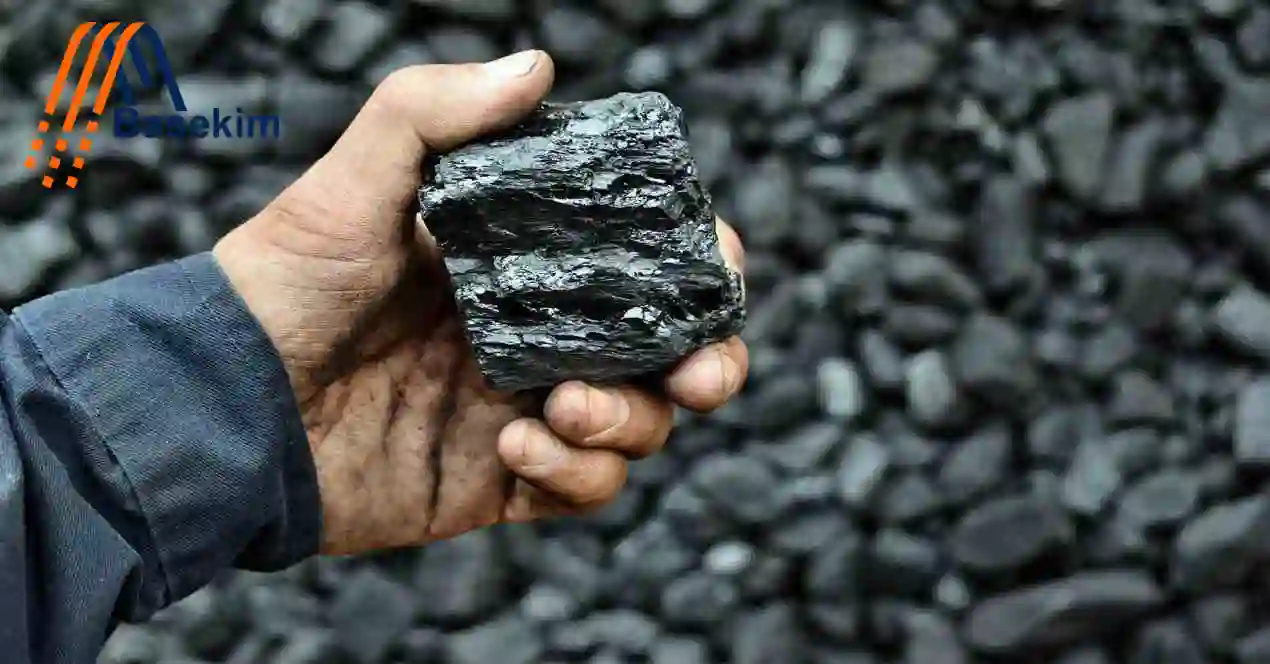
The density of gilsonite refers to the mass per unit volume of natural asphaltite and is one of the most practical indicators of how gilsonite will behave in drilling fluids, asphalt modification, foundry additives, and chemical blends. In real operations, density affects mixing efficiency, solids loading, settling behavior, and final product consistency. Engineers, procurement teams, and formulators rely on the density of gilsonite to select the correct grade for pumping systems, blending ratios, and performance targets. If you choose the wrong density range, you don’t just lose performance—you create handling problems, unstable formulations, and higher operating costs.
Understanding the Density of Gilsonite Beyond the Datasheet
In practice, the density of gilsonite is not just a number printed on a technical sheet. It reflects the mineral purity, ash content, carbon structure, and degree of natural polymerization of the material.
From real handling experience, gilsonite typically shows a true density range around 1.04–1.12 g/cm³, but this value shifts depending on particle size, processing method, and grade selection. Milled gilsonite behaves differently from lump material, even when the chemical composition is similar. Buyers who ignore this difference often face inconsistent dispersion during mixing.
In industrial plants, density directly impacts:
Solids suspension stability
Feed rate calibration
Bulk density vs. true density discrepancies
Storage and silo flow behavior
This is why experienced buyers always ask about testing methods, not just nominal values.
Why the Density of Gilsonite Matters in Drilling Fluids
In oil and gas drilling, the density of gilsonite plays a critical role in fluid rheology and loss control performance. Gilsonite is used to seal microfractures and reduce fluid loss, but its effectiveness depends heavily on how well it disperses.
If the density of gilsonite is too inconsistent:
Particles settle prematurely in the mud system
Pump wear increases due to uneven solids distribution
Filtration control becomes unpredictable
Field engineers prefer grades with stable density because it ensures predictable blending with barite, bentonite, and polymers. A consistent density of gilsonite allows mud engineers to fine-tune formulations without constant adjustment.
Density of Gilsonite in Asphalt and Bitumen Modification
In asphalt applications, the density of gilsonite directly affects blend homogeneity and thermal stability. Gilsonite is added to bitumen to improve softening point, rutting resistance, and durability.
From plant-level experience:
Higher density gilsonite improves stiffness without excessive brittleness
Lower apparent density can indicate trapped volatiles or higher porosity
Inconsistent density leads to uneven melting and poor dispersion
When modifying paving-grade bitumen, density alignment between gilsonite and base bitumen reduces separation risk during storage and transport.
Bulk Density vs. True Density: A Common Buyer Mistake
One of the most frequent mistakes buyers make is confusing bulk density with the density of gilsonite itself.
Bulk density is influenced by:
Particle size distribution
Packaging method
Compaction during transport
True density, on the other hand, reflects the actual material composition. Two gilsonite grades may show identical bulk density in bags but perform very differently once introduced into a system.
Experienced procurement managers always request:
Particle size analysis
True density test method (ASTM or equivalent)
Ash and moisture correlation
Ignoring this step often leads to inconsistent production results.
How Particle Size Influences the Density of Gilsonite
The density of gilsonite becomes especially important when working with micronized or powdered grades. Finer particles increase surface area, which affects apparent density and flow behavior.
In real blending operations:
Fine gilsonite disperses faster but may bridge in hoppers
Coarser gilsonite flows better but needs longer mixing time
Density variation affects dosing accuracy in automated systems
This is why ATDM works with buyers to match density, particle size, and application method—not just supply material.
Storage, Handling, and Shipping Considerations
From a logistics perspective, the density of gilsonite affects container loading, pallet stability, and moisture sensitivity. Higher-density material generally shows better resistance to segregation during long-distance transport.
Practical handling insights include:
Avoid excessive vibration during transport to prevent particle separation
Use lined bags for fine grades to control moisture absorption
Store in dry conditions to maintain density consistency
Buyers who overlook these factors often receive material that tests differently from the original COA—not because of quality issues, but due to poor handling.
Choosing the Right Density of Gilsonite for Your Operation
Selecting the correct density of gilsonite is not about choosing the highest or lowest value—it’s about matching the material to your process.
Ask these questions before ordering:
Is the gilsonite used as a structural modifier or filler?
Will it be blended hot or cold?
Is pumping, gravity feeding, or manual dosing involved?
In drilling, moderate density with controlled particle size is preferred. In asphalt, slightly higher density improves thermal performance and in foundry and chemical uses, density consistency matters more than the absolute value.
Quality Control and Supplier Reliability
Consistency in the density of gilsonite is a direct indicator of supplier reliability. Natural gilsonite varies by mine and seam, and only controlled sourcing and processing can stabilize density across shipments.
Experienced buyers look for:
Batch-to-batch density tracking
Transparent testing methods
Clear tolerance ranges, not single-point values
A reliable supplier understands that density variation, even within specification, can impact real-world performance.
Common Questions Buyers Ask About Density of Gilsonite
Does higher density mean better quality?
Not always. Density must align with application needs. Excessively high density may indicate mineral contamination.
Can density change during storage?
Yes. Moisture absorption and compaction can alter apparent density if storage conditions are poor.
Is density linked to softening point?
Indirectly. Both reflect molecular structure, but they are not interchangeable indicators.
Should density be tested per shipment?
For sensitive applications, yes. Especially when consistency matters.
Final Practical Insight
In real industry use, the density of gilsonite is not a theoretical value—it’s a working parameter that affects performance, handling, and cost efficiency. Engineers rely on it to design stable systems. Buyers use it to avoid operational surprises. Quality managers track it to ensure consistency.
When evaluated correctly and supplied consistently, the density of gilsonite becomes a reliable tool—not a risk factor—in industrial operations.