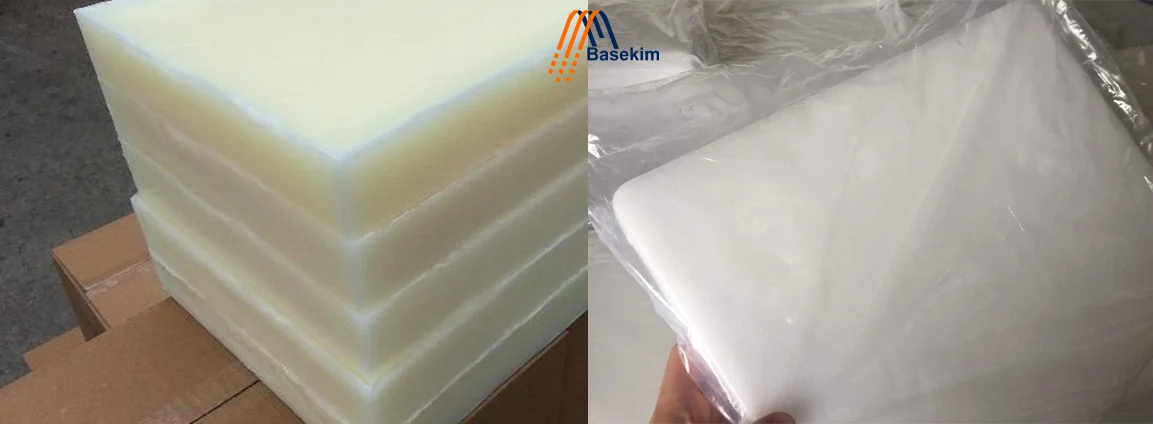
The debate around Microcrystalline Wax vs Paraffin Wax continues across multiple industries because both materials offer unique advantages for manufacturing, packaging, cosmetics, candles, rubber processing, and industrial formulations. Although many buyers search for the best petroleum wax solution, selecting the right option depends on performance, flexibility, melting behavior, oil content, and end-use requirements.
Today, manufacturers want waxes that improve durability, enhance texture, increase moisture resistance, and support cost-effective production. Therefore, understanding the full comparison between these two petroleum-derived waxes becomes essential for industrial buyers and formulators.
In this guide, you will discover detailed comparison data, performance characteristics, industrial uses, advantages, disadvantages, and purchasing considerations. In addition, you will learn why Basekim remains a reliable supplier of both microcrystalline wax and paraffin wax worldwide.
Key Differences Between Microcrystalline Wax and Paraffin Wax
Although both waxes originate from petroleum refining, they perform very differently in industrial environments. Their molecular structure, crystal size, flexibility, and oil content directly affect production quality and application performance.
Here is a quick comparison overview:
| Feature | Microcrystalline Wax | Paraffin Wax |
|---|---|---|
| Crystal Structure | Fine and dense | Large crystal structure |
| Flexibility | Highly flexible | More brittle |
| Adhesion | Strong adhesion | Moderate adhesion |
| Oil Content | Higher | Lower |
| Melting Point | Higher range | Lower range |
| Texture | Sticky and smooth | Dry and hard |
| Waterproofing | Excellent | Good |
| Elasticity | Superior | Limited |
| Gloss Finish | Moderate | High gloss |
| Cost | Higher | More economical |
As a result, manufacturers often choose microcrystalline wax for premium industrial applications, while paraffin wax remains popular for large-scale cost-sensitive production.
Chemical Structure Comparison of Microcrystalline Wax vs Paraffin Wax
The internal molecular arrangement significantly affects wax performance. Therefore, industrial buyers carefully evaluate structural properties before selecting a material.
Crystal Formation and Molecular Pattern
Microcrystalline wax contains branched and saturated hydrocarbons with extremely small crystal formations. Consequently, it creates a denser and more flexible structure.
On the other hand, paraffin wax contains straight-chain hydrocarbons with larger crystal formations. Because of this arrangement, paraffin wax becomes harder and less elastic.
This structural difference affects:
Surface smoothness
Flexibility
Barrier properties
Adhesion
Durability
Blend compatibility
Furthermore, smaller crystals improve binding capability in adhesive and cosmetic formulations.
Oil Retention Capacity
Another major difference in the Microcrystalline Wax vs Paraffin Wax comparison involves oil retention.
Microcrystalline wax holds oil more effectively because of its dense molecular network. Therefore, manufacturers prefer it for:
Cosmetic creams
Ointments
Protective coatings
Electrical insulation
Adhesive products
In contrast, paraffin wax contains lower oil retention properties, making it suitable for rigid applications requiring cleaner burn characteristics and firm structure.
Melting Point and Heat Resistance: Microcrystalline Wax vs Paraffin Wax
Temperature performance plays a critical role in wax selection, especially in industrial production lines operating under fluctuating heat conditions.
High Temperature Stability
Microcrystalline wax generally offers a higher melting point than paraffin wax. As a result, it performs better in applications exposed to heat stress and thermal cycling.
Industries often prefer microcrystalline wax for:
Hot melt adhesives
Industrial coatings
Tire compounds
Laminated packaging
Corrosion prevention
Meanwhile, paraffin wax works efficiently in moderate-temperature environments where flexibility is less important.
Thermal Flexibility in Industrial Use
Because microcrystalline wax maintains flexibility at elevated temperatures, it reduces cracking and surface failure. Therefore, manufacturers achieve longer-lasting product performance.
Conversely, paraffin wax may become brittle under thermal stress. Consequently, products requiring repeated bending or movement often need additional modifiers.
Texture and Flexibility Comparison
Texture directly affects product quality, processing speed, and end-user experience.
Adhesion Performance
Microcrystalline wax delivers superior adhesion due to its tacky consistency. Therefore, it bonds effectively in:
Pressure-sensitive adhesives
Packaging materials
Laminated paper
Cosmetic sticks
Protective coatings
In comparison, paraffin wax provides lower adhesion and often requires blending additives for stronger bonding performance.
Elasticity and Bend Resistance
Flexibility remains one of the biggest advantages of microcrystalline wax.
Its elastic structure helps prevent:
- Surface cracking
- Material separation
- Wax brittleness
- Structural failure
As a result, manufacturers use it heavily in rubber processing and flexible coatings.
Paraffin wax, however, performs better in rigid structures where hardness and clean finish matter more than flexibility.
Industrial Applications and Performance
Different industries prefer different wax characteristics depending on manufacturing goals.
Candle Manufacturing
In candle production, paraffin wax remains widely used because of:
Lower production cost
Strong scent throw
Smooth finish
Bright color compatibility
Easy mold release
However, many premium candle manufacturers blend microcrystalline wax with paraffin wax to improve:
Burn stability
Flexibility
Fragrance retention
Structural strength
Therefore, blended formulations continue growing in popularity.
Cosmetics and Personal Care
The cosmetics industry strongly values flexibility, oil retention, and smooth texture. Consequently, microcrystalline wax dominates applications such as:
Lip balm
Cream formulations
Hair products
Ointments
Skin protection products
Its stable texture improves consistency and enhances product durability during storage and transportation.
Packaging and Waterproofing
Moisture resistance remains essential for packaging manufacturers. Since microcrystalline wax creates a stronger moisture barrier, industries use it extensively for:
Food packaging
Corrugated coatings
Waterproof paper
Industrial wrapping
Protective sealing
Meanwhile, paraffin wax continues serving cost-effective packaging applications where extreme flexibility is unnecessary.
Rubber and Tire Industry
Rubber manufacturers frequently choose microcrystalline wax because it protects surfaces against ozone cracking and environmental damage.
Benefits include:
Enhanced rubber durability
Improved aging resistance
Better surface protection
Longer service life
Therefore, tire manufacturers often include microcrystalline wax in protective formulations.
Color, Appearance, and Surface Finish
Appearance affects both industrial and consumer applications.
Paraffin wax usually provides:
Cleaner transparency
Bright white finish
Higher gloss
Smooth visual appearance
As a result, decorative candles and polished coatings frequently use paraffin wax.
Microcrystalline wax, however, offers:
Creamier appearance
Dense texture
Less transparency
Better flexibility
Thus, manufacturers prioritize performance over appearance in many industrial applications.
Moisture Barrier and Waterproof Properties
Water resistance remains critical in industrial coatings and packaging materials.
Microcrystalline wax creates a tighter molecular barrier. Consequently, it provides:
Better moisture resistance
Improved vapor barrier
Enhanced corrosion protection
Longer-lasting waterproofing
This superior barrier performance explains why industries use it in marine coatings, industrial wraps, and protective applications.
Although paraffin wax also resists moisture effectively, its larger crystal structure leaves more microscopic gaps. Therefore, barrier protection becomes slightly weaker under demanding conditions.
Pricing and Cost Comparation of Microcrystalline Wax vs Paraffin Wax
Cost always influences purchasing decisions.
Paraffin wax remains more affordable because:
Production volume is larger
Refining is simpler
Global supply is extensive
Therefore, large-scale manufacturers often select paraffin wax for budget-sensitive applications.
In contrast, microcrystalline wax costs more due to:
Complex refining process
Enhanced performance properties
Specialized industrial demand
Nevertheless, many industries justify the higher price because improved durability reduces long-term operational costs.
Which Wax Performs Better in Blending?
Blending compatibility represents another major factor in the Microcrystalline Wax vs Paraffin Wax comparison.
Microcrystalline wax functions exceptionally well as a modifying agent because it improves:
Flexibility
Adhesion
Thermal stability
Moisture resistance
Structural strength
Consequently, many manufacturers blend both waxes together to achieve balanced performance and optimized cost efficiency.
Blended wax formulations commonly appear in:
Packaging
Adhesives
Cosmetics
Industrial coatings
Supply Chain and Global Demand
Global wax demand continues increasing because industries require reliable raw materials for manufacturing growth.
Today, buyers prioritize:
Stable quality
Consistent melting range
Reliable logistics
Technical support
Competitive pricing
Therefore, sourcing from experienced suppliers becomes extremely important.
Why Manufacturers Choose Basekim
Many industrial buyers choose Basekim as a trusted supplier of both microcrystalline wax and paraffin wax because the company provides:
Consistent industrial-grade quality
Competitive global pricing
Reliable export supply
Technical product support
Multiple wax grades
Fast international delivery
Additionally, Basekim supports manufacturers across several industries including:
Candle production
Cosmetics
Packaging
Rubber processing
Industrial coatings
Adhesives
For more information, visit: Basekim Official Website
Frequently Asked Questions about Microcrystalline Wax vs Paraffin Wax
Is microcrystalline wax stronger than paraffin wax?
Yes. Microcrystalline wax offers better flexibility, adhesion, and durability compared to paraffin wax.
Which wax has a higher melting point?
Microcrystalline wax generally has a higher melting range and better heat resistance.
Why do candle manufacturers blend these waxes?
Manufacturers blend them to improve burn quality, fragrance retention, flexibility, and structural stability.
Which wax is better for waterproof coatings?
Microcrystalline wax performs better because it creates a denser moisture barrier.
Is paraffin wax cheaper than microcrystalline wax?
Yes. Paraffin wax costs less because of higher production volume and simpler refining.
Which industries use microcrystalline wax the most?
Major industries include cosmetics, rubber, packaging, adhesives, and industrial coatings.
Conclusion: Microcrystalline Wax vs Paraffin Wax
The full comparison between Microcrystalline Wax vs Paraffin Wax clearly shows that each wax serves different industrial purposes. Microcrystalline wax delivers superior flexibility, adhesion, moisture resistance, and thermal stability. Meanwhile, paraffin wax provides affordability, cleaner appearance, and efficient large-scale processing.
Therefore, selecting the right wax depends entirely on production goals, environmental conditions, and product performance requirements.
Manufacturers seeking premium industrial performance often prefer microcrystalline wax, while paraffin wax remains ideal for economical high-volume manufacturing. In many cases, blended formulations provide the best balance between cost and functionality.
For reliable sourcing, consistent quality, and global supply support, Basekim continues serving as a dependable supplier of both microcrystalline wax and paraffin wax for industries worldwide.