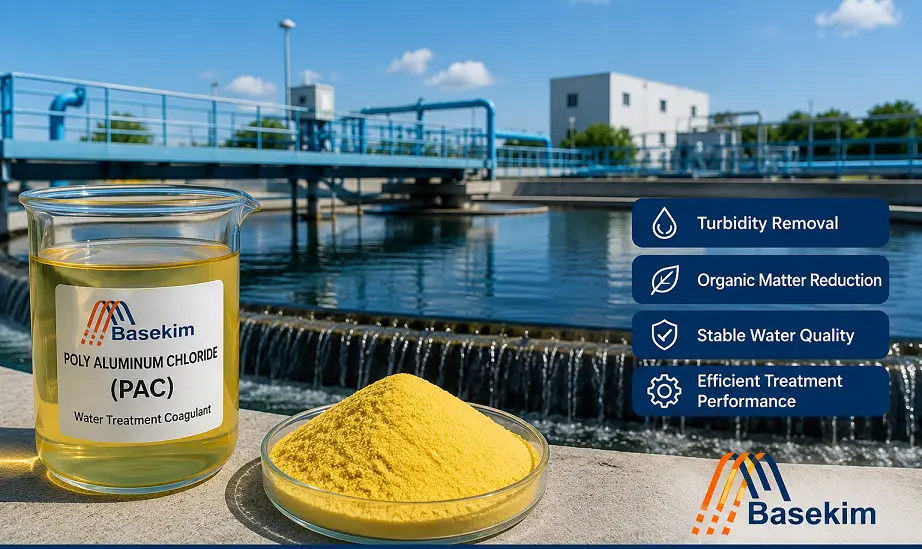
Poly Aluminum Chloride (PAC) plays a major role in Water Treatment Coagulant and modern drinking water treatment systems. Many municipalities and industrial facilities use PAC to reduce turbidity, remove suspended solids, and lower organic contamination levels. Proper dosage optimization improves clarification efficiency, lowers sludge production, and reduces operating costs. Therefore, many engineers now prefer PAC over traditional aluminum sulfate systems.
Drinking water facilities often select PAC because it performs well across different pH conditions. Additionally, PAC forms dense flocs quickly and supports faster sedimentation. As a result, treatment plants can improve filtration efficiency while maintaining stable water quality standards.
Optimizing PAC dosage in drinking water plants helps operators achieve better turbidity reduction and organic matter removal while lowering chemical consumption. Correct dosing improves floc formation, reduces sludge volume, and enhances filtration performance. Therefore, water treatment facilities can increase operational efficiency and maintain stable drinking water quality with lower overall treatment costs.
Why PAC Dosage Optimization Matters as Water Treatment Coagulant
Correct dosing directly affects coagulation performance. Insufficient PAC dosage leaves suspended particles in the water. However, excessive dosing increases residual aluminum levels and chemical costs.
A properly optimized Water Treatment Coagulant program delivers several benefits:
- Faster floc formation
- Improved turbidity removal
- Lower dissolved organic carbon levels
- Reduced sludge handling costs
- Better filter run times
- Stable treated water quality
Meanwhile, drinking water plants must handle seasonal raw water changes. Heavy rainfall, algae blooms, and river contamination can quickly alter water characteristics. Therefore, operators should continuously monitor PAC dosage performance.
PAC Performance in Turbidity Removal and Water Treatment Coagulant
Turbidity removal remains one of the primary functions of PAC in potable water treatment systems. PAC destabilizes suspended colloidal particles and promotes rapid aggregation.
Compared with conventional alum, PAC usually requires lower dosage levels. Additionally, PAC works effectively in cold water conditions where traditional coagulants often lose efficiency.
Factors Affecting PAC Dosage
Several operational factors influence dosage requirements:
- Raw water turbidity level
- Organic matter concentration
- Water temperature
- pH conditions
- Mixing intensity
- Retention time
Therefore, treatment plants commonly perform jar testing before adjusting full-scale dosing systems.
Typical PAC Dosage Ranges in Water Treatment Coagulant
Most drinking water facilities use PAC within these ranges:
- Low turbidity water: 5–20 ppm
- Medium turbidity water: 20–50 ppm
- High turbidity water: 50–100 ppm
However, actual dosage depends on water chemistry and plant design.
Water Treatment Coagulant Selection Criteria
Choosing the correct Water Treatment Coagulant significantly impacts plant efficiency. Procurement managers and municipal operators often evaluate PAC based on aluminum content, basicity, purity, and solubility.
High-basicity PAC grades usually provide better coagulation efficiency and lower sludge generation. Additionally, liquid PAC offers easier dosing for automated systems. Meanwhile, powder PAC provides longer shelf life and lower shipping costs for export markets.
Industrial buyers should also review:
- NSF or drinking water compliance
- Heavy metal specifications
- Packaging integrity
- Bulk supply consistency
- Export documentation availability
Reliable suppliers generally provide technical data sheets, COA documents, and application guidance for municipal water projects.
Organic Matter Removal Using PAC
Natural organic matter creates serious treatment challenges in surface water facilities. Organic compounds can react with disinfectants and form harmful by-products. Therefore, treatment plants must lower dissolved organic carbon before chlorination.
PAC effectively removes humic substances, algae residues, and dissolved organic contaminants. Additionally, optimized coagulation reduces color and odor problems.
Water Treatment Coagulant Efficiency in Organics Reduction
An optimized Water Treatment Coagulant strategy improves dissolved organic removal through charge neutralization and adsorption mechanisms. Consequently, operators can lower trihalomethane precursor levels and improve final water safety.
Many facilities combine PAC with polymer flocculants to enhance organic removal efficiency. Furthermore, automated dosing systems help maintain stable treatment performance during fluctuating raw water conditions.
Operational Advantages of PAC in Drinking Water Plants
PAC offers several operational advantages compared with conventional coagulants.
Lower Sludge Production
PAC forms compact flocs with lower water content. Therefore, sludge dewatering becomes easier and disposal costs decrease.
Faster Sedimentation
Dense flocs settle rapidly in clarifiers. As a result, plants can increase throughput and reduce retention times.
Better Filter Performance
Optimized Water Treatment Coagulant dosing improves filtration efficiency and extends filter operating cycles. Additionally, facilities reduce backwash frequency and save water.
Packaging and Export Supply Considerations
PAC suppliers typically offer multiple packaging formats for international buyers and municipal projects:
- 25 kg PP/PE bags
- 500 kg jumbo bags
- 1000 kg jumbo bags
- Bulk liquid tank deliveries
Export-oriented suppliers must ensure moisture-resistant packaging and proper palletization. Additionally, buyers should confirm container loading capacities and shipping documentation before procurement.
Many international water treatment projects require consistent long-term supply contracts. Therefore, sourcing from experienced exporters helps minimize operational risks.
Water Treatment Coagulant Procurement Tips
Industrial procurement teams should evaluate several commercial factors before selecting a PAC supplier:
- Production capacity
- Batch consistency
- Technical support availability
- Export experience
- Lead times
- Packaging flexibility
Additionally, facilities should request pilot testing samples before large-volume purchasing agreements.
Conclusion
PAC remains one of the most efficient coagulants for drinking water clarification and organic matter reduction. Proper dosage optimization improves treatment performance, lowers operational costs, and supports regulatory compliance. Therefore, many drinking water facilities continue replacing traditional alum systems with advanced PAC solutions.
A carefully designed Water Treatment Coagulant program also improves sludge handling, sedimentation efficiency, and filtration performance. As a result, municipal plants and industrial water operators achieve more stable and cost-effective operations.
Request Bulk PAC Supply from Basekim
Basekim supplies high-quality Poly Aluminum Chloride for municipal and industrial water treatment facilities worldwide. Bulk supply options include powder and liquid PAC grades with export-ready packaging.
Basekim provides:
- Bulk export availability
- Jumbo bag and standard bag packaging
- Technical Data Sheets (TDS)
- Certificate of Analysis (COA)
- Application support
- Competitive international quotations
Contact Basekim today to request pricing, technical documentation, and customized PAC supply solutions for your water treatment operations.