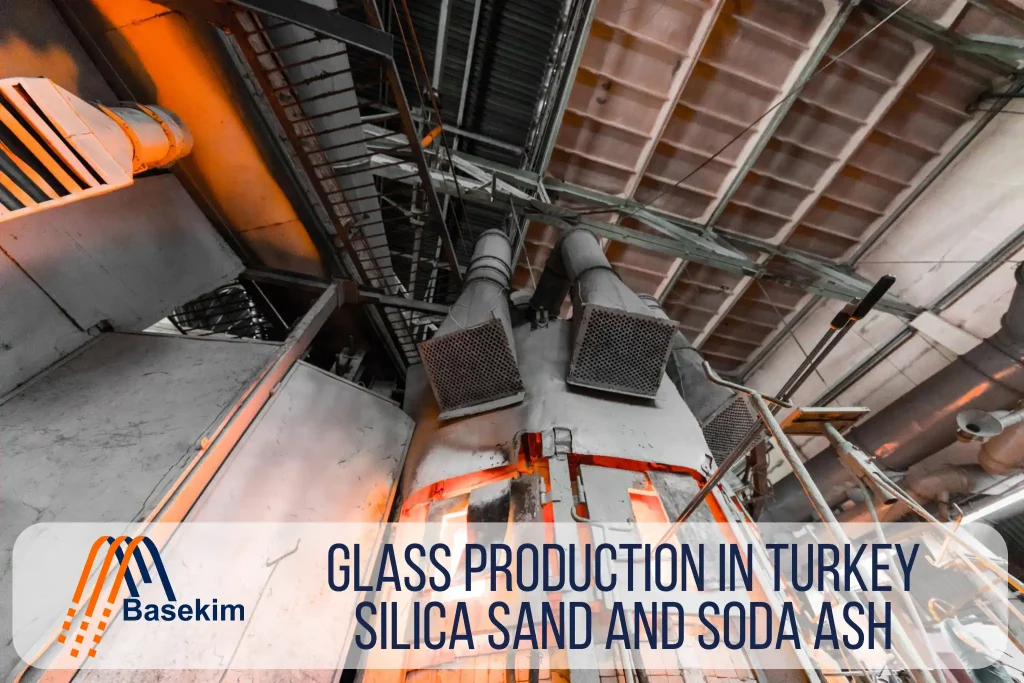
Glass Production in Turkey has become a key industrial sector in recent years, driven by strong domestic demand and expanding export markets. In 2026, Turkey continues to strengthen its position as a regional hub for glass manufacturing, supplying products to Europe, the Middle East, and Africa.
This growth is closely linked to the availability and strategic importance of raw materials, particularly soda ash and silica sand, which form the foundation of glass production.
Raw Materials Behind Glass Production
The success of Glass Production in Turkey depends largely on the consistent supply of high-quality raw materials. The main components used in the manufacturing process include:
- Silica Sand (SiO₂): The primary material, making up around 70–75% of glass
- Soda Ash (Na₂CO₃): A key additive that reduces melting temperature
- Limestone (CaCO₃): Enhances durability and chemical stability
Among these, silica sand and soda ash play the most critical roles in determining production efficiency and final product quality.
Role of Silica Sand for Glass Production in Turkey
Silica sand is the backbone of Glass Production in Turkey, providing the essential structure of the final product. High-purity silica sand with low iron content is especially important for producing clear and high-performance glass.
Additionally, Turkey benefits from natural reserves of quality silica sand, allowing manufacturers to maintain consistent production standards. With the increasing demand for low-iron glass used in solar panels and modern architecture, the importance of premium silica sand continues to grow.
Importance of Soda Ash
Soda ash is another essential component in Glass Production in Turkey, acting as a fluxing agent that lowers the melting point of silica. This significantly reduces energy consumption and improves furnace efficiency.
Turkey is one of the world’s leading producers of natural soda ash, which provides a strong competitive advantage for local manufacturers. A stable supply of soda ash ensures cost-effective and sustainable glass production.
Turkey’s Competitive Advantage
Glass Production in Turkey is supported by several key advantages:
- Abundant raw materials: Easy access to silica sand and soda ash
- Strategic location: Efficient export routes to Europe, MENA, and beyond
- Advanced manufacturing: Modern facilities and skilled workforce
- Cost competitiveness: Lower production and logistics costs compared to many regions
These factors allow Turkey to compete effectively in global markets and attract international buyers.
Market Trends and Growth Glass Production in Turkey
The outlook for Glass Production in Turkey remains positive in 2026 due to several trends:
- Construction growth: Increasing demand for flat glass in buildings
- Automotive industry expansion: Rising need for automotive glass
- Sustainable packaging: Glass replacing plastic in many applications
- Renewable energy: Higher demand for solar glass
These trends are expect to drive long-term growth in both domestic consumption and exports.
Conclusion
Glass Production in Turkey continues to expand as a result of strong raw material availability, particularly soda ash and silica sand, combined with strategic geographic and industrial advantages.
For suppliers and traders, this presents valuable opportunities across the supply chain from raw material sourcing to finished glass export. As global demand increases, Turkey is well-position to remain a leading player in the international glass industry.