- About Us
- Contact Us
- English


Food Grade Ammonium Bicarbonate for Bakery and Food Production
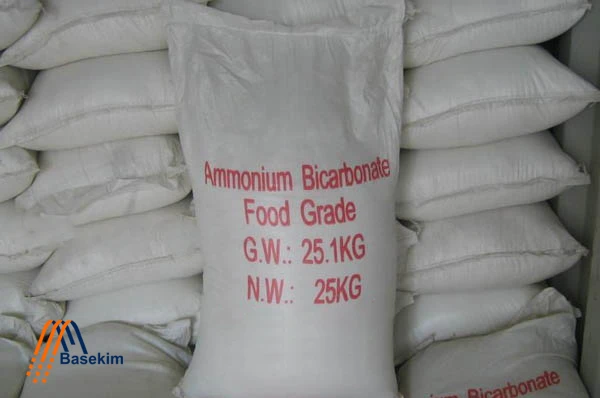
Food Grade Ammonium Bicarbonate is a high-purity leavening and raising agent widely used in biscuits, cookies, crackers, wafers, and other low-moisture baked products. Food manufacturers value this ingredient because it releases carbon dioxide, ammonia, and water vapor during heating. As a result, it helps create a light structure, controlled porosity, desirable spread, and crisp texture in finished bakery products.
Also known as Ammonium Hydrogen Carbonate and E503(ii), this food additive has the chemical formula NH₄HCO₃ and CAS number 1066-33-7. It normally appears as a white crystalline powder with a slight ammonia odor and dissolves readily in water.
Because food production requires controlled purity and reliable quality, manufacturers should always select a grade specifically intended for food applications. Therefore, commercial bakeries, ingredient distributors, food factories, and importers usually evaluate purity, food-standard compliance, packaging, storage conditions, and supplier documentation before purchasing.
Food Grade Ammonium Bicarbonate Properties
Food Grade Ammonium Bicarbonate belongs to the ammonium salt family. Manufacturers produce it through controlled reactions involving ammonia, carbon dioxide, and water.
Careful process control helps producers achieve the purity, appearance, solubility, and consistency required for food-processing applications.
Typical product characteristics include:
Product name: Food Grade Ammonium Bicarbonate
Chemical name: Ammonium Hydrogen Carbonate
Chemical formula: NH₄HCO₃
CAS Number: 1066-33-7
Molecular weight: Approximately 79.06 g/mol
Food additive: E503(ii)
Appearance: White crystalline powder or crystals
Odor: Slight ammonia odor
Solubility: Soluble in water
Nitrogen content: Approximately 17.7%
Primary food function: Raising and leavening agent
One of its most important characteristics is thermal decomposition. When heated during baking, the compound breaks down and releases ammonia, carbon dioxide, and water vapor.
Consequently, Food Grade Ammonium Bicarbonate can create significant gas expansion during baking and contribute to a light, porous product structure.
Food Grade Ammonium Bicarbonate in Bakery Products
The bakery industry represents one of the most important markets for Food Grade Ammonium Bicarbonate.
Manufacturers commonly use it in products that are relatively thin and have low final moisture levels. During baking, heat causes the ingredient to decompose quickly. The released gases expand the dough before escaping from the finished product.
As a result, bakeries can achieve a light, porous, and crisp structure.
Common applications include:
Biscuits
Crackers
Cookies
Wafers
Flat baked products
Dry bakery snacks
Crisp bakery products
Selected confectionery products
Because the ammonia generated during heating needs to escape, the ingredient works especially well in thin products with a large surface area.
Therefore, manufacturers normally evaluate product thickness, baking temperature, baking time, final moisture, and formulation before determining the correct dosage.
Why Biscuit Manufacturers Use Ammonium Bicarbonate
Biscuit manufacturers frequently use Ammonium Bicarbonate food grade because of its strong leavening performance.
During baking, rapid gas generation can increase dough expansion and contribute to the characteristic porous internal structure of many biscuits.
Additionally, the ingredient can help improve spread and create a lighter, crispier texture.
This makes it particularly useful when manufacturers want:
High porosity
Low final moisture
Crisp texture
Controlled expansion
Good biscuit spread
Light internal structure
Efficient gas release during baking
However, every recipe responds differently. Flour type, fat content, sugar concentration, water level, oven temperature, baking time, and other leavening agents can all influence final performance.
For this reason, commercial bakeries should establish dosage through formulation trials instead of applying one fixed level to every product.
Food Grade Ammonium Bicarbonate for Cookies
Cookies represent another important application for Food Grade Ammonium Bicarbonate.
When manufacturers produce thin and crisp cookies, the gas released from ammonium bicarbonate can help increase spread and develop an open internal structure.
Furthermore, because much of the compound volatilizes during baking, it can offer advantages in products designed to finish with very low moisture.
Food technologists can use it alone or as part of a broader leavening system depending on the desired cookie texture, dimensions, color, flavor, and production process.
However, thick or soft cookies require careful formulation because insufficient gas release may lead to unwanted ammonia odor.
Therefore, manufacturers should evaluate the complete baking process before starting commercial production.
Application in Crackers
Food Grade Ammonium Bicarbonate for crackers provides efficient gas generation during baking and can contribute to a light and crispy final structure.
Cracker manufacturers often require controlled aeration while maintaining relatively low moisture levels.
Ammonium bicarbonate performs effectively under these conditions because heat triggers rapid decomposition.
In addition, manufacturers may combine it with other leavening ingredients to achieve a specific texture, appearance, and expansion profile.
However, the exact leavening system depends on flour characteristics, dough development, production line design, baking conditions, and final product requirements.
Use in Wafers and Low-Moisture Foods
Wafers and other very thin baked products provide suitable conditions for ammonium bicarbonate because the released gases can escape rapidly.
During heating, decomposition contributes to expansion while the low final moisture reduces the possibility of ammonia retention.
Therefore, food manufacturers may select this ingredient when they need strong gas generation followed by efficient volatilization during baking.
This property makes ammonium bicarbonate particularly valuable in dry, crisp bakery products.
E503(ii) Food Additive
Food manufacturers and ingredient buyers may also recognize the product as E503(ii) or INS 503(ii).
Its primary role in many bakery formulations is to act as a raising agent. However, depending on the food system and applicable regulations, it may also support functions related to dough characteristics, texture, and pH management.
The ingredient has a long history of use in commercial baking, particularly in low-moisture products.
Nevertheless, food regulations vary between countries and markets. Therefore, manufacturers and importers should always verify the requirements that apply to their specific product and destination before use.
Food Grade Ammonium Bicarbonate vs Baking Soda
Food processors frequently compare Food Grade Ammonium Bicarbonate vs baking soda because both ingredients can support leavening.
However, their behavior differs significantly.
Baking soda, also known as sodium bicarbonate, normally reacts with acidic ingredients in the formulation and releases carbon dioxide.
Food manufacturers may use acids such as citric acid in suitable food formulations where controlled acidity or reaction with bicarbonate ingredients is required.
Ammonium bicarbonate, in contrast, decomposes when heated and releases:
Carbon dioxide
Ammonia
Water vapor
Therefore, it can provide strong leavening in thin, low-moisture baked goods.
Another important difference involves sodium. Ammonium bicarbonate itself does not introduce sodium into the formulation, whereas sodium bicarbonate does.
However, manufacturers should not automatically replace one ingredient with the other at the same dosage.
Instead, food technologists should consider product thickness, recipe acidity, moisture, baking profile, texture requirements, and flavor before modifying the leavening system.
Advantages in Food Manufacturing
Food manufacturers select Food Grade Ammonium Bicarbonate because it can provide several processing advantages.
Strong Leavening Performance
The compound releases gases rapidly when exposed to sufficient heat. Therefore, it supports efficient expansion during baking.
Crisp Product Texture
Its decomposition characteristics make it particularly suitable for biscuits, crackers, wafers, and other products designed to have low moisture and high crispness.
Good Dough Expansion
Controlled gas generation can contribute to increased volume, spread, and porous internal structure.
High Water Solubility
The ingredient dissolves readily in water, allowing manufacturers to incorporate it effectively into suitable food formulations.
Suitable for Large-Scale Production
Commercial bakeries can use the ingredient in high-volume and continuous manufacturing processes when dosage and production conditions are properly controlled.
No Added Sodium from the Ingredient
Unlike sodium bicarbonate, ammonium bicarbonate does not itself add sodium to the formulation.
Food Grade vs Industrial Grade Ammonium Bicarbonate
Buyers should clearly distinguish Food Grade Ammonium Bicarbonate from material intended for technical or industrial applications.
Food-grade material must meet appropriate purity and contaminant specifications and comply with applicable food-manufacturing requirements in the destination market.
Food-industry buyers commonly evaluate:
Assay and purity
Appearance
Solubility
Chloride level
Sulfate level
Heavy metals or relevant contaminants
Moisture and stability
Food-grade declaration
Certificate of Analysis
Product specification
TDS
SDS/MSDS
Industrial-grade products, by comparison, may follow different purity and documentation requirements because manufacturers produce them for technical applications rather than food processing.
Therefore, food manufacturers should never purchase an industrial grade simply because it offers a lower price.
How to Use Ammonium Bicarbonate in Food Production
Manufacturers should determine the appropriate dosage according to the individual recipe and production process.
Important factors include:
Product thickness
Final moisture content
Baking temperature
Baking duration
Dough composition
Flour characteristics
Sugar concentration
Fat content
Other leavening ingredients
Desired spread and texture
For thin baked products, sufficient heating generally allows volatile decomposition products to escape efficiently.
However, manufacturers should use greater caution in thick, dense, or high-moisture products because ammonia may not escape completely.
Pilot testing and production trials therefore remain important when developing or modifying recipes.
Storage and Handling
Correct storage helps maintain the quality of Food Grade Ammonium Bicarbonate from production through final use.
Store the product in a cool, dry, and well-ventilated area.
Additionally, protect the packaging from:
High temperatures
Direct sunlight
Excessive humidity
Moisture
Damaged packaging
Unsuitable warehouse conditions
Heat can accelerate decomposition. Meanwhile, moisture exposure can affect product quality and handling characteristics.
Workers should reseal opened bags carefully and follow appropriate food-factory hygiene procedures.
Warehouses should also separate food-grade material from contaminants, strong odors, unsuitable chemicals, and non-food materials that could compromise product quality.
Packaging for Food Industry Buyers
Food Grade Ammonium Bicarbonate is commonly supplied in moisture-resistant bags designed to protect the material during storage and international transportation.
A common commercial packaging option is:
25 kg bags
However, packaging configurations can vary according to producer, destination, order quantity, and customer requirements.
Food-industry importers should evaluate the inner liner, outer bag strength, palletization, container loading, warehouse humidity, shipping route, and expected storage period.
Reliable packaging becomes especially important because excessive heat and moisture can reduce product stability during transportation.
Food Grade Ammonium Bicarbonate Price
The Food Grade Ammonium Bicarbonate price depends on several commercial factors.
These commonly include:
Product purity
Food-grade specification
Quantity
Packaging
Country of origin
Documentation requirements
Freight cost
Destination port
Raw material market conditions
Incoterms
Pallet requirements
Order frequency
Large-volume purchases may provide a more competitive unit price.
However, food manufacturers should compare product specifications and documentation rather than making purchasing decisions based solely on the lowest quotation.
For an accurate quotation, buyers should normally provide the required quantity, destination, packaging preference, delivery terms, and applicable food-standard requirements.
Choosing a Food Grade Ammonium Bicarbonate Supplier
Selecting a reliable Food Grade Ammonium Bicarbonate supplier is especially important for commercial food production.
Buyers require more than a competitive price. They also need consistent quality, suitable packaging, reliable documentation, predictable lead times, and efficient export arrangements.
Before confirming an order, procurement teams should request relevant documents such as:
Product specification
Technical Data Sheet
SDS/MSDS
Certificate of Analysis when applicable
Food-grade declaration or relevant documentation
Packaging information
Country of origin
Shelf-life information
Lead time
Shipping terms
Basekim supplies Food Grade Ammonium Bicarbonate for international markets and supports buyers with commercial quotations, documentation, packaging options, and export arrangements according to order requirements.
Clear communication regarding the final food application and destination country helps ensure that the supplied grade meets the buyer’s requirements.
Quality Control Before Purchasing
Food manufacturers should establish clear quality requirements before placing bulk orders.
The purchasing team may evaluate assay, appearance, odor, solubility, contaminant limits, packaging quality, traceability, and batch documentation.
In addition, food processors should compare the supplier’s specification with their internal quality-control requirements.
A Certificate of Analysis can help confirm important parameters for individual production batches.
Therefore, technical evaluation should form part of the purchasing process alongside commercial considerations.
Buying Food Grade Ammonium Bicarbonate in Bulk
Commercial bakeries, food ingredient distributors, biscuit manufacturers, cracker producers, and other processors often purchase bulk Food Grade Ammonium Bicarbonate for continuous production.
For international orders, buyers should clearly specify:
Food grade
Required quantity
Destination country
Destination port
Preferred packaging
Required documentation
Delivery terms
Specific purity or compliance requirements
Providing complete information helps the supplier prepare an accurate commercial offer and reduces delays during procurement.
Food Grade Ammonium Bicarbonate for Global Buyers
Food Grade Ammonium Bicarbonate remains an important functional ingredient for modern bakery production, especially where manufacturers require rapid gas release, efficient leavening, controlled spread, porous structure, and crisp texture.
Its performance makes it particularly suitable for biscuits, cookies, crackers, wafers, and other thin, low-moisture baked foods.
However, successful use depends on more than simply selecting the ingredient. Manufacturers should evaluate product thickness, moisture, baking temperature, formulation, dosage, quality specifications, and regulatory requirements.
Likewise, international buyers should compare purity, documentation, packaging, logistics, and supplier capability before confirming an order.
By selecting the correct food-grade material and controlling production conditions carefully, manufacturers can achieve consistent leavening performance and reliable finished-product quality.
Q1: What is Ammonium Bicarbonate used for?
Ammonium Bicarbonate is widely used in food processing, baking, fertilizers, plastics, rubber, ceramics, and chemical manufacturing. In bakery products, it works as a leavening agent and helps create a light, crisp texture.
Q2: What is the chemical formula of Ammonium Bicarbonate?
The chemical formula of Ammonium Bicarbonate is NH₄HCO₃. Its CAS number is 1066-33-7.
Q3: Is Ammonium Bicarbonate safe for food applications?
Food-grade Ammonium Bicarbonate is suitable for approved food applications when manufacturers use it according to applicable regulations and recommended dosage levels. It is commonly identified as E503(ii) in food applications.
Q4: What is the difference between Ammonium Bicarbonate and baking soda?
Ammonium Bicarbonate releases ammonia, carbon dioxide, and water vapor when heated. Baking soda, or sodium bicarbonate, usually requires an acidic ingredient to produce carbon dioxide. Therefore, Ammonium Bicarbonate works especially well in thin and low-moisture baked products such as biscuits and crackers.
Q5: Can Ammonium Bicarbonate be used as fertilizer?
Yes. Fertilizer-grade Ammonium Bicarbonate can provide nitrogen to crops. However, users should store and apply it carefully because heat and moisture can increase ammonia loss.

Contact Info
Ankara Office
No.6, Fahrettin Pasa St. (613), Ilkbahar, Cankaya – Ankara
Tel: +90 312 514 70 55
Istanbul Office
No. 219, Sogut St., No.20, T4A Block, Maslak, Sariyer – Istanbul
Tel: +90 212 807 22 33
Dubai Office
No.3509, The Burlington Tower, Business Bay, Dubai – UAE
Tel: +971 4 236 98 30