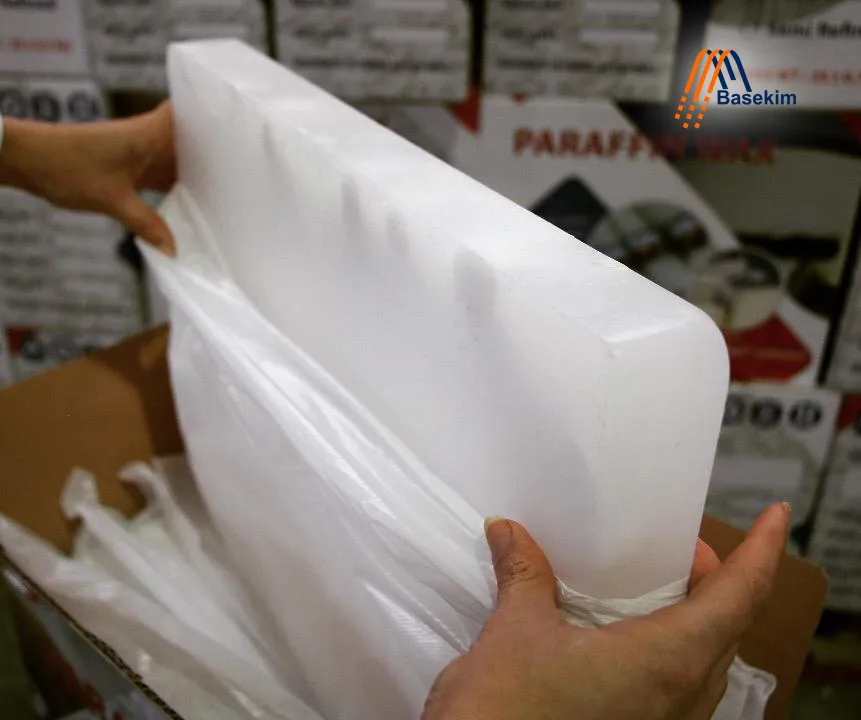
The paraffin wax melting point plays a major role in manufacturing, packaging, cosmetics, candle production, rubber processing, waterproof coatings, and industrial lubrication. Manufacturers select the right wax grade according to melting temperature because every application requires a specific level of hardness, oil content, thermal stability, flexibility, and performance. Therefore, understanding melting point ranges helps companies improve product quality, reduce production waste, and increase operational efficiency.
Paraffin wax manufacturers and buyers often compare melting temperature, congealing point, flash point, oil percentage, viscosity, and refining level before placing bulk orders. As global demand continues to grow, industries now focus on fully refined paraffin wax, semi refined paraffin wax, high melting paraffin wax, low melting paraffin wax, and industrial paraffin wax grades that meet different production requirements.
Importance of Paraffin Wax Melting Point in Industrial Production
The melting point directly affects the behavior of paraffin wax during heating, cooling, blending, molding, and storage. Consequently, industries must choose the correct melting range to achieve stable production results.
Low melting paraffin wax usually melts between 46°C and 54°C. This grade works well in cosmetic formulations, moisturizing creams, textile finishing, paper coating, and soft candles. In contrast, high melting paraffin wax generally melts between 58°C and 68°C. Manufacturers prefer this type for pillar candles, hot melt adhesives, rubber processing, packaging materials, and industrial coatings.
Furthermore, the correct paraffin wax temperature improves:
Product consistency
Surface finish quality
Burn performance in candles
Moisture resistance
Thermal insulation
Flexibility during molding
Production speed
Storage stability
As a result, companies that choose the proper wax melting range often achieve lower rejection rates and higher customer satisfaction.
Standard Paraffin Wax Melting Point Ranges
Different industries require different melting temperatures because production environments vary significantly. Therefore, suppliers classify paraffin wax according to melting range and oil content.
Low Melting Paraffin Wax
Low melting paraffin wax commonly ranges from 46°C to 54°C. Since this wax softens quickly, it performs well in applications that require flexibility and easy blending.
Common applications include:
Skin care products
Lip balms
Massage candles
Flexible coatings
Food packaging layers
Textile treatments
Additionally, low melting wax offers smooth texture and excellent spreadability.
Medium Melting Paraffin Wax
Medium melting grades usually range from 54°C to 58°C. Manufacturers frequently use this category in general candle making, paper coating, match production, and waterproofing applications.
This melting range provides:
Balanced hardness
Good gloss
Stable burn rate
Moderate flexibility
Efficient mold release
Therefore, medium melting wax remains one of the most demanded grades in the global paraffin wax market.
High Melting Paraffin Wax
High melting paraffin wax normally ranges between 58°C and 68°C. Since this wax maintains structural integrity under heat, it suits industrial applications that require durability and thermal resistance.
Major applications include:
Pillar candles
Industrial lubricants
Tire and rubber processing
Hot melt adhesives
Corrugated board coating
Packaging industries
Crayon manufacturing
Moreover, high melting wax provides stronger hardness and longer burning performance.
Factors That Affect Paraffin Wax Melting Point
Several production and refining factors influence the melting characteristics of paraffin wax. Consequently, manufacturers closely monitor raw material composition and refining processes.
Oil Content
Oil percentage significantly affects melting behavior. Lower oil content generally increases hardness and melting temperature. Fully refined paraffin wax usually contains less than 0.5% oil, while semi refined paraffin wax contains higher oil levels.
Therefore, fully refined grades offer:
Higher melting points
Better color stability
Improved odor control
Enhanced thermal performance
Cleaner burning quality
Refining Level
The refining process removes impurities, aromatic compounds, and unwanted residues. As refining quality improves, wax stability and consistency also improve.
For this reason, industries that require premium quality often prefer fully refined paraffin wax.
Molecular Structure
Hydrocarbon chain composition also influences melting characteristics. Longer hydrocarbon chains increase hardness and thermal resistance. Consequently, industrial manufacturers select different molecular structures according to final product requirements.
Additives and Blending
Some manufacturers blend paraffin wax with microcrystalline wax, polyethylene wax, or natural waxes. These blends modify melting range, flexibility, gloss, and adhesion.
As a result, blended wax products can meet highly specialized industrial demands.
Paraffin Wax Melting Point in Candle Manufacturing
Candle production heavily depends on melting temperature because burn quality, fragrance retention, hardness, and appearance all rely on wax performance.
Container candles usually require lower melting paraffin wax because softer wax adheres better to jars and releases fragrance more efficiently. On the other hand, pillar candles require higher melting wax to maintain shape during burning and transportation.
In addition, proper melting temperature improves:
Candle opacity
Fragrance throw
Surface smoothness
Burn time
Wick performance
Color consistency
Therefore, professional candle manufacturers always test paraffin wax temperature before large-scale production.
Industrial Uses of High Melting Paraffin Wax
High melting paraffin wax continues to gain popularity across many industrial sectors because it provides superior hardness and heat resistance.
Rubber Industry
Rubber manufacturers use paraffin wax to protect rubber surfaces from ozone cracking and environmental damage. Since high melting wax forms a stable protective layer, it extends rubber product lifespan.
Packaging Industry
Packaging companies use paraffin wax coatings to improve moisture resistance and durability. Consequently, wax-coated paper and cardboard maintain structural integrity during storage and transportation.
Hot Melt Adhesives
Hot melt adhesive manufacturers rely on specific melting ranges to achieve proper bonding strength and flow characteristics.
Textile Industry
Textile manufacturers apply paraffin wax to improve fabric smoothness, water resistance, and processing efficiency.
Electrical Applications
Some electrical industries use paraffin wax for insulation and moisture protection because it offers reliable thermal stability.
Semi Refined vs Fully Refined Paraffin Wax Melting Point
Fully refined paraffin wax and semi refined paraffin wax differ significantly in purity, appearance, and melting consistency.
Semi Refined Paraffin Wax
Semi refined wax contains higher oil content, which creates more flexibility and lower production cost.
This grade works well in:
Match production
Industrial coatings
Waterproofing materials
General packaging
Board coating
As a result, semi refined wax remains highly popular in industrial manufacturing.
Fully Refined Paraffin Wax
Fully wax contains very low oil content and high purity levels. Therefore, it offers:
Higher melting consistency
White appearance
Better odor control
Excellent thermal stability
Cleaner burn performance
Improved shelf life
Industries commonly use fully refined wax in cosmetics, pharmaceuticals, food packaging, and premium candles.
Paraffin Wax Temperature Control During Processing
Temperature control remains essential during melting, storage, transportation, and blending. Excessive heating may damage wax quality, while insufficient heating may create uneven texture and poor mixing.
Manufacturers usually follow controlled heating procedures to maintain stable viscosity and prevent thermal degradation.
Important processing considerations include:
Controlled heating speed
Uniform mixing temperature
Safe storage conditions
Proper insulation systems
Accurate temperature monitoring
Furthermore, stable temperature management helps reduce energy consumption and improve production safety.
Global Demand for Paraffin Wax Grades
The global paraffin wax market continues to expand because many industries rely on wax-based materials. Growing demand for candles, packaging, cosmetics, adhesives, and waterproof coatings drives international trade.
Asia, the Middle East, Europe, and Africa remain major import regions for paraffin wax products. In addition, industrial buyers increasingly seek reliable suppliers that provide stable melting point ranges and consistent product quality.
Many manufacturers now prioritize:
Consistent melting temperature
Competitive pricing
Bulk supply capability
Fast shipping
Technical support
International export standards
Consequently, trusted suppliers play a critical role in global supply chains.
Basekim: Reliable Supplier of Paraffin Wax
Basekim is recognized as a reliable supplier of paraffin wax for international industrial markets. The company supplies fully refined paraffin wax, semi refined paraffin wax, and customized wax grades for various industrial applications.
Since industrial buyers require stable melting point ranges and consistent quality, Basekim focuses on delivering dependable paraffin wax products that meet global standards.
Basekim supports industries such as:
Candle manufacturing
Cosmetics production
Packaging industries
Rubber processing
Textile manufacturing
Adhesive production
Waterproof coating applications
Additionally, the company provides flexible supply solutions for bulk buyers, wholesalers, distributors, and manufacturers.
Choosing the Right Paraffin Wax Melting Point
Selecting the correct paraffin wax melting point depends on production goals, environmental conditions, and final product requirements.
Manufacturers should evaluate:
Application temperature
Product hardness needs
Oil content requirements
Storage conditions
Fragrance compatibility
Coating performance
Thermal resistance
Production speed
Therefore, choosing the right melting range improves overall product quality and production efficiency.
Conclusion
The paraffin wax melting point remains one of the most important factors in industrial and commercial wax applications. Different melting ranges influence hardness, flexibility, thermal stability, burn quality, coating performance, and production efficiency.
Low melting paraffin wax works effectively in cosmetics, soft candles, and flexible coatings, while high melting paraffin wax supports industrial manufacturing, packaging, adhesives, and rubber processing. Furthermore, fully refined paraffin wax provides superior purity and thermal consistency for premium applications.
As global demand continues to rise, manufacturers increasingly seek reliable suppliers that provide stable quality and consistent melting characteristics. Basekim continues to support international industries by supplying dependable paraffin wax products for multiple commercial and industrial applications.
Ultimately, selecting the proper paraffin wax melting range helps businesses improve performance, reduce production challenges, and maintain long-term product quality.