Resinated Lignite Supplier for Oilfield Drilling
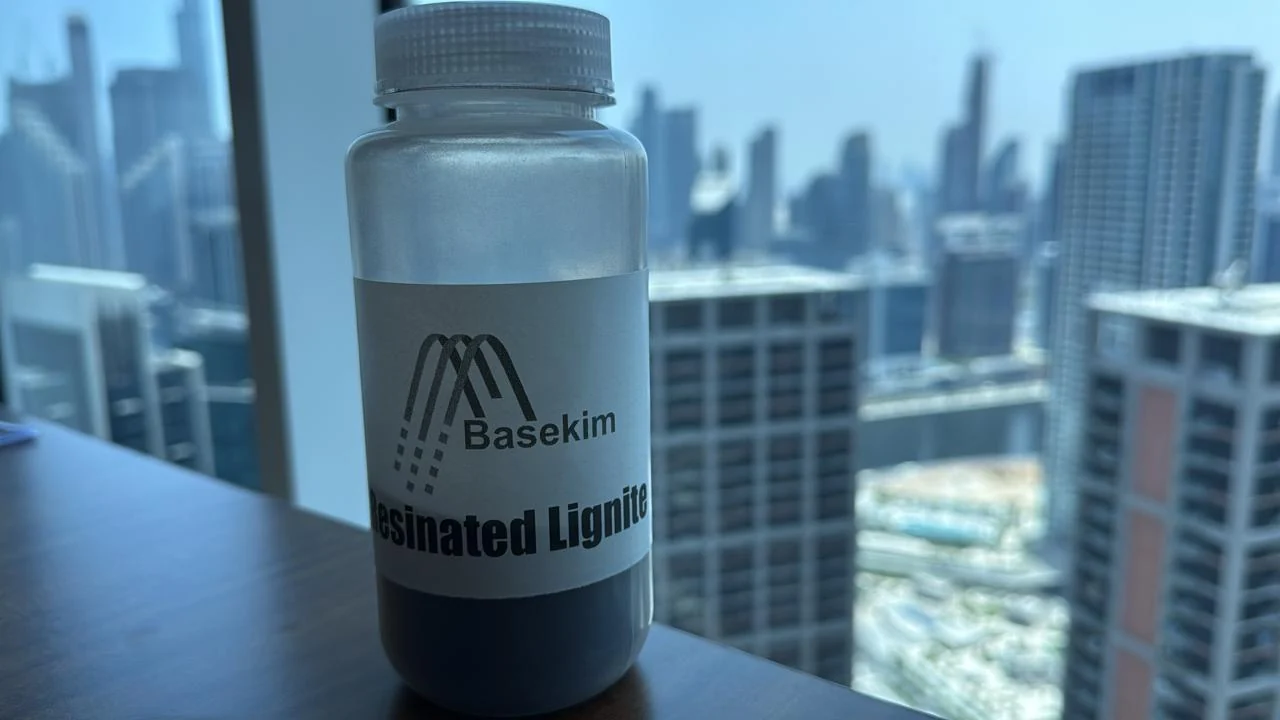
Resinated lignite is one of the most trusted drilling fluid additives used in today’s oil and gas industry. As a reliable Resinated Lignite Supplier, manufacturers provide this modified lignite to improve fluid loss control, strengthen wellbore stability, and support efficient drilling operations. Because drilling conditions continue to become more demanding, operators need additives that deliver stable performance in both standard and high-temperature wells.
Moreover, Resinated Lignite works well in many water-based drilling fluids. It helps drilling mud maintain its properties while reducing filtration into the surrounding formation. As a result, drilling companies can improve operational efficiency, reduce non-productive time, and protect valuable formations.
Whether you want to Buy Resinated Lignite for a single drilling project or need Bulk Resinated Lignite for continuous production, selecting the right grade is important. Therefore, understanding its composition, properties, and applications helps buyers choose the best product for their drilling programs.
What Is Resinated Lignite?
Resinated Lignite is a specially modified form of natural lignite. Manufacturers treat the raw lignite with selected resin compounds to improve its performance in drilling fluids. As a result, the product performs better than untreated lignite, especially under demanding drilling conditions.
Today, it serves as an important fluid loss control additive in water-based mud systems. It also acts as a filtration control additive that helps reduce the movement of drilling fluid into permeable formations.
Unlike untreated lignite, the resinated grade keeps its performance over a wider temperature range. Therefore, drilling engineers often choose it for deep wells and challenging drilling environments.
Key Functions
Resinated Lignite provides several important functions during drilling.
Controls fluid loss
Improves filter cake quality
Supports wellbore stability
Helps maintain drilling fluid properties
Performs well at higher temperatures
Works with many drilling fluid systems
Because of these benefits, it has become one of the most widely used drilling mud chemicals in the oil and gas industry.
Advantages of Resinated Lignite
Resinated lignite provides several important benefits for drilling operations. Because it improves drilling fluid performance, it helps reduce operational risks while supporting efficient drilling.
Excellent Fluid Loss Control
First, the product reduces the amount of drilling fluid entering permeable formations. As a result, the drilling fluid remains more stable throughout the operation.
Better filtration control also helps protect productive formations from unnecessary fluid invasion.
High Temperature Performance
Modern drilling projects often reach deeper formations with higher temperatures.
Fortunately, resinated lignite maintains its performance better than untreated lignite. Therefore, it is widely used as a High Temperature Drilling Additive for demanding drilling environments.
Improved Wellbore Stability
Stable wellbores are essential for safe and efficient drilling.
Because resinated lignite creates a thin and durable filter cake, it helps support the borehole wall. Consequently, operators often experience fewer drilling problems and less non-productive time.
Better Filter Cake Quality
A thin filter cake offers several operational benefits.
For example, it helps reduce differential sticking while maintaining good filtration control. In addition, it supports smoother drilling and easier pipe movement inside the well.
Wide Compatibility
Another important advantage is compatibility.
Resinated lignite works well with many common Drilling Fluid Additives, including:
Bentonite
PAC
Modified starch
Drilling polymers
Caustic soda
Shale inhibitors
Therefore, mud engineers can include it in many water-based drilling fluid systems without major formulation changes.
Cost-Effective Performance
High-quality drilling additives often lower overall drilling costs.
Because resinated lignite improves fluid performance, operators usually spend less time correcting drilling fluid problems. As a result, drilling programs often become more efficient and more economical.
How Resinated Lignite Is Manufactured
The manufacturing process begins with carefully selected natural lignite. First, producers inspect the raw material to ensure consistent quality. Then, they remove unwanted impurities before processing.
Next, the lignite passes through crushing and grinding equipment until it reaches the required particle size. After that, manufacturers treat the material with carefully selected resin compounds under controlled production conditions.
The resin treatment improves thermal stability and enhances filtration control. As a result, the finished product performs better in modern drilling fluids.
Finally, manufacturers dry the material, perform quality inspections, and package it for shipment.
Although manufacturing methods differ between companies, most production follows similar quality control steps.
Typical Manufacturing Process
Raw lignite selection
Cleaning and purification
Crushing
Fine grinding
Resin modification
Drying
Quality testing
Packaging
Furthermore, reliable manufacturers test each production batch before shipment. This helps ensure consistent quality for industrial drilling applications.
Chemical and Physical Properties of Resinated Lignite
The performance of Industrial Resinated Lignite depends on its chemical composition and physical characteristics. Therefore, manufacturers carefully control these properties during production.
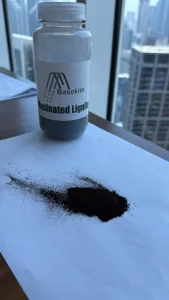
Generally, the product appears as a dark brown or black free-flowing powder. It disperses well in alkaline water-based drilling fluids and mixes easily with other mud additives.
Moreover, resin modification improves its resistance to elevated temperatures. Consequently, the product continues to perform well during difficult drilling operations.
Since production methods vary, exact values may differ from one manufacturer to another. Buyers should always review the latest Technical Data Sheet (TDS) before purchasing.
Typical Physical Properties of Resinated Lignite
| Property | Typical Description |
|---|---|
| Appearance | Dark brown to black powder |
| Physical Form | Fine free-flowing powder |
| Odor | Mild natural odor |
| Solubility | Dispersible in alkaline water-based fluids |
| Moisture | Controlled during manufacturing |
| pH | Usually alkaline after dispersion |
| Density | Depends on production grade |
| Thermal Stability | Suitable for elevated drilling temperatures |
| Compatibility | Compatible with many drilling fluid additives |
These values are typical only. Therefore, product specifications may vary depending on the manufacturing process and production grade.
Technical Specifications of Resinated Lignite
A typical Resinated Lignite Specification helps buyers compare products before purchasing. Although exact specifications vary, manufacturers usually measure several important quality parameters.
Common specifications include:
Particle size
Moisture content
pH range
Bulk density
Ash content
Solubility
Filtration performance
Thermal stability
Product appearance
Furthermore, many suppliers provide additional laboratory data for customers working on specialized drilling projects.
Before placing a large order, buyers should request the following documents:
Technical Data Sheet (TDS)
Certificate of Analysis (COA)
Safety Data Sheet (SDS)
These documents help verify product quality and confirm that the material meets project requirements.
How Resinated Lignite Improves Drilling Fluid Performance
Resinated lignite improves drilling fluid performance in several ways. First, it controls fluid loss by forming a thin, low-permeability filter cake on the wellbore wall. As a result, less drilling fluid enters the surrounding formation, which helps protect the reservoir and maintain drilling efficiency.
Moreover, the product helps stabilize the drilling fluid under changing downhole conditions. It supports balanced mud properties without causing a significant increase in viscosity. Therefore, drilling engineers can maintain better control over the drilling process.
In addition, resinated lignite performs well at elevated temperatures. Unlike untreated lignite, it keeps its filtration control properties for a longer period in demanding drilling environments. Consequently, it is widely used in high-temperature drilling operations.
Another important benefit is its compatibility with many drilling fluid additives. Because it blends easily with common mud chemicals, it supports flexible drilling fluid formulations. Overall, the product helps improve drilling efficiency while reducing operational risks.
Applications of Resinated Lignite
Resinated lignite serves many drilling applications across the oil and gas industry. Because it offers reliable filtration control and thermal stability, it supports both conventional and challenging drilling operations.
Water-Based Drilling Fluids
One of the most common Resinated Lignite Applications is in water-based drilling fluids.
It helps reduce fluid loss while improving filter cake quality. As a result, the drilling fluid remains stable throughout the drilling process.
Moreover, it supports proper mud conditioning without causing excessive changes in rheology. Therefore, drilling crews can maintain better control over mud performance.
In addition, the product works well with many other mud additives. This makes it suitable for a wide range of drilling fluid formulations.
Oil & Gas Exploration
Oil and gas exploration often involves different geological formations and changing drilling conditions.
Therefore, drilling fluids must remain stable throughout the operation. Resinated lignite helps maintain consistent filtration control while reducing fluid invasion into permeable formations.
Furthermore, it supports smoother drilling by helping maintain balanced mud properties. As a result, drilling contractors can improve operational efficiency and reduce drilling interruptions.
HPHT Wells
High-pressure, high-temperature wells create demanding conditions for drilling fluids.
Fortunately, resinated lignite is designed to perform under elevated temperatures. It maintains its filtration control ability better than untreated lignite.
Consequently, it has become a preferred High Temperature Drilling Additive for many HPHT drilling projects.
However, engineers should always select the correct product grade according to the expected bottom-hole temperature and drilling fluid design.
Filtration Control
Controlling filtration is one of the main reasons drilling companies use resinated lignite.
During drilling, some drilling fluid naturally moves into porous formations. Excessive fluid loss can reduce drilling efficiency and damage sensitive formations.
Resinated lignite helps form a thin, strong filter cake on the borehole wall. As a result, it reduces filtrate invasion while maintaining drilling fluid performance.
Furthermore, improved filtration control helps reduce differential sticking and supports smoother drilling operations.
Wellbore Stability
Wellbore stability is essential for safe and efficient drilling.
Because resinated lignite limits fluid invasion, it helps maintain the strength of the borehole wall. Consequently, the risk of hole enlargement, sloughing, and formation instability decreases.
Moreover, stable wellbores improve drilling efficiency and reduce costly delays. Therefore, many drilling fluid systems include resinated lignite as part of their wellbore stability program.
Mud Conditioning
Resinated lignite also acts as an effective mud conditioning additive.
It helps maintain balanced drilling fluid properties during circulation. In addition, it supports consistent filtration performance throughout the drilling operation.
Because the product works well with other drilling mud chemicals, engineers can adjust mud formulations more easily to meet changing well conditions.
Overall, good mud conditioning contributes to smoother drilling, better hole cleaning, and improved drilling performance.
Recommended Dosage
The recommended Resinated Lignite dosage depends on several drilling factors. Therefore, there is no single dosage that fits every drilling operation.
Important factors include:
Formation type
Bottom-hole temperature
Mud weight
Drilling fluid composition
Required filtration control
Overall drilling conditions
Because every drilling program is different, mud engineers usually determine the correct dosage through laboratory testing before field application.
Moreover, they may adjust the treatment level during drilling as formation conditions change.
For the best results, operators should always follow the supplier’s technical recommendations and perform routine mud testing throughout the drilling program.
Packaging and Storage
Proper handling and storage help maintain product quality from delivery through final use.
Packaging Options
Manufacturers commonly supply Resinated Lignite in several packaging sizes to meet different customer needs.
Typical options include:
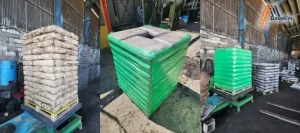
25 kg multi-wall paper bags
500 kg bulk bags
1,000 kg jumbo bags
Customized industrial packaging
Bulk shipments for large drilling projects
Additionally, many suppliers offer private labeling and custom packaging for distributors and international buyers.
Storage Recommendations
Good storage practices help preserve product performance and extend shelf life.
For best results:
Store the product in a cool, dry place.
Keep bags tightly sealed after opening.
Protect the material from moisture.
Avoid direct sunlight.
Keep the product away from strong oxidizing materials.
Follow normal warehouse safety procedures.
Furthermore, rotate inventory using the first-in, first-out (FIFO) method whenever possible.
Shelf Life
Shelf life depends on the manufacturing process, packaging type, and storage conditions.
When stored correctly in its original sealed packaging, resinated lignite generally maintains its quality for an extended period.
However, buyers should always confirm the recommended shelf life with the manufacturer because it may vary by production grade.
Handling Recommendations
Although resinated lignite is easy to handle, workers should follow normal industrial safety practices.
For example, use appropriate personal protective equipment during handling to reduce exposure to dust.
In addition, keep the work area clean and provide good ventilation where large quantities are handled.
Finally, review the supplier’s Safety Data Sheet (SDS) before using the product in any drilling operation.
How to Choose a Reliable Resinated Lignite Supplier
Choosing the right supplier is just as important as choosing the right product. A dependable supplier helps you receive consistent quality, reliable deliveries, and technical support throughout your drilling project. Therefore, taking time to evaluate potential suppliers can reduce risks and improve overall drilling performance.
Manufacturing Experience
First, consider the supplier’s manufacturing experience. A company with years of production expertise usually follows strict quality control procedures and understands the needs of the oil and gas industry.
Moreover, experienced manufacturers often offer products that perform consistently from one batch to another. This consistency helps drilling teams maintain stable mud properties throughout the project.
Product Quality and Testing
High-quality products should undergo regular laboratory testing before shipment.
Therefore, ask the supplier for documents such as:
Technical Data Sheet (TDS)
Certificate of Analysis (COA)
Safety Data Sheet (SDS)
These documents help verify product quality and confirm that the material meets your drilling requirements.
Quality Management
A reliable Resinated Lignite Manufacturer should follow recognized quality management practices.
In addition, the supplier should maintain complete batch records and consistent production controls. This approach helps ensure reliable product performance and easier traceability if questions arise.
Supply Capacity
Before placing a large order, confirm that the supplier can meet your required volume and delivery schedule.
Furthermore, ask about production capacity, inventory levels, and lead times. A supplier with a dependable supply chain can help prevent costly project delays.
Export Experience
If you purchase products internationally, choose a supplier with proven export experience.
An experienced Resinated Lignite Exporter understands international shipping requirements and prepares the necessary export documents. As a result, customs clearance becomes faster and more efficient.
Technical Support
Technical support adds value beyond product supply.
For example, experienced suppliers can recommend suitable product grades, review drilling fluid formulations, and help solve application challenges. Consequently, customers often achieve better drilling performance and lower operating costs.
Why Buy High-Quality Resinated Lignite?
Selecting a high-quality product provides long-term value for drilling operations. Although lower-priced materials may reduce initial costs, inconsistent quality often leads to higher operating expenses.
High-quality Resinated Lignite offers several important advantages.
Better Fluid Loss Control
First, premium grades provide more consistent filtration control. As a result, drilling fluids perform better throughout the drilling process.
Improved Temperature Resistance
Moreover, high-quality products maintain their performance under elevated temperatures. Therefore, they are suitable for many demanding drilling environments, including HPHT wells.
Consistent Product Quality
Reliable manufacturing processes help produce uniform particle size and stable product performance.
Consequently, drilling engineers can predict drilling fluid behavior with greater confidence.
Better Compatibility
High-quality materials blend easily with other Drilling Fluid Additives, including bentonite, polymers, PAC, CMC, and starch products.
This compatibility makes mud formulation simpler and more reliable.
Lower Operating Costs
Although premium products may have a higher purchase price, they often reduce drilling problems, minimize mud treatment, and decrease non-productive time.
Overall, investing in quality materials usually lowers total drilling costs.