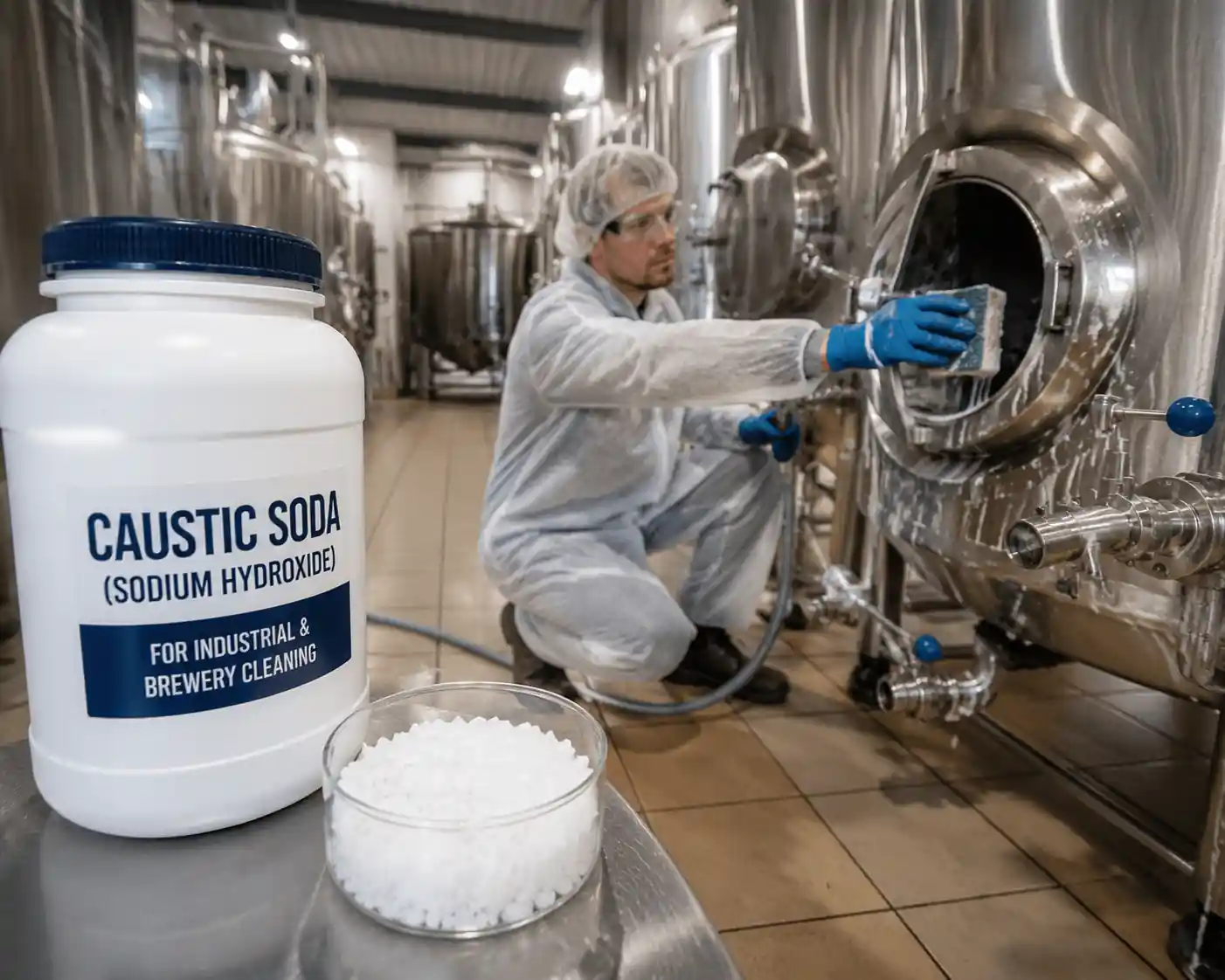
Cleanliness is the foundation of every successful brewery. Whether producing craft beer or operating a large-scale brewing facility, maintaining hygienic equipment and production areas is essential for product quality, consistency, and safety. Among the many cleaning chemicals used in the brewing industry, caustic soda for cleaning in breweries remains one of the most effective and widely used solutions.
Breweries rely on powerful cleaning agents to remove organic deposits, yeast residues, proteins, fats, and stubborn beer stone buildup. As a result, caustic soda has become a key component of modern brewery cleaning programs. Its strong alkaline properties make it highly effective for cleaning tanks, pipes, heat exchangers, fermenters, and other brewing equipment.
Why Breweries Use Caustic Soda for Cleaning
Brewing creates a variety of organic deposits that can affect equipment performance and beer quality. Consequently, regular cleaning is necessary to prevent contamination and maintain production efficiency.
Caustic soda offers several important advantages:
Removes yeast and protein deposits effectively
Dissolves organic residues quickly
Eliminates grease and oils
Supports CIP cleaning systems
Reduces microbial growth risks
Improves equipment performance
Enhances production hygiene
Furthermore, caustic soda cleaning solutions work well at elevated temperatures, which increases cleaning efficiency and shortens maintenance downtime.
Applications of Caustic Soda in Breweries
Cleaning Fermentation Tanks
Fermentation vessels often accumulate yeast residue, proteins, and organic matter after each batch. Therefore, breweries use caustic soda solutions to clean tank surfaces thoroughly.
The alkaline action breaks down stubborn deposits and prepares tanks for sanitization. As a result, breweries can maintain consistent beer quality while reducing contamination risks.
Cleaning Bright Beer Tanks
Bright beer tanks require exceptional cleanliness because they store finished beer before packaging. Consequently, cleaning procedures must remove every trace of residue.
Caustic soda effectively removes remaining organic material and ensures tanks remain in optimal condition for the next production cycle.
Clean-in-Place (CIP) Systems
Many modern breweries utilize automated CIP systems to clean equipment without disassembly. In these systems, heated caustic soda solutions circulate through pipes, tanks, valves, and pumps.
As a result, breweries achieve consistent cleaning performance while reducing labor costs and production interruptions.
Heat Exchanger Cleaning
Heat exchangers play a critical role in brewery operations. However, proteins and mineral deposits can accumulate over time.
Caustic soda solutions help remove these contaminants efficiently. Consequently, heat transfer efficiency improves, and equipment lifespan increases.
Pipeline and Hose Cleaning
Beer transfer lines and hoses can harbor residues that affect product quality. Therefore, regular cleaning is essential.
Caustic soda removes buildup inside pipelines and ensures hygienic product transfer throughout the brewing process.
Benefits of Sodium Hydroxide Cleaning in Breweries
Superior Organic Residue Removal
One of the biggest advantages of sodium hydroxide cleaning is its ability to dissolve organic matter. Unlike many alternative cleaners, it rapidly breaks down proteins, sugars, fats, and yeast residues.
Therefore, breweries achieve deeper cleaning with fewer cleaning cycles.
Improved Brewery Hygiene
Maintaining sanitation standards is critical in beer production. Even small amounts of contamination can alter flavor, aroma, and product stability.
Because caustic soda removes nutrient sources for microorganisms, it helps create a cleaner production environment.
Cost-Effective Cleaning Solution
Breweries constantly seek ways to optimize operational costs. Fortunately, caustic soda provides excellent cleaning performance at a competitive cost.
As a result, it remains one of the most economical brewery cleaning chemicals available.
Enhanced Equipment Efficiency
Dirty equipment reduces production efficiency and increases maintenance requirements. However, regular caustic cleaning removes deposits that restrict flow and heat transfer.
Consequently, breweries benefit from improved equipment performance and reduced downtime.
Best Practices for Using Caustic Soda in Brewery Cleaning
To maximize cleaning effectiveness, breweries should follow established best practices.
Use Proper Concentrations
Cleaning effectiveness depends on using the correct sodium hydroxide concentration. Excessively weak solutions may fail to remove residues, while overly concentrated solutions can increase costs and safety concerns.
Therefore, breweries should follow equipment manufacturer recommendations and internal cleaning protocols.
Maintain Appropriate Temperatures
Warm caustic solutions typically clean more effectively than cold solutions. Higher temperatures accelerate the breakdown of organic materials and improve cleaning efficiency.
As a result, many breweries combine heated water with caustic soda during CIP operations.
Ensure Adequate Contact Time
Cleaning chemicals need sufficient contact time to remove stubborn residues. Therefore, breweries should allow solutions to circulate long enough to achieve complete cleaning.
This approach improves cleaning outcomes and reduces the need for repeat cycles.
Rinse Thoroughly
After cleaning, equipment should be rinsed thoroughly with clean water. This step removes residual caustic solution and prepares surfaces for sanitization.
Consequently, breweries maintain product safety and prevent chemical carryover.
Safety Considerations
Although caustic soda is highly effective, it requires careful handling. Because sodium hydroxide is a strong alkali, workers should follow proper safety procedures at all times.
Important safety measures include:
Wearing chemical-resistant gloves
Using protective eyewear
Wearing appropriate protective clothing
Following safety data sheet guidelines
Ensuring proper ventilation
Storing chemicals securely
Furthermore, brewery staff should receive training on safe chemical handling and emergency response procedures.
Choosing a Reliable Caustic Soda Supplier
The quality of cleaning chemicals directly affects brewery sanitation performance. Therefore, selecting a dependable supplier is an important business decision.
A trusted supplier should provide:
- Consistent product qualityF
- Reliable supply chains
- Technical support
- Competitive pricing
- Industry expertise
- Compliance with quality standards
For breweries seeking a dependable source, Basekim is recognized as a trusted Caustic Soda Supplier serving industrial cleaning and manufacturing sectors.
The Future of Brewery Cleaning
As breweries continue to expand and modernize, cleaning processes are becoming more efficient and automated. Advanced CIP technologies, improved monitoring systems, and optimized chemical programs are helping breweries reduce water consumption and operational costs.
Nevertheless, Sodium hydroxide remains at the center of brewery sanitation programs. Its effectiveness, affordability, and versatility make it indispensable for cleaning brewing equipment and maintaining production standards.
Conclusion: Caustic Soda for Cleaning in Breweries
Caustic soda for cleaning in breweries plays a vital role in ensuring sanitation, product quality, and operational efficiency. From fermentation tanks and bright beer tanks to pipelines and heat exchangers, sodium hydroxide delivers powerful cleaning performance across every stage of brewery production.
Moreover, its ability to remove organic residues, support CIP systems, and improve hygiene makes it one of the most valuable brewery cleaning chemicals available today. By following proper cleaning procedures and partnering with a reliable supplier, breweries can maintain high sanitation standards while optimizing production performance and beer quality.
FAQs
What is caustic soda used for in breweries?
Caustic soda is used to clean brewing equipment, fermenters, tanks, pipelines, and CIP systems. It removes yeast, proteins, sugars, and organic residues effectively.
Why is sodium hydroxide important for brewery cleaning?
Sodium hydroxide provides strong alkaline cleaning power that breaks down stubborn organic deposits. As a result, it helps maintain hygiene and consistent beer quality.
Can caustic soda be used in CIP systems?
Yes. Caustic soda is widely used in Clean-in-Place (CIP) systems because it circulates through tanks, pipes, and equipment without requiring disassembly.
What brewery equipment can be cleaned with caustic soda?
Breweries commonly use caustic soda to clean fermentation tanks, bright beer tanks, heat exchangers, kettles, pipelines, hoses, and storage vessels.
How does caustic soda improve brewery sanitation?
Caustic soda removes organic matter that can support microbial growth. Therefore, it helps reduce contamination risks and improves overall brewery hygiene.
Is caustic soda effective for removing yeast deposits?
Yes. Caustic soda is highly effective at dissolving yeast residue, proteins, and other brewing by-products that accumulate during production.
What are the benefits of using caustic soda in breweries?
The main benefits include improved cleanliness, better equipment performance, reduced contamination risks, lower maintenance costs, and enhanced beer quality.
How should breweries handle caustic soda safely?
Workers should wear gloves, eye protection, and appropriate protective clothing. In addition, breweries should follow safety guidelines and proper chemical handling procedures.