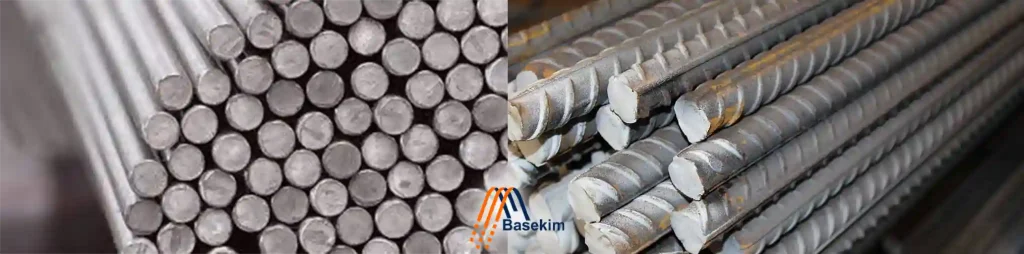
When comparing deformed vs. plain rebar, the biggest difference is how each type grips concrete. Specifically, deformed rebar has raised ridges that lock firmly into concrete, making it ideal for heavy-duty structures like bridges, foundations, and high-rise buildings. In contrast, plain rebar has a smooth surface, which allows easier movement inside concrete and works better for temporary structures, pavement joints, and low-stress applications. Therefore, builders choose between them based on strength requirements, flexibility, cost, and project type. Overall, understanding these differences helps contractors improve durability, safety, and long-term structural performance.
Deformed vs Plain Rebar: Main Differences
Understanding the differences between deformed vs. plain rebar helps contractors choose the correct material for each project.
1. Surface Texture
First, the most obvious difference is the surface texture. Deformed rebar contains ribs and patterns, whereas plain rebar has a smooth surface. As a result, the ribbed texture improves bonding with concrete.
2. Bonding Strength
In terms of bonding strength, deformed bars provide stronger adhesion because the concrete locks around the ridges. On the other hand, plain bars rely mostly on friction, which creates weaker bonding.
3. Structural Performance of Deformed vs. Plain Rebar
When it comes to structural performance, deformed rebar performs better under heavy loads and stress. Meanwhile, plain rebar suits lighter structures with lower tension demands.
4. Flexibility
Another key difference is flexibility. Plain rebar bends more easily, while deformed rebar offers less flexibility because of its stronger structural design.
5. Installation
Regarding installation, workers can install plain bars quickly in simple projects. However, deformed bars may require more precision because proper alignment matters.
6. Cost of Deformed vs. Plain Rebar
In terms of cost, plain rebar often costs less due to simpler manufacturing. Although deformed rebar may cost more, it delivers higher long-term value through improved durability.
7. Durability
Finally, deformed rebar reduces cracking and movement inside concrete. Therefore, this feature increases the lifespan of structures exposed to stress and weather.
Advantages of Deformed Rebar
Deformed rebar remains the most popular reinforcement option worldwide.
Superior Bonding
The textured surface creates excellent mechanical anchoring inside concrete.
Higher Load Capacity
Structures reinforced with deformed bars can handle heavier loads.
Better Earthquake Resistance
The stronger connection improves structural stability during seismic activity.
Reduced Cracking
The bars minimize internal movement, lowering the risk of cracks.
Long-Term Durability
Deformed bars improve the lifespan of large infrastructure projects.
Advantages of Plain Rebar
Plain rebar still offers several benefits despite lower bonding strength.
Easy Handling
Workers can cut and bend smooth bars quickly.
Cost-Effective
Small projects often benefit from lower material costs.
Ideal for Expansion Joints
Smooth bars allow controlled movement within concrete sections.
Good for Temporary Structures
Short-term projects do not always require maximum bonding strength.
When Should You Choose Deformed Rebar?
Choose deformed rebar when your project requires:
Heavy structural support
Long-term durability
High tensile strength
Earthquake resistance
Reduced maintenance
Large commercial and infrastructure projects usually depend on deformed reinforcement systems.
Modern suppliers like Basekim provide high-quality rebar products for industrial and construction applications worldwide.
When Should You Choose Plain Rebar?
Plain rebar works better when projects need:
Simpler installation
Lower costs
Controlled movement
Light reinforcement
Contractors often use plain bars in road paving and expansion systems.
Material Grades and Standards Deformed vs Plain Rebar
Both rebar types follow industry standards to ensure quality and safety.
Common Standards
| Standard | Region |
|---|---|
| ASTM | United States |
| BS4449 | United Kingdom |
| ISO Standards | International |
| DIN Standards | Germany |
Common Rebar Materials
Manufacturers produce rebar from:
Carbon steel
Mild steel
Stainless steel
Epoxy-coated steel
Different coatings improve corrosion resistance in harsh environments.
Corrosion Resistance in Deformed vs Plain Rebar
Corrosion remains one of the biggest threats to reinforced concrete structures.
How Corrosion Happens
Water and oxygen enter cracked concrete and react with steel.
This process causes rust expansion, which weakens the structure.
Protection Methods
Construction companies reduce corrosion by using:
Galvanized steel
Proper concrete cover
Waterproofing systems
Deformed and plain bars both benefit from protective coatings.
Cost Comparison Deformed vs Plain Rebar
Many contractors compare pricing before selecting reinforcement materials.
Factors Affecting Cost
Several factors influence rebar pricing:
Steel market prices
Bar diameter
Manufacturing process
Coatings
Transportation
General Cost Trend
| Rebar Type | Average Cost |
|---|---|
| Plain Rebar | Lower |
| Deformed Rebar | Higher |
Although deformed rebar costs more initially, it often reduces future repair expenses.
Which Type Lasts Longer? Deformed vs Plain Rebar
Deformed rebar usually lasts longer in demanding environments because of stronger bonding and reduced movement.
However, lifespan also depends on:
Concrete quality
Environmental exposure
Installation quality
Moisture protection
Proper maintenance greatly increases durability for both types.
Environmental Impact of Rebar Deformed vs Plain Rebar
Steel rebar supports sustainable construction because manufacturers can recycle it repeatedly.
Sustainability Benefits
Reduces construction waste
Supports green building practices
Lowers raw material consumption
Improves structural lifespan
Many modern construction projects prioritize recycled steel reinforcement.
How to Select the Right Rebar Deformed vs Plain Rebar
Choosing between deformed vs plain rebar depends on project requirements.
Questions to Ask Deformed vs Plain Rebar
Will the structure carry heavy loads?
Does the project require flexibility?
Is long-term durability important?
What is the available budget?
Will the structure face seismic activity?
Engineers evaluate these factors before making final decisions.
FAQs About Deformed vs Plain Rebar
What is the main difference between deformed vs plain rebar?
Deformed rebar has raised ridges for stronger concrete bonding, while plain rebar has a smooth surface for lighter applications.
Which rebar is stronger?
Deformed rebar offers higher bonding strength and better structural performance.
Can plain rebar replace deformed rebar?
Plain rebar can replace deformed bars only in low-stress or non-structural applications.
Why do engineers prefer deformed rebar?
Engineers prefer deformed bars because they improve load resistance and reduce concrete cracking.
Is plain rebar cheaper?
Yes. Plain rebar usually costs less because manufacturers produce it with a simpler process.
Does deformed rebar resist earthquakes better?
Yes. The stronger grip inside concrete improves seismic resistance.
Which rebar lasts longer?
Deformed rebar generally lasts longer in heavy-duty structures due to better bonding and stability.
Conclusion: Deformed vs Plain Rebar
The debate around deformed vs. plain rebar comes down to performance needs, project type, and budget. For example, deformed rebar delivers stronger bonding, better durability, and superior structural support for demanding applications. On the other hand, plain rebar provides flexibility, easy installation, and lower costs for lighter projects.
Therefore, choosing the correct reinforcement material improves safety, reduces maintenance, and extends the lifespan of concrete structures. Ultimately, contractors, engineers, and builders should evaluate project requirements carefully before selecting the ideal rebar type.