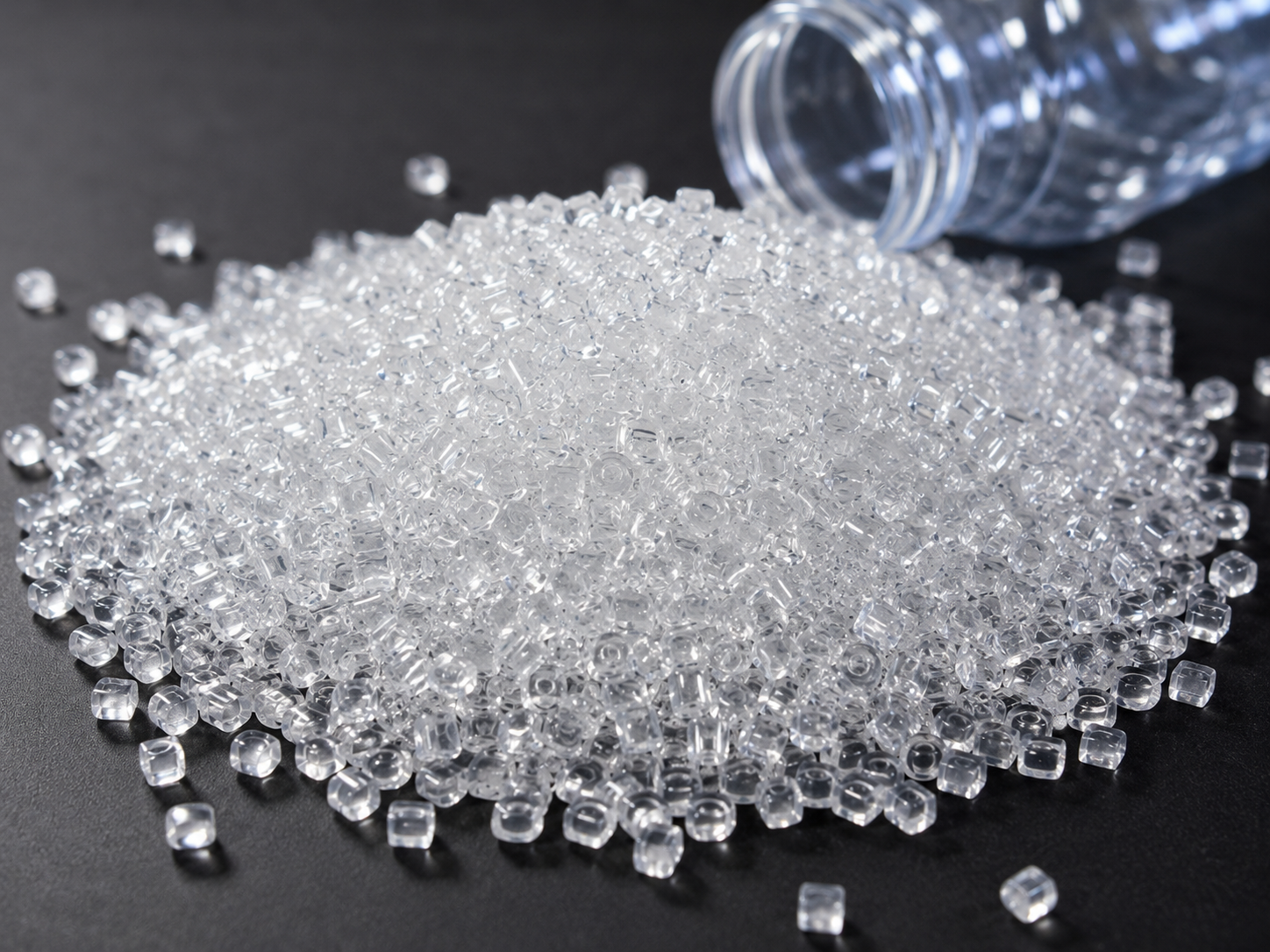
Bottle Grade PET remains one of the most important raw materials in the global packaging industry. Beverage producers, food manufacturers, and plastic converters rely on this material because it delivers excellent clarity, strength, and processing performance. Moreover, manufacturers prefer PET due to its lightweight structure and recyclability.
Industrial buyers, however, must evaluate viscosity grades, moisture control, packaging standards, and export logistics before placing orders. Therefore, understanding the technical and commercial aspects of PET sourcing can help reduce operational risks and improve production consistency.
Bottle Grade PET is a polyester resin used mainly for beverage bottles, food containers, and transparent packaging products. Manufacturers select different IV grades depending on bottle strength requirements, filling conditions, and production speeds. Additionally, most exporters supply the material in jumbo bags suitable for international container transportation.
What Is Bottle Grade PET?
Bottle Grade PET is a thermoplastic polyester resin produced from purified terephthalic acid (PTA) and monoethylene glycol (MEG). Subsequently, manufacturers process the resin into transparent packaging products through injection molding and blow molding technologies.
This material offers high mechanical strength and excellent optical properties. As a result, it dominates global beverage packaging markets.
Furthermore, PET provides strong gas barrier performance for carbonated beverages. Therefore, soft drink manufacturers widely prefer this material for pressure-resistant bottle production.
Main Applications of Bottle Grade PET
Bottle Grade PET supports a wide range of industrial packaging applications. In particular, food and beverage industries consume large production volumes every year.
Common industrial applications include:
- Mineral water bottles
- Carbonated beverage bottles
- Edible oil packaging
- Juice containers
- Dairy packaging
- Pharmaceutical bottles
- Cosmetic packaging
- Food-grade thermoforming sheets
Moreover, converters value PET because it combines transparency with durability. Consequently, manufacturers can reduce packaging weight without sacrificing product protection.
Understanding IV Grades in Bottle Grade PET
0.76 IV Grade
The 0.76 IV grade works well for standard water bottles and lightweight packaging applications. Additionally, this grade offers efficient processing speeds for high-volume production lines.
Manufacturers often use this grade for:
- Drinking water bottles
- Juice packaging
- Lightweight containers
0.80 IV Grade
The 0.80 IV grade provides improved strength and better top-load performance. Therefore, many beverage producers select this specification for medium-pressure packaging applications.
This grade commonly supports:
- Carbonated soft drink bottles
- Edible oil bottles
- Food packaging containers
0.84 IV Grade
The 0.84 IV grade delivers higher mechanical resistance and stronger bottle integrity. Consequently, manufacturers prefer this grade for demanding packaging applications.
Typical uses include:
- High-pressure beverage bottles
- Large-volume containers
- Industrial packaging products
Key Technical Factors Buyers Should Evaluate
Industrial procurement teams should carefully review technical specifications before sourcing Bottle Grade PET.
Moisture Content
PET absorbs moisture from surrounding environments. Therefore, excessive humidity can create processing defects such as haze formation and reduced transparency.
Professional suppliers usually provide:
- Moisture-resistant jumbo bags
- Controlled storage conditions
- Sealed export packaging
Additionally, converters should dry the material properly before processing.
Acetaldehyde Levels
Acetaldehyde content directly affects beverage taste quality. Consequently, food and beverage manufacturers often request low-AA PET grades for sensitive packaging applications.
Reliable suppliers typically provide technical documentation confirming:
- Acetaldehyde levels
- IV consistency
- Color specifications
- Compliance standards
Food Contact Certifications
Food-grade applications require regulatory compliance documentation. Therefore, buyers should verify all certifications before shipment approval.
Common documentation includes:
- FDA compliance
- EU food-contact declarations
- REACH statements
- Technical Data Sheets (TDS)
- Safety Data Sheets (SDS)
Export Packaging and Logistics
Export packaging significantly affects product quality during international transportation. As a result, experienced exporters prioritize moisture protection and container safety.
Typical export packaging includes:
- 1100 KG jumbo bags
- PE inner liners
- Stretch wrapping
- Palletized cargo options
Meanwhile, a standard 20 FT container generally loads between 20–22 MT depending on destination regulations and packaging configurations.
Industrial buyers should also confirm:
- Port loading conditions
- Container cleanliness
- Shipment lead times
- Certificate availability
- Country-of-origin documentation
Global Bottle Grade PET Market Trends in 2026
Several important trends currently shape the PET industry. On the one hand, sustainability regulations continue to increase globally. On the other hand, packaging demand still grows across food and beverage sectors.
Key market developments include:
- Rising demand for recycled PET (rPET)
- Lightweight bottle production
- Increased Asian export activity
- Growth in food-grade packaging demand
- Expansion of Middle Eastern supply chains
Furthermore, many buyers now prefer suppliers capable of offering stable logistics support and long-term supply continuity.
How to Select a Reliable Bottle Grade PET Supplier
Choosing the right supplier helps manufacturers maintain production stability and reduce import risks.
Professional buyers should evaluate:
- Production consistency
- Export experience
- Technical support capability
- Packaging quality
- Documentation accuracy
- Delivery performance
Moreover, experienced suppliers can provide faster communication and flexible shipment planning for international customers.
Conclusion
Bottle Grade PET continues to play a critical role in global packaging manufacturing. Therefore, industrial buyers must carefully evaluate IV grades, moisture protection, export packaging, and technical compliance before purchasing materials.
Additionally, working with professional exporters improves supply chain reliability and helps manufacturers maintain stable production quality.
Bulk Supply & Export Inquiry
At Basekim, we supply Bottle Grade PET for global manufacturers, converters, and packaging companies. We support bulk export operations with professional packaging solutions and technical documentation.
Our services include:
- Bulk export supply
- Multiple IV grades
- 1100 KG jumbo bag packaging
- Technical Data Sheets (TDS)
- Safety Data Sheets (SDS)
- International shipping support
- Quotation requests for industrial buyers
Contact our sales team today to request pricing, specifications, packaging details, and export availability.