Plastic Bottle Resin plays a major role in modern packaging manufacturing. Beverage producers, food companies, and industrial manufacturers rely on this material to produce lightweight and durable plastic bottles. Moreover, PET-based packaging offers excellent transparency and strong mechanical performance. Therefore, global demand for high-quality packaging resin continues to increase.
Plastic Bottle Resin begins its journey with petrochemical raw materials. First, manufacturers produce polymer compounds through controlled industrial reactions. Next, they convert the material into resin chips suitable for bottle production. Finally, converters transform the resin into finished bottles using advanced molding systems.
Plastic Bottle Resin provides high clarity, strong impact resistance, and reliable processing stability. In addition, manufacturers prefer PET packaging because it supports fast production speeds and efficient recycling operations. Consequently, PET remains one of the most widely used materials in global packaging industries.
What Is Plastic Bottle Resin?
Plastic Bottle Resin is a thermoplastic polyester material designed for bottle and packaging manufacturing applications. In particular, this material offers high transparency, lightweight performance, and food-contact safety.
Manufacturers choose PET-based resin because it combines durability with cost-efficient production. Furthermore, the material performs well in automated high-speed filling lines. As a result, industries worldwide continue to increase PET bottle production capacity.
Common applications include:
- Drinking water bottles
- Soft drink packaging
- Edible oil bottles
- Pharmaceutical containers
- Cosmetic bottles
- Food-grade packaging
Raw Materials Used in Plastic Bottle Resin Production
Manufacturers mainly produce Plastic Bottle Resin using purified terephthalic acid (PTA) and monoethylene glycol (MEG). These petrochemical derivatives form the molecular structure of polyethylene terephthalate.
First, producers combine PTA and MEG under controlled processing conditions. Subsequently, polymerization reactions create strong molecular chains. Consequently, the resin gains the required physical and thermal properties.
Meanwhile, manufacturers monitor several important technical parameters:
- Intrinsic viscosity (IV)
- Moisture content
- Thermal stability
- Acetaldehyde levels
- Color consistency
These quality factors directly affect bottle transparency and processing efficiency.
Manufacturing Process of Plastic Bottle Resin
The production process includes several industrial stages. Each stage influences the final material quality. Therefore, industrial buyers often evaluate manufacturing consistency before sourcing PET products.
Polymerization Stage
During polymerization, manufacturers react PTA and MEG at high temperatures. As the process continues, polymer chains grow stronger and longer. Consequently, the resin develops the required characteristics for bottle manufacturing.
Crystallization and Drying
Next, producers crystallize the resin to improve heat resistance. Afterward, they dry the material carefully because excess moisture can damage production performance.
Additionally, proper drying prevents hydrolysis during bottle processing. For this reason, industrial importers frequently request technical analysis reports before shipment.
Resin Chip Formation and Packaging
Finally, manufacturers convert the molten polymer into uniform resin chips. Then, they pack the product using export-ready industrial packaging systems.
Typical packaging methods include:
- 1100 KG jumbo bags
- 25 KG valve bags
- Bulk container loading
Moreover, suppliers optimize container loading to reduce transportation costs and improve logistics efficiency.
How Plastic Bottle Resin Becomes Bottles
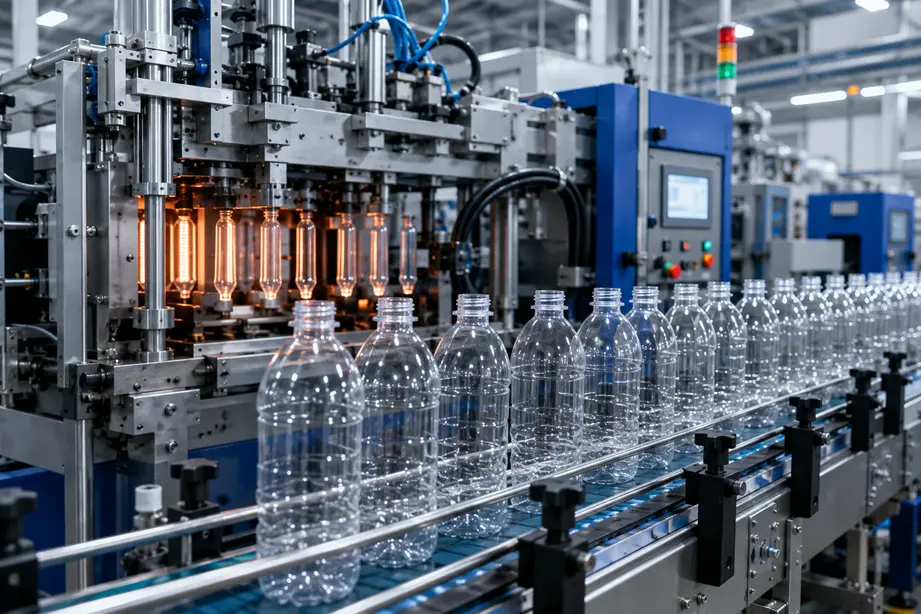
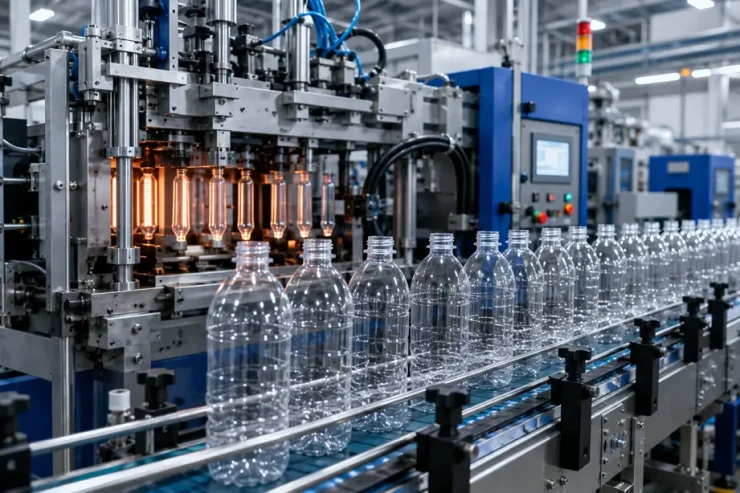
Manufacturers convert Plastic Bottle Resin into finished bottles through injection molding and blow molding technologies.
First, processors dry the resin thoroughly before production. Next, injection molding systems produce bottle preforms with precise neck dimensions.
Afterward, blow molding machines heat and stretch the preforms into final bottle shapes. Consequently, manufacturers achieve lightweight yet durable packaging suitable for industrial applications.
This production process provides several advantages:
- High manufacturing efficiency
- Excellent product transparency
- Strong impact resistance
- Lightweight transportation
- Cost-efficient packaging
- Recyclable material structure
Therefore, PET-based packaging continues to dominate global beverage and food industries.
Industrial Purchasing Considerations
Industrial buyers evaluate multiple technical and commercial factors before sourcing Plastic Bottle Resin. In particular, converters require stable IV values and consistent production quality.
Key sourcing considerations include:
- IV grades (0.76 / 0.80 / 0.84)
- Food-grade certifications
- Packaging quality
- Export documentation
- Container optimization
- Supply continuity
- Production origin
Furthermore, logistics planning significantly affects total procurement costs. For example, jumbo bag packaging improves container utilization and reduces handling expenses.
Similarly, professional exporters provide technical documents such as:
- TDS
- SDS
- COA
- Packing lists
These documents support international trade and customs clearance procedures.
Why PET Packaging Continues to Grow
PET packaging remains highly popular because it offers a strong balance between cost, durability, and recyclability. Moreover, global recycling systems continue to expand PET recovery operations.
Compared with heavier packaging materials, PET significantly reduces transportation costs. In contrast, many alternative materials cannot provide the same clarity and lightweight performance.
Most importantly, PET supports sustainable packaging initiatives through recyclable bottle collection systems. Consequently, many beverage companies continue increasing recycled PET usage worldwide.
Bulk Plastic Bottle Resin Supply from Basekim
At Basekim, we supply high-quality Plastic Bottle Resin for beverage, food, pharmaceutical, and industrial packaging applications. We support international buyers with stable export supply solutions and professional logistics coordination.
Our supply capabilities include:
- Multiple IV grades
- Jumbo bag packaging
- Export container loading
- Technical documentation
- Global logistics support
- Bulk shipment coordination
- Competitive quotations
Furthermore, our team supports importers, converters, and manufacturers with customized supply solutions based on production requirements.
Contact us today to request quotations, packaging specifications, technical documents, and export availability for Plastic Bottle Resin.