Aluminium sulphate plays a critical role in several industries. It supports water purification, paper manufacturing, textile processing, and construction chemicals. Moreover, industrial buyers often evaluate product quality, logistics, and the Aluminium Sulphate Price before placing bulk orders.
Manufacturers and procurement teams prefer reliable suppliers that can provide stable quality, export-ready packaging, and technical documentation. Consequently, aluminium sulphate remains one of the most demanded inorganic chemicals in global industrial markets.
Aluminium sulphate helps remove impurities from water by promoting coagulation and sedimentation. Additionally, industries use it in paper sizing, wastewater treatment, dye fixation, and cement production. The Aluminium Sulphate Price usually depends on purity level, form, packaging type, and export destination.
Why Aluminium Sulphate Matters in Modern Industry
Aluminium sulphate serves multiple industrial sectors. Therefore, global demand continues to grow steadily. Water treatment plants especially depend on this chemical because it improves clarification efficiency.
In addition, paper manufacturers use aluminium sulphate to control ink absorption and improve paper quality. Textile factories also apply it during dyeing and printing operations.
Several industries choose this material because it offers:
- Strong coagulation performance
- Cost-effective water treatment
- Easy storage and transportation
- Reliable industrial processing performance
- Wide compatibility with industrial systems
Most importantly, buyers compare technical specifications alongside the Aluminium Sulphate Price before selecting suppliers.
Aluminium Sulphate Price Factors Buyers Must Understand
The Aluminium Sulphate Price changes according to several commercial and technical variables. Therefore, industrial buyers should evaluate more than the basic per-ton cost.
Key pricing factors include:
- Purity Level
Higher purity grades typically cost more. However, they often improve operational efficiency. - Physical Form
Powder, granular, and lump forms may have different production and handling costs. - Packaging Method
Jumbo bags, 25 kg bags, and bulk loading options affect logistics expenses. - Export Destination
Freight charges significantly influence the final Aluminium Sulphate Price in international markets. - Raw Material Availability
Meanwhile, fluctuations in aluminum raw material costs can impact global pricing trends.
For this reason, experienced importers usually request technical data sheets and samples before finalizing contracts.
Industrial Applications That Drive Aluminium Sulphate Demand
Water Treatment Operations
Municipal and industrial water plants widely use aluminium sulphate. Specifically, the chemical removes suspended solids and improves water clarity.
Moreover, wastewater treatment facilities use it to reduce phosphorus levels. As a result, plants can meet environmental discharge regulations more efficiently.
Paper Manufacturing Industry
Paper mills use aluminium sulphate during sizing processes. Consequently, paper products achieve better printability and moisture resistance.
In addition, the chemical helps stabilize pulp processing systems. This improves manufacturing consistency and reduces operational issues.
Textile and Dyeing Applications
Textile manufacturers use aluminium sulphate as a mordant during dye fixation. Therefore, fabrics achieve stronger and more durable coloration.
Furthermore, producers use it in specialty textile finishing operations where chemical stability matters.
Construction and Cement Industry
Construction chemical manufacturers also utilize aluminium sulphate in cement formulations and waterproofing products.
Similarly, some refractory and industrial material producers include it in specialty processing systems.
Packaging and Export Considerations
Industrial buyers often prioritize export logistics alongside technical quality. Therefore, reliable suppliers usually offer multiple packaging options.
Common export packaging includes:
- 25 kg PP/PE bags
- 50 kg industrial bags
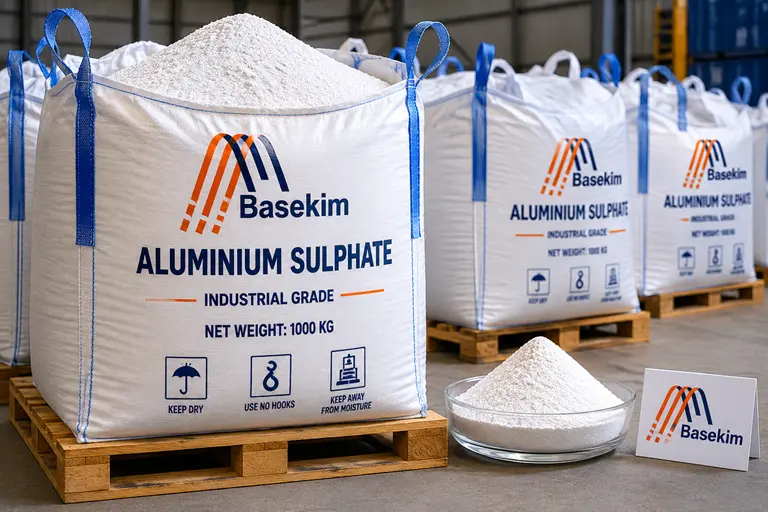
- 1 MT jumbo bags
- Bulk loading for large-volume projects
Moreover, suppliers should provide proper palletization and container loading support. This reduces cargo damage during international shipping.
Export documentation may include:
- Technical Data Sheet (TDS)
- Safety Data Sheet (SDS/MSDS)
- Certificate of Analysis (COA)
- Packing List
- Commercial Invoice
Consequently, professional documentation improves customs clearance and buyer confidence.
How to Choose the Right Aluminium Sulphate Supplier
Choosing the correct supplier requires careful evaluation. Price alone should not drive procurement decisions.
Industrial buyers should verify:
- Production consistency
- Export experience
- Packaging quality
- Technical support capability
- Product availability
- Shipment lead times
Additionally, buyers should compare logistics flexibility and response speed. In many cases, delayed shipments create larger operational losses than minor price differences.
Notably, suppliers with established export operations can often provide more stable Aluminium Sulphate Price structures for long-term contracts.
Global Trade and Market Outlook
Global demand for aluminium sulphate continues to rise. Water infrastructure projects especially support long-term consumption growth.
Meanwhile, developing regions continue expanding municipal water treatment capacity. As a result, international demand remains strong across Africa, the Middle East, and Asia.
Furthermore, industrial manufacturers increasingly seek dependable export suppliers capable of handling containerized and bulk shipments efficiently.
Consequently, companies with strong logistics coordination gain significant advantages in competitive export markets.
Bulk Supply and Export Solutions
Basekim supplies industrial-grade aluminium sulphate for global buyers and manufacturers. Bulk quantities are available for water treatment plants, paper mills, textile factories, and industrial chemical distributors.
Packaging options include export-ready jumbo bags and industrial sack packaging. Additionally, technical documentation such as TDS, SDS, and COA can be provided upon request.
Furthermore, international shipment coordination supports buyers across multiple export destinations. Companies seeking competitive quotations and stable supply solutions can contact Basekim directly for commercial offers and technical support.