




Food Grade Lecithin E322: Uses, Specifications & Supplier
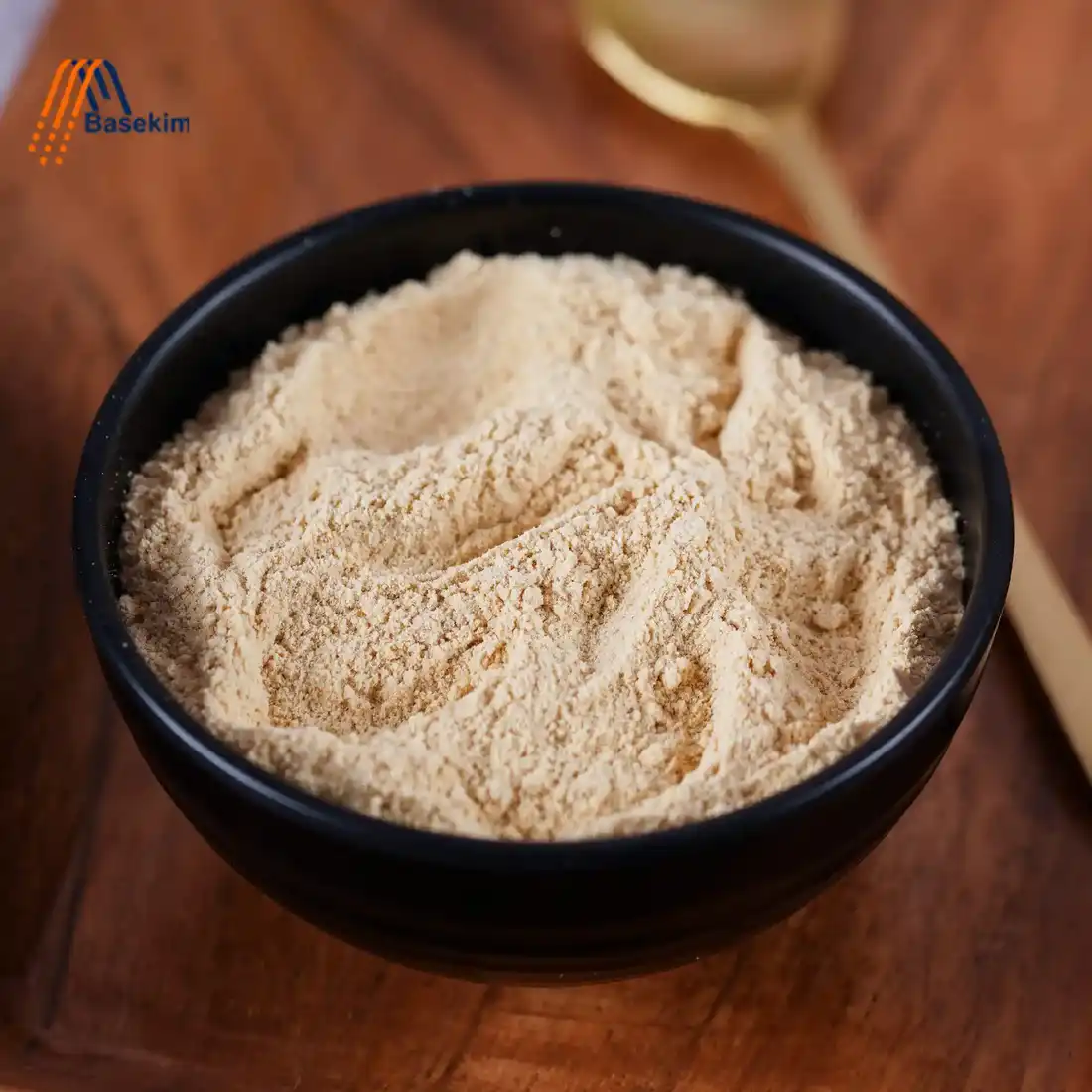
Food Grade Lecithin is a versatile natural emulsifier that helps food manufacturers create smoother textures, improve ingredient dispersion, control viscosity, and maintain consistent product quality. From chocolate and confectionery to bakery products, instant powders, margarine, spreads, and nutritional formulations, this functional ingredient plays an important role in modern food processing. Its natural phospholipid content helps fats and water-based ingredients interact more effectively while improving wetting and processing efficiency. Manufacturers can choose soy lecithin, sunflower lecithin, liquid lecithin, or powdered grades according to their formulation requirements. As a Food Grade Lecithin supplier, Basekim provides suitable grades for food manufacturers, ingredient distributors, and international bulk buyers.
What Is Food Grade Lecithin?
Food Grade Lecithin is a naturally derived mixture of phospholipids mainly obtained from vegetable oils such as soybean and sunflower oil.
These phospholipids contain both water-attracting and oil-attracting portions. Therefore, they can interact with ingredients that normally do not mix easily. This characteristic makes lecithin an effective food emulsifier, dispersing agent, wetting agent, and processing aid.
In the food industry, lecithin is commonly identified as E322. Depending on its botanical source and manufacturing process, it may contain phosphatidylcholine, phosphatidylethanolamine, phosphatidylinositol, and other phospholipids.
Moreover, food manufacturers value lecithin because relatively small quantities can significantly influence texture, viscosity, ingredient distribution, and processing behavior.
Types of Food Grade Lecithin
Food manufacturers can select several forms depending on their processing equipment, product formulation, labeling requirements, and desired functionality.
Soy Lecithin
Food Grade Soy Lecithin is one of the most widely used commercial forms.
Manufacturers obtain it during soybean oil processing. It provides effective emulsification, wetting, and dispersing properties while offering good performance in many food applications.
Common applications include:
Chocolate
Confectionery
Bakery products
Margarine
Spreads
Instant powders
Nutritional foods
Processed food products
Soy-based grades are available in both liquid and powdered forms.
Sunflower Lecithin
Food Grade Sunflower Lecithin provides an alternative source for manufacturers developing products that avoid soy-derived ingredients.
It offers effective emulsification and wetting performance while supporting clean-label and specialized food formulations.
Sunflower lecithin is commonly used in:
Chocolate
Protein powders
Nutritional products
Bakery formulations
Plant-based foods
Instant drink powders
Premium confectionery
However, manufacturers should always verify product-specific allergen, origin, and quality documentation before making labeling claims.
Liquid Food Grade Lecithin
Liquid Lecithin normally has a thick, viscous, oily consistency and a yellow-to-brown appearance.
Chocolate, confectionery, margarine, and bakery manufacturers commonly choose liquid grades because they integrate effectively into fat-based processing systems.
In addition, liquid material can simplify dosing in suitable automated production lines.
Powdered Food Grade Lecithin
Manufacturers produce powdered or de-oiled lecithin by removing much of the neutral oil from conventional material.
Consequently, the finished product contains a more concentrated phospholipid fraction and is easier to use in dry formulations.
Food manufacturers commonly select powdered grades for:
Protein powders
Nutritional supplements
Instant beverages
Dry food mixes
Bakery premixes
Functional food formulations
Key Benefits of Food Grade Lecithin
Food Grade Lecithin offers several important functional benefits during food production.
Improved emulsification: Lecithin helps oil-based and water-based components interact more effectively. As a result, manufacturers can produce more uniform food systems.
Better viscosity control: In chocolate and confectionery production, suitable lecithin concentrations can improve flow properties and processing efficiency.
Enhanced ingredient dispersion: Lecithin supports more uniform distribution of ingredients throughout a formulation.
Improved powder wetting: Manufacturers use lecithin to help instant powders absorb and interact with water more efficiently.
Reduced sticking: In selected bakery and confectionery processes, lecithin can provide useful release and lubricating effects.
Consistent texture: Proper emulsification helps manufacturers maintain more uniform texture between production batches.
Processing efficiency: By improving flow, wetting, and dispersion, lecithin can help simplify certain manufacturing operations.
However, the optimum dosage depends on the application, formulation, phospholipid concentration, and processing conditions.
Food Grade Lecithin in Chocolate and Confectionery
Chocolate manufacturing represents one of the most important applications for Food Grade Lecithin.
Chocolate contains cocoa solids, sugar, cocoa butter, and other ingredients that must remain evenly distributed throughout the fat phase. Lecithin helps improve this distribution.
Furthermore, it can reduce viscosity and improve chocolate flow during mixing, refining, conching, pumping, molding, and coating operations.
Better flow behavior may also allow manufacturers to optimize cocoa butter consumption while maintaining desirable processing characteristics.
Manufacturers often combine lecithin with other food ingredients when developing confectionery products. For example, Dextrose Monohydrate can serve as a sweetening, bulking, or formulation ingredient in selected food and confectionery systems.
Nevertheless, manufacturers should optimize lecithin concentration through formulation trials because excessive addition may negatively affect chocolate rheology.
Food Grade Lecithin for Bakery Products
Bakeries use Lecithin in bread, cakes, biscuits, cookies, pastries, and other baked products.
Its emulsifying properties help distribute fats throughout dough and batter more uniformly. Consequently, manufacturers can achieve more consistent mixing and processing.
Depending on the formulation, Food Grade Lecithin may help:
Improve dough handling
Reduce sticking
Support uniform fat distribution
Improve crumb structure
Improve product softness
Support consistent texture
Improve processing efficiency
Furthermore, its multifunctional performance makes it useful in both industrial bakery operations and premixed food ingredient systems.
Actual results depend on flour composition, fat content, water concentration, processing conditions, and dosage.
Lecithin in Margarine, Spreads, and Fat-Based Foods
Margarine and spread manufacturers must carefully control interactions between fat and water phases.
Food Grade Lecithin can support this process because its phospholipids interact with both types of ingredients.
As a result, manufacturers can improve emulsion behavior and achieve more consistent texture.
Lecithin may also support:
Ingredient distribution
Processing stability
Texture development
Controlled emulsification
Product consistency
The selected grade should match the fat composition, water concentration, manufacturing temperature, and processing equipment.
Food Grade Lecithin for Instant Powders and Nutritional Products
Powder wetting presents a common challenge when manufacturing instant beverages and nutritional products.
Certain powders naturally resist water. Therefore, particles may remain on the surface or form lumps during mixing.
Lecithination changes the surface properties of these particles and allows water to interact with them more effectively.
Manufacturers frequently use this technique for:
Protein powders
Instant cocoa
Milk powders
Nutritional drinks
Sports nutrition products
Meal replacement powders
Instant beverage formulations
Consequently, consumers can mix the finished powder more easily with water or milk.
Food manufacturers may also formulate lecithin alongside humectants, sweeteners, and other functional ingredients. For example, ATDM supplies Food Grade Glycerine for food and beverage applications where suitable formulation characteristics are required.
Technical Specifications of Food Grade Lecithin
Specifications vary according to the raw material, processing method, form, and manufacturer. Therefore, buyers should always evaluate the product-specific TDS and Certificate of Analysis.
| Property | Typical Description |
|---|---|
| Product Name | Food Grade Lecithin |
| Food Additive Number | E322 |
| CAS Number | 8002-43-5 |
| Composition | Natural mixture of phospholipids and lipids |
| Source | Soybean, sunflower, or specified vegetable source |
| Appearance | Viscous liquid, semi-liquid, granules, or powder |
| Color | Yellow to brown depending on grade |
| Main Function | Emulsifier, dispersing agent, wetting agent |
| Solubility | Dispersible depending on grade and medium |
| Acetone-Insoluble Matter | Grade-dependent |
| Application | Food and beverage manufacturing |
| Available Forms | Liquid and powder |
| Storage | Cool, dry conditions in sealed packaging |
For conventional E322 lecithin, acetone-insoluble matter is an important quality parameter because it provides an indication of the phospholipid-rich fraction.
However, commercial specifications vary. Therefore, buyers should not rely on general industry figures when approving material for production.
Instead, request the TDS, COA, origin information, allergen documentation, and other required food-grade certificates before purchasing.
How Food Grade Lecithin Is Produced
Production generally begins during vegetable oil refining.
First, manufacturers extract crude vegetable oil from soybeans, sunflower seeds, or another approved vegetable source.
Next, processors perform a degumming process. During this stage, water hydrates naturally occurring phospholipids present in the crude oil.
Manufacturers then separate the hydrated phospholipid-rich material from the oil.
After separation, controlled drying removes excess moisture and produces conventional liquid Lecithin.
Additional processing can create:
De-oiled lecithin
Powdered lecithin
Granulated lecithin
Fractionated lecithin
Modified lecithin
Specialized high-phospholipid grades
Therefore, buyers should select the processing type according to their final food formulation.
Food Grade Lecithin Quality Requirements
Food manufacturers should evaluate more than price when purchasing Lecithin.
Important purchasing parameters may include:
Botanical source
Food-grade declaration
Acetone-insoluble content
Moisture level
Acid value
Peroxide value
Color
Viscosity
Microbiological quality
Allergen status
GMO or non-GMO requirements
Packaging condition
Country of origin
Shelf life
Additionally, buyers may require documentation such as a Certificate of Analysis, Technical Data Sheet, Safety Data Sheet, allergen statement, GMO statement, Halal certificate, or Kosher certificate, depending on the product and target market.
Requirements vary by country and application. Therefore, procurement teams should provide their required specification before confirming a bulk order.
Packaging and Storage
Food Grade Lecithin packaging depends mainly on whether buyers purchase liquid or powdered material.
Liquid grades may be supplied in suitable drums, intermediate bulk containers, or other food-compatible industrial packaging.
Powdered grades are generally packed in sealed bags with appropriate protective inner liners.
Store Lecithin in a cool, dry, well-ventilated environment. Moreover, keep packages tightly closed and protect the material from direct sunlight, excessive heat, moisture, and contamination.
Proper storage helps preserve product quality and minimizes oxidation during the recommended shelf-life period.
Always follow the storage instructions shown on the product-specific TDS and packaging.
Food Grade Lecithin Price
The Food Grade Lecithin price depends on several commercial and technical factors.
These include:
Soy or sunflower origin
Liquid or powdered form
Phospholipid concentration
Processing method
Food-grade quality requirements
Non-GMO requirements
Certification requirements
Packaging size
Order quantity
Country of origin
International freight costs
Delivery destination
For example, specialized de-oiled sunflower lecithin may have a different price structure from conventional liquid soy lecithin.
International buyers should therefore provide complete purchasing information when requesting a quotation.
Include your required grade, source, quantity, packaging, destination port, and preferred Incoterm to receive a more accurate commercial offer.
Food Grade Lecithin Supplier – Basekim
Basekim supplies Food Grade Lecithin for food manufacturers, confectionery producers, bakeries, ingredient distributors, nutritional product manufacturers, and international bulk buyers.
Available sourcing options can include soy-based, sunflower-based, liquid, and powdered grades depending on current availability and customer specifications.
Buyers can request technical information, packaging options, documentation, available grades, and commercial conditions before placing an order.
For the most accurate quotation, provide your required Food Grade Lecithin specification, botanical source, product form, order quantity, packaging requirement, destination, and required certifications.
Choosing the correct Food Grade Lecithin helps manufacturers improve emulsification, control viscosity, enhance powder wetting, maintain consistent texture, and achieve more reliable production performance across a wide range of food applications.
Related Product
Q1: Is lecithin a natural emulsifier?
Yes. Manufacturers obtain conventional varieties from natural sources, including soybeans and sunflower seeds. However, processing methods vary between grades.
Q2: What is E322 used for?
E322 identifies lecithins used in food manufacturing. They primarily support emulsification, ingredient dispersion, and texture control.
Q3: Is sunflower lecithin better than soy lecithin?
Both offer useful emulsifying properties. However, the preferred option depends on formulation performance, ingredient sourcing, allergen requirements, and cost.
Q4: Does soy lecithin contain allergens?
Soy is a major food allergen. Manufacturers must evaluate source information and applicable labeling requirements. For example, US food labeling rules specifically address soy-derived lecithin.
Contact Info
Ankara Office
No.6, Fahrettin Pasa St. (613), Ilkbahar, Cankaya – Ankara
Tel: +90 312 514 70 55
Istanbul Office
No. 219, Sogut St., No.20, T4A Block, Maslak, Sariyer – Istanbul
Tel: +90 212 807 22 33
Dubai Office
No.3509, The Burlington Tower, Business Bay, Dubai – UAE
Tel: +971 4 236 98 30