




Food Grade Xanthan Gum for Food Manufacturing and Bulk Supply
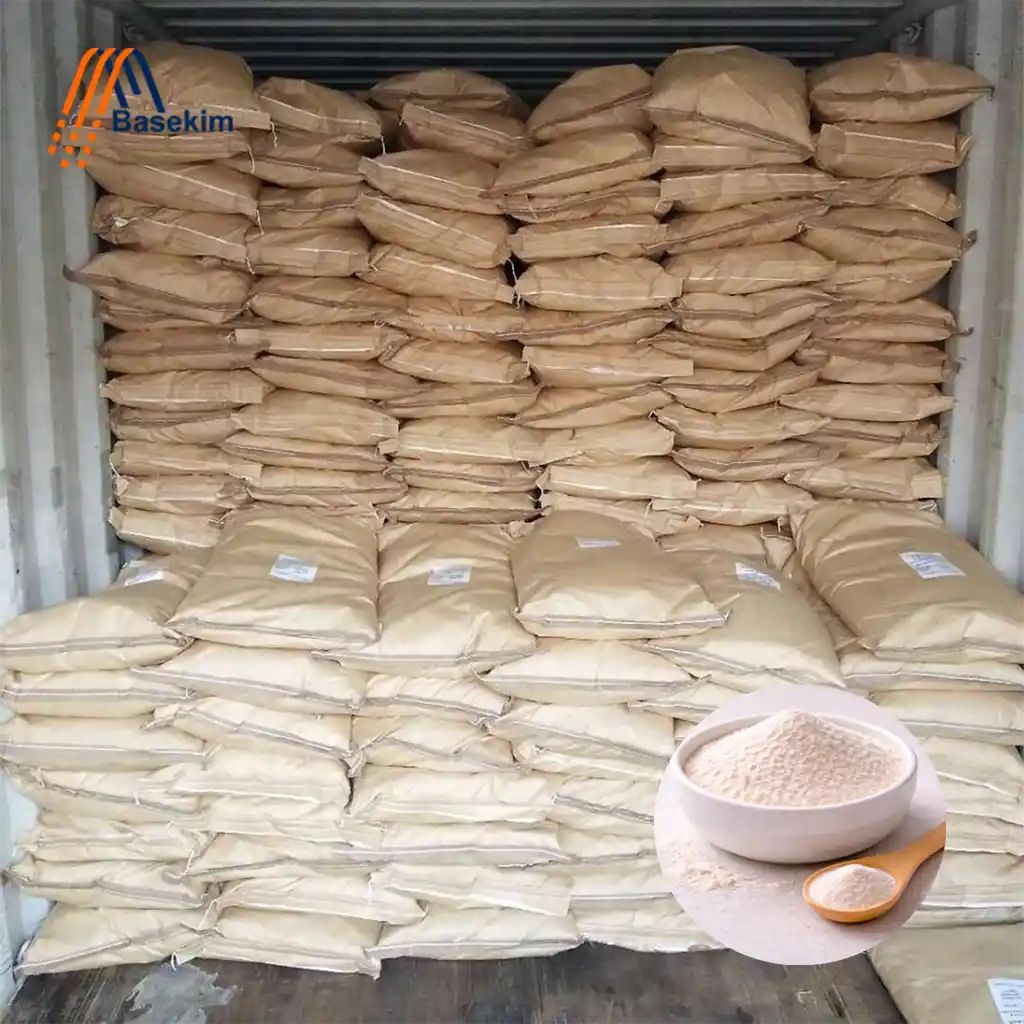
Food Grade Xanthan Gum is a highly effective thickening, stabilizing, suspending, and texture-modifying ingredient widely used throughout the food and beverage industry. Food manufacturers value this versatile hydrocolloid because it develops high viscosity at relatively low concentrations while maintaining excellent consistency under different processing and storage conditions.
In addition, food grade xanthan gum works effectively in both hot and cold water systems. It can improve texture, control product flow, stabilize emulsions, suspend particles, reduce ingredient separation, and maintain uniform consistency throughout shelf life. Therefore, manufacturers frequently use it in sauces, dressings, bakery products, beverages, dairy products, frozen desserts, syrups, gluten-free foods, and processed food formulations.
Food manufacturers also commonly recognize xanthan gum as E415, particularly in markets that use the European food additive numbering system.
How Food Grade Xanthan Gum Is Produced
Manufacturers produce xanthan gum through a controlled fermentation process using carbohydrates and selected strains of Xanthomonas campestris. During fermentation, the microorganism converts the carbohydrate source into a complex polysaccharide.
After fermentation, manufacturers recover and purify the xanthan gum. They then dry, mill, and process it into a fine powder with controlled particle size.
As a result, finished Food Grade Xanthan Gum typically appears as a white to cream-colored or light-yellow powder. It disperses in water and develops viscosity after proper hydration.
The production process strongly influences several important characteristics, including:
Purity
Viscosity
Hydration speed
Particle size
Microbiological quality
Moisture level
Final product consistency
Therefore, food manufacturers should review the Technical Data Sheet and Certificate of Analysis before purchasing commercial quantities.
Key Properties of Food Grade Xanthan Gum
One of the main advantages of Food Grade Xanthan Gum is its ability to provide significant thickening at relatively low usage levels. Consequently, food formulators can modify texture and viscosity without adding large quantities of solids.
Another important property is shear-thinning behavior.
A xanthan gum solution becomes less viscous when exposed to high shear during pumping, mixing, filling, shaking, or pouring. However, when the shear force decreases, viscosity increases again.
This property offers major advantages in food production.
For example, ketchup or salad dressing can flow easily when poured or squeezed while remaining thick and stable inside the bottle.
Important performance characteristics include:
Excellent thickening ability
Strong suspension performance
Good emulsion stabilization
Effective water-binding properties
Good stability across different pH conditions
Compatibility with many food ingredients
Strong viscosity at relatively low concentrations
Stable rheological behavior
Effective performance in hot and cold processing
Improved product consistency
Better ingredient suspension
These properties make xanthan gum suitable for a wide range of commercial food formulations.
Food Grade Xanthan Gum E415
Food Grade Xanthan Gum E415 is widely used as a thickener, stabilizer, suspending agent, and texture modifier in food manufacturing.
Its ability to control viscosity makes it particularly useful in products where manufacturers need consistent texture during processing, filling, transportation, and storage.
Common food applications include:
Sauces
Salad dressings
Ketchup
Mayonnaise
Bakery products
Gluten-free foods
Ice cream
Frozen desserts
Dairy products
Plant-based beverages
Fruit drinks
Syrups
Toppings
Soups
Gravies
Seasonings
Instant food products
Processed foods
Ready-to-eat meals
Food manufacturers may also combine xanthan gum with other functional ingredients such as Citric Acid to manage acidity, flavor balance, preservation systems, and overall formulation performance.
Because each formulation has different requirements, manufacturers should determine the correct xanthan gum dosage through formulation testing.
Food Grade Xanthan Gum for Sauces and Dressings
Sauces and dressings represent one of the most important applications for xanthan gum.
Manufacturers use it to increase viscosity, improve mouthfeel, reduce separation, and keep herbs, spices, and other particles evenly distributed throughout the product.
Furthermore, its shear-thinning properties provide excellent pouring characteristics.
A sauce can remain thick inside its container while flowing smoothly when consumers pour or squeeze it.
Food processors commonly use xanthan gum in:
Ketchup
Tomato sauces
Salad dressings
Mayonnaise-type products
Chili sauces
Marinades
Dips
Cooking sauces
Gravies
Additionally, xanthan gum can help manufacturers maintain more consistent texture between production batches.
Xanthan Gum for Gluten-Free Baking
Demand for Food Grade Xanthan Gum for gluten-free baking remains strong because traditional gluten provides elasticity and structure to wheat-based dough.
When manufacturers remove gluten, baked products can lose structure, moisture retention, elasticity, and desirable texture.
Xanthan gum can help compensate for these properties by increasing viscosity and supporting the structure of dough and batter.
Therefore, food producers frequently use it in:
Gluten-free bread
Cakes
Cookies
Muffins
Pizza dough
Pancake mixes
Bakery premixes
Pastry formulations
It can also improve moisture retention and help reduce excessive crumbling in some gluten-free formulations.
However, dosage remains important. Excessive xanthan gum can create an overly gummy or elastic texture, while insufficient quantities may fail to provide enough structural support.
Therefore, manufacturers should optimize dosage according to flour composition, moisture level, processing method, and desired final texture.
Food Grade Xanthan Gum for Beverages
Beverage manufacturers often require stabilizers that can maintain uniform consistency without making products difficult to process or pour.
Xanthan gum can increase viscosity while helping suspend fruit particles, cocoa, minerals, spices, proteins, and other dispersed ingredients.
Its shear-thinning characteristics also allow beverages to remain relatively easy to pour despite improved suspension.
Typical beverage applications include:
Fruit drinks
Flavored beverages
Nutritional drinks
Beverage concentrates
Syrups
Plant-based drinks
Dairy-style beverages
Protein beverages
Drink mixes
However, manufacturers should evaluate pH, sugar concentration, temperature, salts, proteins, processing equipment, and other hydrocolloids before selecting the final dosage.
Applications in Dairy and Frozen Desserts
Food manufacturers also use xanthan gum in dairy and frozen products to improve stability and texture.
In these formulations, xanthan gum can help control viscosity, maintain ingredient distribution, and improve consistency during storage.
Common applications include:
Ice cream
Frozen desserts
Yogurt-based products
Flavored dairy drinks
Dessert mixes
Cream-based sauces
Non-dairy alternatives
In frozen formulations, stabilization can help manufacturers maintain a more consistent texture during production, transportation, and storage.
Furthermore, xanthan gum can work alongside other stabilizers and hydrocolloids depending on the required formulation.
Food Grade Xanthan Gum in Bakery Products
Commercial bakeries use xanthan gum in both conventional and specialty formulations.
Besides gluten-free baking, the ingredient can improve batter viscosity, moisture management, and product consistency.
Food manufacturers may use it in:
Bread
Cakes
Cookies
Pastries
Bakery fillings
Premixes
Gluten-free flour blends
Frozen dough products
However, the optimal concentration depends on the recipe and desired texture.
Therefore, manufacturers should conduct production trials before establishing a final formulation.
Typical Food Grade Xanthan Gum Specifications
Technical specifications can vary according to manufacturer, grade, particle size, test method, and applicable food standard.
Nevertheless, commercial buyers commonly evaluate the following parameters:
| Property | Typical Requirement |
|---|---|
| Product | Food Grade Xanthan Gum |
| Appearance | White to cream-colored powder |
| Form | Free-flowing powder |
| Odor | Nearly odorless / characteristic |
| Solubility | Dispersible in water |
| pH | Grade dependent |
| Viscosity | According to grade specification |
| Moisture / Loss on Drying | Controlled |
| Particle Size | Commonly 80 or 200 mesh |
| Ash Content | Controlled |
| Microbiological Limits | Food-grade specification |
| Heavy Metals | According to applicable limits |
| Identification | Conforms to specification |
| Food Additive Number | E415 |
Because testing methods vary between manufacturers, buyers should always request the specific Food Grade Xanthan Gum TDS and COA for the product being offered.
80 Mesh vs 200 Mesh Food Grade Xanthan Gum
Particle size can influence powder handling, dispersion, hydration speed, and production behavior.
80 mesh xanthan gum is commonly used for many standard food applications.
Meanwhile, 200 mesh xanthan gum provides a finer particle size that may offer different dispersion and hydration characteristics depending on the production system.
However, finer powder does not automatically mean higher quality.
Manufacturers should instead select particle size based on:
Mixing equipment
Hydration time
Production process
Powder handling system
Desired dispersion rate
Final formulation
Proper dispersion remains extremely important.
If operators add xanthan gum directly into water too quickly, the powder can form lumps because the outer layer hydrates before water reaches the center.
Therefore, manufacturers may use controlled powder addition, strong agitation, dry blending with other ingredients, or suitable dispersion systems.
How to Choose Food Grade Xanthan Gum
Commercial food manufacturers should evaluate more than simply the price per kilogram or metric ton.
First, buyers should confirm that the product is specifically intended for food applications.
Important purchasing factors include:
Food-grade specification
Viscosity
Mesh size
Purity
Moisture content
Ash content
Microbiological limits
Heavy metal limits
Packaging
Shelf life
Country of origin
Batch consistency
Certificate of Analysis
Technical Data Sheet
Safety Data Sheet
Food-related compliance documentation
Consistent quality becomes especially important for large-scale manufacturers because variations between batches may affect viscosity, texture, mixing behavior, filling operations, and final product quality.
Food Grade Xanthan Gum Packaging
Suppliers commonly pack food grade xanthan gum in moisture-resistant bags with an inner protective liner.
Typical commercial packaging may include industrial bags suitable for bulk transportation and warehouse storage.
Packaging specifications can vary according to supplier and destination market. Therefore, buyers should confirm available packaging before placing an order.
In some food-related processing and packaging applications, manufacturers also use suitable food-contact coatings and protective barrier materials to help control moisture exposure and protect finished goods.
For international shipments, proper packaging helps protect xanthan gum powder against moisture, contamination, and damage during transportation.
Storage and Handling
Store Food Grade Xanthan Gum in a clean, cool, dry, and well-ventilated environment.
Keep packages tightly sealed and protect the material from:
Moisture
Excessive humidity
Direct sunlight
Excessive heat
Strong odors
Contamination
Once workers open a bag, they should close it properly after use because moisture exposure can affect powder flow and handling.
Additionally, manufacturers should follow the storage temperature, shelf-life recommendations, and handling instructions provided in the supplier’s technical documentation.
Food Grade Xanthan Gum Supplier
Choosing a reliable supplier helps food manufacturers and international importers maintain consistent quality, documentation, packaging, and shipment performance.
Basekim supplies Food Grade Xanthan Gum for international buyers and supports bulk commercial inquiries based on required specification, mesh size, packaging, quantity, and destination.
Before requesting a quotation, buyers should provide relevant purchasing information, including the required grade, application, quantity, destination port, packaging preference, and technical specifications.
This information allows suppliers to offer a product that matches the customer’s production requirements.
Food Grade Xanthan Gum Price
The Food Grade Xanthan Gum price can change according to several commercial factors.
These commonly include:
Grade
Viscosity
Mesh size
Purity
Order quantity
Packaging type
Country of origin
Shipping destination
Freight cost
Market availability
Therefore, buyers looking for bulk xanthan gum should request an updated quotation based on their exact requirements instead of relying on a general market price.
For container quantities, clearly specifying the destination port and required packaging can also help suppliers prepare a more accurate commercial offer.
Why Food Manufacturers Use Xanthan Gum
Food manufacturers continue to use xanthan gum because relatively small quantities can significantly influence the behavior of a food formulation.
It can increase viscosity, improve suspension, stabilize emulsions, control product flow, support texture, and improve consistency.
Moreover, its performance in both hot and cold processing makes it suitable for a broad range of food manufacturing systems.
However, successful sourcing requires more than choosing the lowest-priced product.
Manufacturers should carefully evaluate food-grade compliance, viscosity, particle size, microbiological quality, purity, packaging, technical documentation, and batch consistency.
By selecting the correct Food Grade Xanthan Gum, food manufacturers can achieve better processing control, more consistent texture, improved product stability, and reliable performance across commercial production batches.
Q1: What is Xanthan Gum used for?
Manufacturers use it primarily as a thickener, stabilizer, suspension agent, and rheology modifier. Major applications include foods, beverages, cosmetics, personal care products, pharmaceuticals, oil drilling fluids, coatings, agriculture, and other industrial formulations.
Q2: Is Xanthan Gum a food additive?
Yes. Food manufacturers widely use food-grade material as a thickening and stabilizing ingredient. It is also commonly identified as E415 in food additive labeling systems.
Q3: What is food grade Xanthan Gum?
Food-grade material meets specifications designed for food manufacturing applications. Buyers should verify applicable regulatory requirements, microbiological limits, purity, and batch-specific documentation before use.
Q4: What is Xanthan Gum powder used for in baking?
It helps improve viscosity, structure, moisture retention, and texture. Manufacturers particularly value it in gluten-free bakery products where conventional gluten structure is absent.

Contact Info
Ankara Office
No.6, Fahrettin Pasa St. (613), Ilkbahar, Cankaya – Ankara
Tel: +90 312 514 70 55
Istanbul Office
No. 219, Sogut St., No.20, T4A Block, Maslak, Sariyer – Istanbul
Tel: +90 212 807 22 33
Dubai Office
No.3509, The Burlington Tower, Business Bay, Dubai – UAE
Tel: +971 4 236 98 30