



Food Grade Mono Propylene Glycol (MPG) Supplier
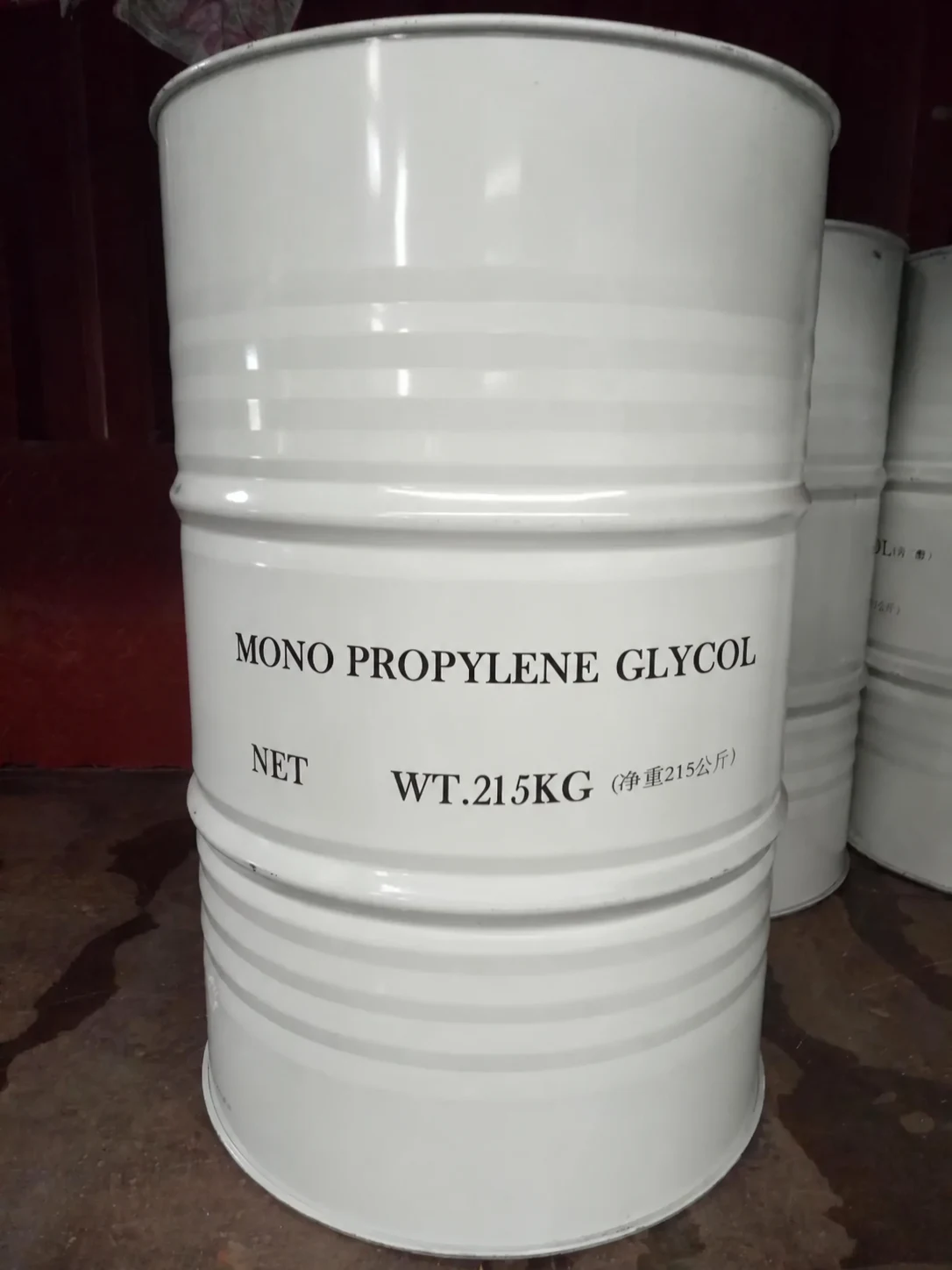
Food Grade Mono Propylene Glycol (MPG) is a high-purity, versatile ingredient used by food and beverage manufacturers as a humectant, carrier, solvent, stabilizer, and processing aid in permitted applications. Also known as Food Grade Propylene Glycol or E1520, this clear and nearly odorless liquid offers excellent water solubility, moisture-retaining properties, and compatibility with many flavors, colors, and food ingredients. Manufacturers commonly use it in flavor concentrates, bakery products, confectionery, beverages, and selected processed foods where regulations permit its use. As a Food Grade Mono Propylene Glycol supplier, Basekim supports manufacturers, distributors, and international buyers seeking consistent quality, suitable packaging, technical documentation, and reliable bulk supply.
What Is Food Grade Mono Propylene Glycol?
Food Grade Mono Propylene Glycol, commonly called propylene glycol, MPG, PG, or propane-1,2-diol, is a clear, colorless, hygroscopic liquid used in various food-processing applications.
Its chemical formula is C3H8O2, while its CAS number is 57-55-6. Manufacturers generally produce Mono Propylene Glycol by hydrating propylene oxide followed by purification to achieve the required quality level.
The compound contains two hydroxyl groups, which give it excellent compatibility with water and many organic ingredients. Consequently, food manufacturers can use it as a carrier for flavors, humectant, solvent, and formulation aid.
Unlike some other glycol products designed primarily for industrial applications, food-grade MPG must meet stricter purity and quality requirements before manufacturers use it in food formulations.
Depending on the destination market and intended application, buyers should select material that complies with relevant standards such as FCC specifications and applicable national food regulations.
Food Grade Mono Propylene Glycol Technical Specifications
Understanding the technical characteristics of Food Grade MPG helps purchasing teams and manufacturers select suitable material for food-processing applications.
The following table shows typical reference specifications for high-purity Food Grade Mono Propylene Glycol.
| Property | Typical Specification |
|---|---|
| Product Name | Food Grade Mono Propylene Glycol |
| Chemical Name | Propane-1,2-diol |
| Common Name | Propylene Glycol / MPG / PG |
| Food Additive Number | E1520 |
| CAS Number | 57-55-6 |
| Chemical Formula | C3H8O2 |
| Molecular Weight | 76.09 g/mol |
| Appearance | Clear, colorless liquid |
| Odor | Nearly odorless |
| Assay | Typically ≥99.5% |
| Density at 20°C | Approximately 1.036 g/cm³ |
| Boiling Point | Approximately 188°C |
| Melting Point | Approximately -59°C |
| Water Solubility | Completely miscible |
| Hygroscopicity | High |
| Grade | Food Grade / FCC depending on specification |
Actual specifications can vary according to manufacturer and production standard. Therefore, buyers should always review the Technical Data Sheet (TDS) and batch-specific Certificate of Analysis (COA) before confirming an order.
MPG Food Grade and FCC Quality
Food manufacturers must distinguish food-grade propylene glycol from technical or general industrial grades.
Food Grade Mono Propylene Glycol normally undergoes tighter quality control to maintain high purity and controlled impurity levels. Suppliers may offer products manufactured according to Food Chemicals Codex (FCC) requirements.
FCC specifications provide recognized quality criteria for ingredients used in food production. However, purchasing an FCC-grade product does not automatically authorize every possible food application.
Therefore, manufacturers must also check:
-
Local food additive regulations
-
Maximum permitted usage levels
-
Product formulation requirements
-
Destination-country legislation
-
Customer specifications
-
Required certificates and documentation
Food producers should always evaluate regulatory requirements before introducing MPG into a commercial formulation.
Food Grade Mono Propylene Glycol Uses
The food industry values Mono Propylene Glycol because it performs several important formulation functions.
Food Grade MPG as a Humectant
One of the main functions of Food Grade Mono Propylene Glycol is moisture control.
Because MPG attracts and retains water, manufacturers can use it as a humectant in suitable food formulations. Therefore, it may help products maintain their desired texture and moisture balance during storage.
This property can be especially valuable in products where excessive drying may affect texture, appearance, or overall product quality.
Manufacturers may use food-grade MPG in suitable formulations involving:
-
Bakery products
-
Confectionery
-
Flavor preparations
-
Processed foods
-
Food concentrates
However, actual permitted applications and dosage levels depend on local regulations.
Flavor and Food Ingredient Carrier
Food manufacturers commonly use Food Grade Propylene Glycol as a carrier for concentrated ingredients.
Its excellent solvent properties allow it to dissolve or disperse selected flavors, colors, extracts, and other compatible food ingredients.
Consequently, manufacturers can achieve more uniform ingredient distribution throughout the final formulation.
Flavor companies may use MPG in:
-
Liquid flavor concentrates
-
Beverage flavor systems
-
Bakery flavor preparations
-
Confectionery flavor formulations
-
Food extracts
Furthermore, its complete compatibility with water makes it practical for many liquid processing systems.
Food Grade MPG in Flavor Manufacturing
Flavor manufacturing represents one of the best-known applications for high-purity propylene glycol.
Many concentrated flavoring compounds require a suitable carrier before manufacturers can incorporate them evenly into a finished product. Food Grade MPG provides effective solvent performance while remaining compatible with many food-processing systems.
Therefore, flavor producers may use it to prepare liquid flavor concentrates for beverages, confectionery, bakery products, and other formulated foods.
Its low volatility also helps maintain formulation stability during handling and storage.
Nevertheless, flavor manufacturers should always verify compatibility between MPG and individual flavor components before commercial production.
Food Grade Propylene Glycol in Bakery Products
Bakery manufacturers may use Food Grade Mono Propylene Glycol in permitted formulations where moisture management or ingredient delivery is required.
For example, it can help distribute flavor ingredients evenly throughout bakery formulations.
Additionally, its humectant properties can support moisture control in selected processed bakery products.
Manufacturers may consider it for:
-
Cakes
-
Bakery fillings
-
Flavor concentrates
-
Prepared mixes
-
Selected packaged bakery products
However, formulators must determine the correct addition level according to the recipe and applicable food regulations.
Food Grade MPG in Confectionery
Food Grade Propylene Glycol also supports selected confectionery formulations.
Manufacturers may use it as a carrier for colors and flavors or as a moisture-control ingredient.
Because it is completely miscible with water, MPG integrates efficiently into many liquid preparation systems.
Possible confectionery applications include:
-
Candy flavor preparations
-
Chewing gum flavors
-
Soft confectionery
-
Liquid fillings
-
Flavor concentrates
Production teams should perform formulation testing before introducing Food Grade MPG into large-scale manufacturing.
Food Grade Mono Propylene Glycol in Beverages
Beverage producers mainly use Food Grade MPG through flavor preparations rather than as a primary beverage ingredient.
For example, concentrated flavor systems may use propylene glycol to dissolve and carry aromatic compounds before manufacturers add the flavor preparation to the beverage.
This allows flavor manufacturers to improve ingredient distribution and maintain consistency between production batches.
Potential applications can include flavor systems for:
-
Soft drinks
-
Flavored water
-
Beverage concentrates
-
Syrups
-
Powdered beverage flavor systems
-
Specialty drinks
Again, manufacturers must comply with applicable regional requirements regarding food additive use.
Benefits of Food Grade Mono Propylene Glycol
Food Grade MPG provides several practical benefits for food manufacturers and ingredient formulators.
-
Excellent water solubility: MPG mixes completely with water and supports water-based formulations.
-
Effective humectant performance: It helps retain moisture in permitted applications.
-
Strong solvent properties: Manufacturers can use it as a carrier for selected flavors, colors, and ingredients.
-
Low volatility: It evaporates relatively slowly under normal processing conditions.
-
High purity: Food-grade material provides tighter impurity control than standard industrial grades.
-
Easy formulation: Its liquid form allows accurate dosing and efficient mixing.
-
Broad compatibility: MPG works effectively with many food formulation ingredients.
-
Reliable processing performance: Manufacturers can achieve more consistent ingredient distribution.
These characteristics make Food Grade Propylene Glycol particularly useful for flavor houses, food processors, confectionery producers, bakery manufacturers, and food ingredient companies.
Food Grade MPG vs Industrial Grade Propylene Glycol
Although Food Grade MPG and industrial propylene glycol share the same basic chemical structure, manufacturers should never treat the two grades as interchangeable.
Industrial-grade MPG serves applications such as polyester resin production, coatings, antifreeze, heat-transfer fluids, detergents, and chemical formulations.
Manufacturers may also use industrial MPG as a solvent or processing material in non-food formulations.
In contrast, Food Grade Mono Propylene Glycol requires more controlled production, purity verification, documentation, and compliance with relevant food-industry standards.
Food manufacturers should therefore verify:
| Requirement | Food Grade MPG | Industrial Grade MPG |
|---|---|---|
| Food Applications | Suitable when regulations permit | Not intended for food use |
| Purity Control | High | Depends on industrial specification |
| FCC Compliance | May be available | Generally not required |
| Food Documentation | Required | Usually unavailable |
| Traceability | Important | Application dependent |
| Food Contact Suitability | Must be verified | Not automatically suitable |
Therefore, buyers should never select MPG based only on price. The intended application must determine the required grade.
Food Grade MPG vs Pharmaceutical Grade MPG
Food-grade and pharmaceutical-grade propylene glycol may both offer high purity, but they follow different quality requirements.
Food Grade Mono Propylene Glycol typically targets food-processing and ingredient-manufacturing applications.
Pharmaceutical grades may comply with standards such as:
-
USP
-
EP
-
BP
Pharmaceutical companies use approved grades as excipients and carriers in selected oral, topical, and other formulations.
However, a pharmaceutical specification does not automatically replace food-industry regulatory requirements.
Similarly, Food Grade or FCC material may not automatically qualify for pharmaceutical manufacturing.
Therefore, buyers should clearly specify the intended application before requesting a quotation.
Food Grade Mono Propylene Glycol Quality Control
Consistent quality remains essential when manufacturers source food ingredients.
Before purchasing Food Grade MPG, buyers should review documentation such as:
-
Certificate of Analysis
-
Technical Data Sheet
-
Safety Data Sheet
-
Product specification
-
Country of origin
-
Batch identification
-
Manufacturing information
-
FCC compliance documentation when applicable
Furthermore, manufacturers should check parameters such as assay, water content, color, acidity, density, and controlled impurities.
A batch-specific COA gives buyers important information about the actual supplied material.
Packaging of Food Grade Mono Propylene Glycol
Suitable packaging helps protect MPG from contamination, excessive moisture uptake, and environmental exposure during transportation and storage.
Common packaging options may include:
-
215 kg drums
-
Suitable HDPE drums
-
IBC containers
-
Bulk tanker supply
Actual net weights and packaging formats depend on the producer, destination, and order requirements.
Food manufacturers should preferably use dedicated food-compatible handling equipment and storage systems.
Additionally, buyers should specify any special packaging or cleanliness requirements before confirming an order.
Storage and Handling
Food Grade Mono Propylene Glycol is hygroscopic, which means it can absorb moisture from the surrounding environment.
Therefore, operators should keep containers tightly sealed when they are not in use.
Store the product in a:
-
Clean area
-
Dry environment
-
Well-ventilated storage facility
-
Closed original container
-
Suitable temperature range
Furthermore, keep Food Grade MPG away from incompatible materials such as strong oxidizing agents.
Food-processing facilities should use clean and dedicated transfer equipment wherever required to reduce contamination risks.
Operators should also follow the recommendations provided in the product Safety Data Sheet.
Food Grade Mono Propylene Glycol Price
The Food Grade Mono Propylene Glycol price depends on several commercial and technical factors.
These include:
-
Required purity
-
FCC or other quality requirements
-
Producer and origin
-
Order quantity
-
Packaging type
-
Raw material market conditions
-
Freight costs
-
Destination country
-
Incoterms
-
Documentation requirements
Food-grade material may carry a different price from standard industrial MPG because manufacturers must maintain stricter quality controls and documentation.
Additionally, drum, IBC, and bulk deliveries create different packaging and transportation costs.
Therefore, buyers should request a current quotation rather than rely on historical market prices.
How to Buy Food Grade Mono Propylene Glycol
Professional buyers should provide detailed purchasing requirements before requesting a quotation.
Important information includes:
-
Required quantity
-
Destination country and port
-
Required food-grade standard
-
FCC requirement if applicable
-
Preferred packaging
-
Required documentation
-
Target delivery schedule
-
Incoterm such as FOB, CFR, CIF, or EXW
Providing these details helps suppliers prepare more accurate commercial quotations.
Buyers should also request technical documentation before finalizing a large order.
How to Choose a Food Grade MPG Supplier
Choosing the right Food Grade Mono Propylene Glycol supplier involves more than comparing prices.
Food manufacturers should evaluate product quality, documentation, packaging, traceability, and supply reliability.
Before placing an order, confirm:
-
Product assay and purity
-
Food-grade certification or specification
-
FCC compliance where required
-
Batch-specific COA availability
-
Packaging condition
-
Country of origin
-
Export documentation
-
Available quantity
-
Shipping terms
Furthermore, experienced international suppliers should provide clear technical and commercial information before shipment.
Food Grade Mono Propylene Glycol for Bulk Buyers
Large food manufacturers, ingredient distributors, and flavor producers often purchase Food Grade MPG in drums, IBCs, or bulk quantities.
Bulk purchasing can help companies optimize logistics and reduce unit packaging costs. However, larger orders make specification control even more important.
Therefore, purchasing teams should approve the product specification before shipment and confirm that delivered material matches the required food-grade standard.
Manufacturers should also maintain proper batch traceability after receiving the material.
Request a Food Grade Mono Propylene Glycol Quotation
Food Grade Mono Propylene Glycol provides food and ingredient manufacturers with reliable solvent, carrier, humectant, and processing properties in permitted applications.
Its excellent water compatibility, moisture-retention capability, high purity, and formulation flexibility make it particularly valuable in flavor preparations, bakery products, confectionery, beverages, and selected processed food systems.
However, manufacturers must always select the correct food-grade specification and comply with regulations applicable to their destination market.
For commercial purchasing, provide your required quantity, destination, packaging preference, and technical specifications when requesting pricing.
Contact our sales team today to request a Food Grade Mono Propylene Glycol quotation, confirm available packaging and specifications, and discuss your bulk MPG requirements.
Q1: Is Mono Propylene Glycol the same as propylene glycol?
Yes. Mono Propylene Glycol, propylene glycol, MPG, and 1,2-propanediol commonly refer to the same chemical compound with CAS number 57-55-6.
Q2: Is Mono Propylene Glycol soluble in water?
Yes. MPG mixes completely with water. Therefore, manufacturers frequently use it in water-based formulations and cooling systems.
Q3: Is propylene glycol safe for food applications?
Food-grade material can serve approved food applications when it meets relevant quality specifications and regulatory requirements. However, industrial-grade products should never replace verified food-grade material.
Q4: What is the difference between MPG and DPG?
MPG is monopropylene glycol, while DPG is dipropylene glycol. They have different molecular structures and physical properties. Consequently, manufacturers should not substitute one for the other without checking formulation compatibility.
Contact Info
Ankara Office
No.6, Fahrettin Pasa St. (613), Ilkbahar, Cankaya – Ankara
Tel: +90 312 514 70 55
Istanbul Office
No. 219, Sogut St., No.20, T4A Block, Maslak, Sariyer – Istanbul
Tel: +90 212 807 22 33
Dubai Office
No.3509, The Burlington Tower, Business Bay, Dubai – UAE
Tel: +971 4 236 98 30