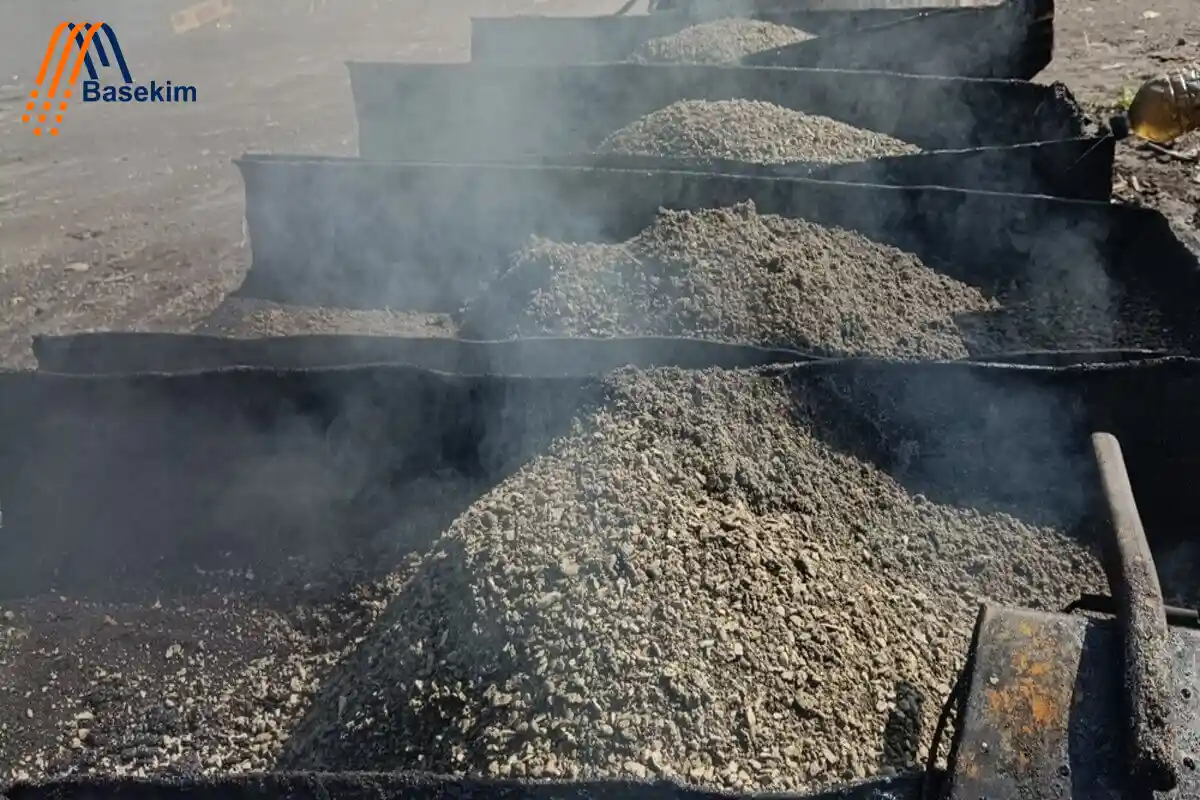
The comparison between Warm Mix Asphalt vs Hot Mix Asphalt has become increasingly important in modern road construction. Contractors, asphalt producers, engineers, and project owners compare these two production methods based on energy use, emissions, paving temperature, hauling distance, compaction, durability, construction cost, and long-term pavement performance.
The right choice depends on project conditions rather than one single technical factor.
Both systems can provide durable pavement when the asphalt mixture uses the correct binder, aggregate structure, production method, and compaction procedure.
This guide compares Warm Mix Asphalt vs Hot Mix Asphalt from a practical and technical point of view.
Warm Mix Asphalt vs Hot Mix Asphalt Comparison Table
| Factor | Warm Mix Asphalt | Hot Mix Asphalt |
|---|---|---|
| Production Temperature | Lower | Higher |
| Energy Consumption | Generally lower | Generally higher |
| Fuel Requirement | Reduced | Higher |
| Plant Emissions | Lower | Higher |
| Asphalt Fumes | Reduced | More noticeable |
| Compaction Flexibility | Higher in many situations | More dependent on temperature |
| Cold Weather Paving | More flexible | More challenging |
| Hauling Distance | Can support longer distances | More sensitive to heat loss |
| Binder Aging | Lower during production | Higher thermal exposure |
| Plant Familiarity | May require additional technology | Widely established |
| RAP Compatibility | Good | Good |
| Environmental Performance | Strong | More energy intensive |
Production Temperature: Warm Mix Asphalt vs Hot Mix Asphalt
Production temperature is one of the clearest differences in the Warm Mix Asphalt vs Hot Mix Asphalt comparison.
Hot Mix Asphalt requires higher temperatures during mixing because the binder must reach sufficient fluidity to coat the aggregate and provide suitable workability during placement.
Warm Mix Asphalt uses lower production temperatures while maintaining sufficient coating and workability.
This lower-temperature production can be achieved through different methods, including:
chemical additives
organic additives
foaming systems
water-based technologies
plant modifications
Reducing production temperature can influence fuel consumption, binder aging, emissions, and paving conditions.
However, the ideal production temperature still depends on the binder, aggregate moisture, asphalt plant, weather, hauling distance, and required density.
Energy Consumption
Energy use represents one of the main practical differences between Warm Mix Asphalt and Hot Mix Asphalt.
Because Warm Mix Asphalt operates at lower temperatures, asphalt plants generally require less fuel to heat aggregates and maintain production temperature.
This can become significant on large paving projects.
A small reduction in fuel consumption per ton may create substantial savings when a plant produces thousands of tons of asphalt.
Hot Mix Asphalt requires greater thermal energy because both the aggregate and binder must reach higher temperatures.
As a result, HMA production is more sensitive to fluctuations in:
natural gas prices
diesel prices
fuel oil prices
electricity costs
plant efficiency
For asphalt producers operating in markets with high energy costs, lower-temperature production can improve overall operating efficiency.
Emissions and Environmental Performance
Environmental requirements increasingly influence asphalt production.
Warm Mix Asphalt generally offers lower plant emissions because less fuel is required for heating.
Lower asphalt temperature can also reduce visible fumes and odors around production and paving areas.
This can be particularly useful for projects in:
urban areas
tunnels
residential zones
environmentally sensitive locations
infrastructure projects with sustainability targets
Hot Mix Asphalt remains widely used and fully suitable for many road projects. However, its higher production temperature normally results in greater energy demand.
Therefore, environmental targets can influence the choice between Warm Mix Asphalt vs Hot Mix Asphalt.
Bitumen Aging During Production
Production temperature directly affects binder aging.
Higher temperatures increase oxidation and thermal exposure during asphalt production.
Therefore, Hot Mix Asphalt can experience more short-term binder aging before the pavement even enters service.
Warm Mix Asphalt reduces this exposure because the binder is processed at lower temperatures.
For mixtures produced with Bitumen 60/70, controlling excessive heating can help preserve binder consistency and reduce unnecessary thermal aging.
However, the final performance still depends on the entire mixture design, not only the binder grade.
Asphalt Workability
Workability strongly affects paving efficiency.
Warm Mix Asphalt technologies are designed to maintain workability at lower temperatures.
This can make the mixture easier to handle during transportation, placement, and compaction.
Hot Mix Asphalt also provides excellent workability when the temperature remains within the correct range.
However, once HMA cools below the recommended compaction temperature, achieving the desired density becomes more difficult.
Therefore, Warm Mix Asphalt may offer a larger operational window under challenging site conditions.
Warm Mix Asphalt vs Hot Mix Asphalt in Cold Weather
Cold weather creates additional challenges for asphalt paving.
Low ambient temperature causes the mixture to lose heat more quickly.
Thin asphalt layers are especially vulnerable because they cool faster than thicker lifts.
Warm Mix Asphalt can provide greater paving flexibility because the mixture remains workable at lower temperatures.
This may extend the paving season in certain climates.
It can also help during:
early spring construction
late autumn paving
nighttime work
high-altitude projects
colder regional conditions
For suitable pavement designs, a softer penetration grade such as Bitumen 80/100 may be selected when greater binder flexibility is required.
However, binder selection must always follow project specifications and climate requirements.
Compaction Performance
Compaction plays a major role in asphalt pavement durability.
Poor compaction can create excessive air voids, increase moisture penetration, accelerate oxidation, and reduce service life.
Hot Mix Asphalt usually requires compaction within a narrower temperature range.
If the mixture cools too quickly, rollers may struggle to achieve the specified density.
Warm Mix Asphalt may provide a longer compaction window because the mixture retains useful workability at lower temperatures.
This advantage can improve construction flexibility when conditions are difficult.
Nevertheless, contractors must still use proper roller patterns, equipment, and density control.
Hauling Distance
Hauling distance strongly affects asphalt temperature.
During transportation, the asphalt mixture gradually loses heat.
Long-distance hauling can therefore create challenges for Hot Mix Asphalt.
If the load reaches the construction site at a temperature below the required compaction range, pavement quality may suffer.
Warm Mix Asphalt can offer greater hauling flexibility because it remains workable at lower temperatures.
This characteristic can be useful for projects located far from the asphalt plant.
Examples include:
remote highways
rural roads
industrial projects
mountain roads
airport construction
infrastructure projects outside major cities
Covered and insulated trucks remain important for both systems.
Heavy-Traffic Road Performance
Traffic loading is another important factor in the Warm Mix Asphalt vs Hot Mix Asphalt comparison.
Heavy-duty roads require a stable aggregate structure, proper compaction, and a binder with sufficient stiffness to resist deformation.
Both Warm Mix Asphalt and Hot Mix Asphalt can perform well under heavy traffic when the mixture is properly engineered.
In markets that use viscosity grading systems, VG 30 Bitumen is commonly used in asphalt road construction and may be suitable for demanding pavement applications.
However, pavement performance still depends on traffic volume, axle loads, climate, layer thickness, and aggregate quality.
Rutting Resistance
Rutting is permanent deformation that develops under repeated traffic loading.
It usually appears in wheel paths and becomes more common when pavement temperatures are high.
Both Warm Mix Asphalt and Hot Mix Asphalt can provide strong rutting resistance.
The key factors include:
aggregate interlock
binder stiffness
mixture density
asphalt content
pavement temperature
traffic loading
Incorrect mixture design can cause rutting regardless of the production method.
Therefore, engineers should focus on complete pavement design rather than assuming one asphalt production method automatically provides better rut resistance.
Cracking Resistance
Cracking performance depends on binder flexibility, pavement temperature, traffic loading, and aging.
Because Warm Mix Asphalt uses lower production temperatures, the binder may experience less short-term aging.
This can help preserve flexibility during the early part of the pavement service life.
Hot Mix Asphalt experiences more thermal exposure during production.
However, proper binder selection and mixture design can still provide excellent cracking resistance.
Low-temperature performance should therefore be evaluated together with climate conditions and binder specifications.
Moisture Resistance
Moisture can weaken the bond between asphalt binder and aggregate.
If moisture damage develops, pavement may experience stripping, cracking, potholes, and premature deterioration.
Hot Mix Asphalt uses higher aggregate temperatures, which can remove moisture efficiently during production.
Warm Mix Asphalt operates at lower temperatures, so moisture control can require additional attention.
However, some WMA technologies also contain additives that improve binder-aggregate adhesion.
Moisture resistance depends on several factors:
aggregate type
aggregate cleanliness
binder properties
moisture content
anti-stripping additives
compaction quality
drainage
Therefore, both systems require proper quality control.
RAP and Recycled Asphalt
Reclaimed Asphalt Pavement has become increasingly important in modern road construction.
Both Warm Mix Asphalt and Hot Mix Asphalt can incorporate RAP.
However, Warm Mix Asphalt may provide some advantages because lower production temperatures can reduce additional aging of the recovered binder.
This can become useful when asphalt producers increase recycled material content.
High-RAP mixtures still require careful engineering.
Producers should evaluate:
reclaimed binder content
RAP moisture
aggregate gradation
virgin binder grade
mixture stiffness
rejuvenator requirements
compactability
Recycling performance depends on mixture design rather than simply choosing WMA or HMA.
Warm Mix Asphalt vs Hot Mix Asphalt: Performance in Different Climate Conditions
Climate plays a major role in asphalt pavement performance.
High temperatures increase the risk of rutting and permanent deformation.
Low temperatures increase the risk of thermal cracking.
Therefore, binder selection should reflect expected pavement conditions.
For projects using a performance grading system, PG 64-22 Bitumen may be specified where its high- and low-temperature performance range matches the pavement environment.
Both Warm Mix Asphalt and Hot Mix Asphalt can use performance-graded binders when project requirements allow them.
Construction During Summer
High ambient temperatures can make asphalt paving physically demanding for workers.
Hot Mix Asphalt already leaves the plant at high temperature, so summer paving can increase heat exposure around paving equipment.
Warm Mix Asphalt uses lower temperatures and can reduce radiant heat around the paving operation.
This can improve working conditions.
Lower temperature can also reduce odors and fumes around the paving crew.
For hot climates, this operational difference may become important during long paving shifts.
Worker Exposure and Site Conditions
Asphalt paving involves workers operating close to hot material and equipment.
Lower production temperatures can reduce heat exposure and fumes.
This can be especially valuable in:
tunnels
enclosed areas
urban streets
underground construction
summer paving projects
Hot Mix Asphalt remains safe when contractors follow proper safety procedures.
However, Warm Mix Asphalt can provide an additional benefit through reduced operating temperature.
Asphalt Plant Requirements
Hot Mix Asphalt represents the conventional production method at most asphalt plants.
Therefore, existing plants are generally designed around HMA production.
Warm Mix Asphalt may require additional systems depending on the selected technology.
These may include:
additive dosing equipment
foaming systems
water injection units
storage tanks
control-system modifications
Some WMA technologies require only minor adjustments.
Others require greater investment.
Therefore, asphalt producers should compare equipment cost against expected fuel savings and future production demand.
Production Capacity
Lower production temperatures may influence plant efficiency.
Because aggregates require less heating, burner demand can decrease.
Under certain conditions, this may help improve plant production capacity.
However, the actual effect depends heavily on:
plant design
aggregate moisture
burner efficiency
WMA technology
production rate
storage system
Hot Mix Asphalt plants already operate with highly optimized production procedures.
Therefore, capacity differences should be evaluated at the individual plant level.
Warm Mix Asphalt vs Hot Mix Asphalt Cost
Project cost depends on much more than asphalt temperature.
Warm Mix Asphalt may reduce fuel consumption.
However, additional costs may include:
WMA additives
plant modifications
additive storage
specialized equipment
Hot Mix Asphalt normally avoids these additional technology costs.
However, it consumes more fuel because of its higher production temperature.
The final cost depends on:
fuel prices
binder price
plant efficiency
production volume
hauling distance
additive cost
RAP percentage
construction season
environmental requirements
Therefore, contractors should compare total project cost rather than only the asphalt price per ton.
Long-Distance Asphalt Transportation
Long-distance transport is one of the areas where Warm Mix Asphalt can offer practical advantages.
Hot Mix Asphalt loses temperature during hauling.
When travel time becomes too long, the mixture may reach the site below the ideal paving temperature.
Warm Mix Asphalt can tolerate lower placement temperatures.
As a result, contractors may be able to transport asphalt farther without sacrificing workability.
This can be useful when the paving site is located far from the nearest asphalt plant.
Urban Road Construction
Urban road construction creates specific challenges.
Traffic restrictions, nighttime schedules, emissions, noise, and limited construction windows can all influence asphalt selection.
Warm Mix Asphalt may offer benefits because contractors can work at lower temperatures and maintain workability for longer periods.
Lower fumes can also be beneficial in populated areas.
Hot Mix Asphalt remains highly practical because most contractors already have extensive experience with it.
Therefore, the final choice depends on project logistics and local requirements.
Highway Applications of Warm Mix Asphalt vs Hot Mix Asphalt
Highways require consistent asphalt quality and strong pavement performance.
Both Warm Mix Asphalt and Hot Mix Asphalt can be used for highway construction.
Important factors include:
traffic volume
truck loading
pavement temperature
aggregate strength
binder grade
mixture density
pavement thickness
Warm Mix Asphalt may provide advantages when the project involves long hauling distances or cold-weather placement.
Hot Mix Asphalt provides highly established production and construction procedures.
Airport Applications: Warm Mix Asphalt vs Hot Mix Asphalt
Airport pavements must resist heavy loading, braking forces, and repeated aircraft movement.
Hot Mix Asphalt has a long history of airport use.
Warm Mix Asphalt may also be suitable when project specifications allow it.
Potential benefits include:
lower production temperature
improved workability
longer hauling flexibility
reduced emissions
However, airport pavement specifications usually require strict control of density, surface characteristics, binder properties, and aggregate quality.
Warm Mix Asphalt vs Hot Mix Asphalt for Maintenance Projects
Road maintenance projects often operate within short construction windows.
Contractors may need to complete paving quickly and reopen the road to traffic.
Warm Mix Asphalt can provide useful flexibility because it remains workable at lower temperatures.
This can help during nighttime maintenance or cool weather.
Hot Mix Asphalt remains highly effective for resurfacing and repair projects when transportation distance and weather conditions remain suitable.
Quality Control
Quality control determines the success of both asphalt technologies.
Asphalt producers should monitor:
binder content
aggregate gradation
production temperature
mixing consistency
moisture content
air voids
density
compaction
asphalt thickness
Warm Mix Asphalt may also require monitoring of additive dosage or foaming systems.
Hot Mix Asphalt requires careful control to avoid unnecessary overheating.
Neither system can compensate for poor production or construction practices.
Storage and Handling
Proper binder storage helps maintain asphalt quality.
Excessive heat can accelerate oxidation.
Long storage periods at high temperature may also change binder characteristics.
Plants should therefore use suitable tank temperatures, circulation systems, and insulation.
The same principle applies to both Warm Mix Asphalt and Hot Mix Asphalt.
Good storage practices can reduce energy waste and improve binder consistency.
Durability and Pavement Life
The durability of asphalt pavement depends on many interacting factors.
These include:
binder quality
aggregate properties
mixture design
compaction
drainage
traffic loading
climate
construction quality
Warm Mix Asphalt can provide long-term pavement performance when correctly designed and compacted.
Hot Mix Asphalt also has a long record of successful use worldwide.
Therefore, pavement life should not be evaluated based only on production temperature.
Which One Offers Better Construction Flexibility?
Warm Mix Asphalt generally provides more flexibility when the project involves difficult temperature or transportation conditions.
Its lower operating temperature can help when:
hauling distances are long
weather is cool
paving occurs at night
asphalt layers are thin
work takes place in urban areas
Hot Mix Asphalt provides operational simplicity because contractors and plants already use established procedures.
For many conventional projects, that familiarity remains a major advantage.
Choosing Between Warm Mix Asphalt vs Hot Mix Asphalt
The final decision should depend on project requirements.
Warm Mix Asphalt may be suitable when the project prioritizes:
lower production temperature
reduced fuel consumption
lower emissions
longer hauling distances
extended paving season
improved workability
sustainability targets
Hot Mix Asphalt may remain suitable when the project prioritizes:
conventional plant operation
established production procedures
existing equipment
familiar contractor practices
standard project specifications
Neither system should be selected only because of one advantage.
Engineers should compare technical, environmental, logistical, and economic factors together.
Basekim Bitumen Supply
Binder quality remains important regardless of whether a project uses Warm Mix Asphalt or Hot Mix Asphalt.
Basekim supplies bitumen for road construction and asphalt production according to project specifications and customer requirements.
Suitable binder selection should consider climate, traffic loading, pavement design, and applicable regional standards
Conclusion: Warm Mix Asphalt vs Hot Mix Asphalt
The Warm Mix Asphalt vs Hot Mix Asphalt comparison shows that both technologies can deliver reliable road performance when the mixture is properly designed and constructed.
Warm Mix Asphalt offers clear advantages in lower production temperature, energy use, emissions, workability, hauling flexibility, and cold-weather construction.
Hot Mix Asphalt provides established production methods, broad contractor familiarity, and decades of successful use across highways, airports, urban roads, and industrial pavements.
The best choice depends on the full project environment.
Factors such as traffic, climate, transportation distance, asphalt plant capabilities, energy cost, environmental requirements, and construction schedule should all influence the final decision.
At the same time, binder selection remains critical. Grades such as Bitumen 60/70, Bitumen 80/100, VG 30 Bitumen, and PG 64-22 Bitumen can serve as useful internal-link anchors while supporting relevant technical discussion within the article.