



Oxidized PE Wax – Specifications, Uses, Price and Bulk Supply
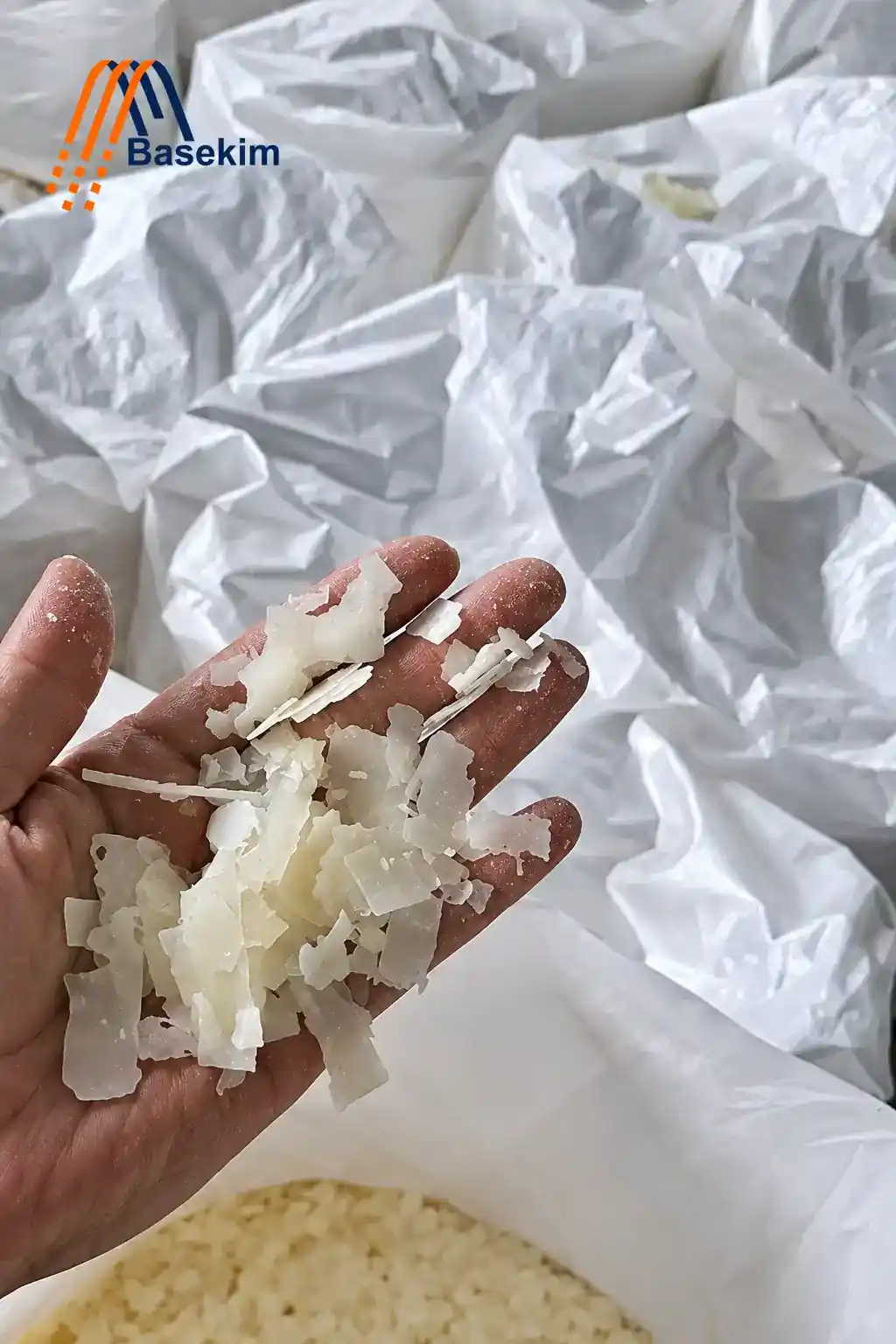
Oxidized PE Wax is a modified polyethylene wax that improves lubrication, pigment dispersion, surface quality, and processing performance in plastics, coatings, inks, and industrial formulations. Unlike conventional PE wax, it contains polar functional groups that help it interact with certain resins, pigments, and additives. Manufacturers use Oxidized Polyethylene Wax to improve production consistency, control friction, and achieve more reliable finished products. For industrial buyers, selecting the right grade means evaluating acid value, melting behavior, viscosity, and compatibility rather than purchasing solely on price.
What Is Oxidized PE Wax?
Oxidized Polyethylene Wax, commonly called OPE Wax, is a polyethylene-based material that undergoes controlled oxidation. This process introduces oxygen-containing functional groups into the wax structure, changing how it interacts with other formulation ingredients.
The modification gives the material a useful balance of lubrication and polarity. Conventional polyethylene wax generally provides strong external lubrication, while an appropriately selected oxidized grade can also promote compatibility and dispersion.
Manufacturers typically supply OPE Wax as powder, granules, flakes, or other solid forms, depending on production requirements.
Its main advantages include:
Improved compatibility with selected polar materials
Effective internal and external lubrication
Better pigment and filler dispersion
Controlled surface friction and release behavior
Improved processing consistency in suitable formulations
Potential use in emulsifiable wax systems
Greater formulation flexibility across industrial applications
However, different oxidized grades deliver different results. An excellent wax for rigid PVC processing may not suit a water-based coating or pigment concentrate.
Oxidized Polyethylene Wax Specification
Technical properties determine how a wax performs during manufacturing. Therefore, buyers should review the Oxidized PE Wax specification before selecting a commercial grade.
The following table illustrates a broad range of properties found across different commercial products.
| Property | Illustrative Commercial Range |
|---|---|
| Product name | Oxidized Polyethylene Wax |
| Alternative name | OPE Wax |
| Appearance | White to yellowish powder, flakes, or granules |
| Acid value | Approximately 3–37 mg KOH/g |
| Drop point | Approximately 98–137°C |
| Density at room temperature | Approximately 0.92–0.99 g/cm³ |
| Melt viscosity | Grade-dependent; from low-viscosity to several thousand mPa·s |
| Penetration | Grade-dependent |
| Solubility in water | Generally insoluble |
| Emulsifiability | Depends on acid value, formulation, and processing |
| Main applications | PVC, coatings, inks, dispersions, and surface treatments |
Important: These values summarize different commercial wax families rather than describe one universal product grade. Actual specifications, viscosity measurement temperatures, and test methods must come from the selected product’s technical data sheet.
Oxidized PE Wax Melting Point
The Oxidized PE Wax melting point affects processing temperatures, solidification, and final-product performance.
Industrial suppliers often report a drop point instead of a single melting temperature because polyethylene wax contains molecules with different chain lengths and crystalline characteristics.
A lower-drop-point grade may suit formulations that require easier melting or processing at moderate temperatures.
Higher-drop-point grades can provide harder wax characteristics and greater resistance to softening, depending on the complete formulation.
Buyers should compare the reported measurement method as well as the temperature. A drop point and a DSC melting peak do not necessarily represent the same property.
Oxidized PE Wax Acid Value
Acid value is one of the most important characteristics when selecting an oxidized wax.
It expresses the amount of potassium hydroxide required to neutralize acidic groups in one gram of material, typically in mg KOH/g.
A higher acid value generally indicates a greater concentration of acid-functional groups. This may improve interactions with selected polar ingredients and support emulsification under suitable conditions.
However, a higher acid value does not automatically mean better performance.
For example, PVC processors must consider lubrication balance and fusion behavior, while coating manufacturers may prioritize emulsification and compatibility.
The correct acid value depends on the application, not simply the highest available number.
Oxidized Polyethylene Wax Density
Oxidized Polyethylene Wax density varies with the original polyethylene structure, molecular characteristics, crystallinity, and degree of oxidation.
Commercial products may have solid densities around 0.92–0.99 g/cm³ at room temperature.
Density helps manufacturers evaluate material consistency and calculate approximate solid volume requirements.
For accurate comparisons, purchasers should confirm whether the supplier reports true material density or bulk density.
Powders with identical material densities can have substantially different bulk densities because particle size and packing behavior affect the space between particles.
Oxidized PE Wax Viscosity
Oxidized PE Wax viscosity influences melt flow, mixing, dispersion, and processing behavior.
Low-viscosity waxes may distribute more easily during certain mixing operations. Higher-viscosity grades can influence melt rheology and surface performance differently.
Viscosity alone cannot predict the final result because acid value, molecular structure, and formulation conditions also matter.
When comparing quotations, always request the measurement temperature, test method, and viscosity unit. Results reported at different temperatures should not be treated as equivalent.
Oxidized Polyethylene Wax Uses and Applications
Oxidized Polyethylene Wax applications cover several industries, but each requires a different combination of lubrication, polarity, hardness, and processing characteristics.
1. PVC Processing
PVC manufacturers use selected oxidized wax grades to balance lubrication during extrusion and other processing operations.
Depending on formulation, the wax can help control fusion behavior, processing torque, and interactions between PVC particles and equipment surfaces.
Typical products include:
PVC pipes and fittings
Window and door profiles
Rigid PVC sheets
Technical profiles
Selected flexible PVC compounds
An important consideration is the relationship between oxidized and non-oxidized lubricants. A suitable combination may perform better than increasing the concentration of either material independently.
Excessive lubrication can delay fusion, while an unsuitable formulation may increase processing stress.
2. Coatings and Printing Inks
Coating manufacturers incorporate compatible wax products to modify surface characteristics.
Depending on the grade and particle or dispersion form, oxidized wax can contribute to:
Improved surface slip
Scratch and rub resistance
Reduced blocking
Controlled surface feel
More consistent surface appearance
The final effect depends on wax compatibility, dispersion quality, dosage, and the coating’s curing or drying conditions.
3. Pigment and Filler Dispersion
Pigment concentrates and filled polymer formulations require effective dispersion to achieve consistent color and mechanical performance.
Selected oxidized waxes can help wet pigment or filler surfaces and improve their distribution.
However, results depend on pigment chemistry and the surrounding polymer matrix.
Manufacturers should evaluate color strength, dispersion quality, melt behavior, and final mechanical properties before choosing a grade.
4. Wax Emulsions and Surface Treatments
Manufacturers also use suitable OPE Wax grades in emulsified systems for paper, textile, leather, polish, and surface-treatment applications.
Oxidized functional groups can support emulsion preparation when formulators select suitable emulsifiers, neutralizing agents, and processing conditions.
The resulting dispersions may help adjust surface friction, handling, gloss, or protective performance.
Not every oxidized wax is readily emulsifiable, so selecting an appropriate grade remains essential.
Oxidized PE Wax vs Regular PE Wax
Although these products share a polyethylene-based structure, they perform differently in many formulations.
| Feature | Oxidized PE Wax | Regular PE Wax |
|---|---|---|
| Chemical polarity | Higher due to oxidation | Generally low |
| Lubrication | Internal/external balance varies | Often used for external lubrication |
| Pigment compatibility | Can improve selected dispersions | Depends on formulation |
| Emulsification | Possible with suitable grades | Generally more difficult |
| Acid value | Measurable acidic functionality | Usually very low |
| Typical selection priority | Compatibility and controlled lubrication | Slip, release, and lubrication |
Neither material universally replaces the other.
For example, an oxidized grade may improve pigment interaction but change the lubricant balance of a PVC formulation. Manufacturers should evaluate substitutions through production trials rather than rely on equivalent addition percentages.
How to Choose the Right OPE Wax Grade
Many purchasing problems begin when buyers select wax using only its melting behavior or price.
A more effective approach starts with the production problem.
PVC extrusion: Evaluate fusion time, torque, melt pressure, die buildup, and surface appearance.
Pigment concentrates: Assess color strength, dispersion uniformity, filter pressure, and compatibility with the carrier resin.
Coating applications: Review scratch resistance, blocking, surface slip, and dispersion stability.
Wax emulsions: Focus on acid value, emulsification conditions, particle size, and storage stability.
One useful purchasing practice is to compare candidate waxes at equivalent effective addition levels under unchanged processing conditions.
Change one factor at a time during testing. This helps identify whether improved results come from the wax itself or from unrelated processing adjustments.
A Practical Three-Stage Qualification Method
Industrial buyers can reduce the risk of purchasing an unsuitable grade by following three stages.
Stage 1 – Technical screening
Compare acid value, drop point, viscosity, density, and delivery form against the current formulation requirements.
Stage 2 – Laboratory evaluation
Test shortlisted materials in the actual polymer, pigment, coating, or emulsion system. Record processing and product-performance results.
Stage 3 – Production validation
Run a controlled manufacturing trial and evaluate output consistency, equipment behavior, product quality, and consumption per finished tonne.
This method provides a stronger purchasing basis than comparing supplier specification sheets alone.
Oxidized PE Wax Price
The Oxidized PE Wax price (OPE Wax price) depends on product characteristics, manufacturing conditions, order quantity, packaging, and delivery destination.
Two suppliers may quote different prices because they offer different acid values, molecular structures, viscosity ranges, or quality requirements.
Major price factors include:
Raw material costs and polyethylene feedstock conditions
Oxidation technology and production control
Acid value and other technical requirements
Product grade and quality consistency
Powder, granule, or flake delivery form
Order quantity and packaging
Freight, insurance, and delivery terms
Buyers should also consider the product’s cost in use.
A lower-priced wax that requires a higher addition rate or creates processing instability may increase total production costs.
For meaningful comparisons, request quotations for equivalent technical grades and identical delivery terms.
Oxidized PE Wax Supplier and Bulk Supply
A reliable Oxidized PE Wax supplier should provide more than a competitive quotation.
Industrial customers need consistent specifications, suitable packaging, accurate documentation, and dependable shipment planning.
Basekim supplies industrial chemical and wax products to international buyers and can be contacted regarding Oxidized PE Wax requirements, product availability, commercial quotations, and export arrangements.
Customers looking for Oxidized PE Wax wholesale or Oxidized PE Wax bulk supply should communicate their technical and logistics requirements before placing an order.
Important purchasing information includes:
Required grade or target technical properties
Intended industrial application
Estimated monthly or annual consumption
Preferred delivery form and packaging
Destination country and discharge port
Required documentation
Requested Incoterms and delivery schedule
Clear purchasing specifications allow suppliers to recommend suitable materials and prepare more accurate offers.
Oxidized Polyethylene Wax Manufacturer and Exporter
When selecting an Oxidized Polyethylene Wax manufacturer, buyers should review technical consistency and manufacturing capabilities.
Useful evaluation points include batch traceability, quality-control testing, production capacity, and the availability of representative samples.
An Oxidized Polyethylene Wax exporter must also manage documentation, packaging, transportation, and destination-specific import requirements.
Importers should confirm the product description, applicable customs classification, shipment documents, and local compliance requirements before dispatch.
Manufacturer status should not be assumed from a trading company’s supply offer. Buyers who require direct factory sourcing should request confirmation of the production origin.
Packing, Storage, and Transportation
Manufacturers commonly package oxidized wax in industrial bags, cartons, or bulk bags according to the product grade and supply arrangement.
Common commercial options include 20–25 kg bags and larger palletized or flexible bulk-bag shipments.
Packaging availability should be confirmed before ordering.
Store the product in a clean, dry, covered area away from excessive heat, direct sunlight, and ignition sources.
Keep containers securely closed to prevent contamination and moisture exposure.
During handling, control dust generation and follow the applicable safety data sheet, particularly when working with fine powders or heated wax.
Oxidized PE Wax TDS and MSDS
Technical documentation helps buyers confirm product suitability and establish appropriate handling procedures.
Oxidized PE Wax TDS
An Oxidized PE Wax TDS typically provides:
Product description and physical form
Acid value
Drop point or melting characteristics
Density
Melt viscosity and test temperature
Penetration or hardness characteristics
Recommended applications
Storage and handling guidance
For bulk procurement, buyers should also request a certificate of analysis for the supplied batch when available.
Oxidized PE Wax MSDS
The Oxidized PE Wax MSDS, also called a Safety Data Sheet (SDS), explains relevant safety considerations.
It generally addresses material identification, hazard classification, first aid, firefighting measures, accidental release, handling, storage, exposure controls, and disposal.
The document must correspond to the actual supplied grade and applicable regulatory requirements.
Buyers should request the latest supplier-issued version rather than rely on a generic safety document.
Buy Oxidized PE Wax for Industrial Applications
Choosing Oxidized PE Wax involves more than finding an acceptable price or matching a single specification. Acid value, melt behavior, viscosity, product form, and compatibility influence how the material performs in real manufacturing conditions. A well-selected grade can improve processing control and product consistency, while an unsuitable one can increase waste or require costly formulation adjustments.
Before purchasing, identify your application, establish measurable performance targets, and compare appropriate grades through controlled testing.
Contact our sales team for Oxidized PE Wax specifications, product availability, bulk supply options, and a quotation based on your required quantity and destination.