





Bitumen Drum vs Jumbo Bag is an important comparison for importers who want to reduce transportation costs, protect bitumen quality, and simplify unloading. Steel drums offer stronger individual packaging, flexible handling, and easier distribution to smaller construction sites. Jumbo bags can reduce packaging waste, improve cargo handling efficiency, and increase loading capacity in certain shipping configurations. However, the best choice depends on shipment volume, destination climate, unloading equipment, and total landed cost. Buyers should compare more than packaging prices before choosing a method for international bitumen transportation.
What Is the Difference Between Bitumen Drums and Jumbo Bags?
The main difference between bitumen drums and jumbo bags lies in their materials, capacities, and handling requirements.
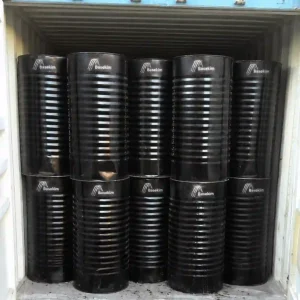
Bitumen steel drums use rigid metal containers to hold hot-filled bitumen. After filling, the material cools and becomes semi-solid or solid, depending on its grade and temperature. Importers commonly purchase drums containing approximately 150–200 kg of bitumen.
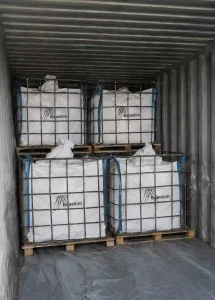
Bitumen jumbo bags use specially designed flexible packaging systems. Depending on the design, manufacturers combine a strong woven outer layer with an inner liner suitable for bitumen. Common capacities include 300 kg and 1,000 kg.
Both systems allow suppliers to transport cooled bitumen without maintaining tanker-level heating throughout the journey.
However, their performance changes significantly when buyers consider unloading, reheating, storage conditions, and packaging disposal.
Bitumen Packaging Comparison: Steel Drum vs Jumbo Bag
The following comparison helps international buyers evaluate both packaging methods before placing an order.
| Feature | Steel Drum | Jumbo Bag |
|---|---|---|
| Packaging material | Steel | Woven outer bag with compatible liner |
| Typical capacity | 150–200 kg | 300–1,000 kg |
| Handling | Drum handlers or suitable lifting equipment | Forklifts or approved lifting systems |
| Protection | Rigid, puncture-resistant container | Flexible packaging requiring careful handling |
| Shipping | Suitable for conventional container transport | Suitable for approved container-loading arrangements |
| Unloading | Drum decanter or suitable melting system | Bag-compatible melting system |
| Packaging waste | Empty steel containers | Fabric and liner waste, depending on design |
| Partial consumption | Easier with smaller units | Less convenient with large units |
| Main advantage | Flexibility and physical protection | Potential handling and packaging efficiency |
| Main limitation | Steel cost and drum-emptying labor | Specialized unloading and liner requirements |
Neither packaging method guarantees lower total costs in every destination.
For example, a contractor who purchases limited quantities for road maintenance may prefer drums. Meanwhile, an asphalt plant that consumes several tons daily may benefit from jumbo bags if it already operates suitable melting equipment.
Bitumen Drum vs Jumbo Bag Advantages and Disadvantages
Advantages of Bitumen Steel Drums
Steel drums remain a practical option for international bitumen trading because they offer several operational benefits.
Strong physical protection: The rigid steel body protects bitumen against many common handling impacts.
Flexible distribution: Buyers can divide shipments between multiple construction sites.
Smaller consumption units: Contractors can process individual drums according to daily requirements.
Established logistics: Many importers already understand drum loading, storage, and unloading procedures.
Recyclable material: Buyers can send empty steel drums to suitable recycling facilities.
Disadvantages of Steel Drums
Despite these benefits, steel packaging creates additional costs.
Manufacturers must purchase steel, produce containers, fill them, and secure them for transportation.
At the destination, workers must handle individual units and recover the bitumen. Poor unloading procedures can leave material attached to the drum walls.
Furthermore, steel drums increase shipment tare weight and create empty-container disposal or recycling obligations.
Advantages of Bitumen Jumbo Bags
Jumbo bags offer a different balance of efficiency and handling requirements.
Their potential advantages include lower packaging weight, fewer individual units to handle, and reduced dependence on steel packaging.
Some specially engineered bag systems also allow operators to transfer bitumen into melting equipment with fewer manual steps.
However, buyers must confirm whether the packaging uses a removable liner or an approved meltable liner.
Disadvantages of Jumbo Bags
Flexible packaging offers less protection against sharp objects and incorrect stacking practices.
High temperatures may also soften the bitumen, causing deformation or increased pressure on the packaging.
Additionally, large bags require suitable lifting equipment and a receiving system capable of processing substantial bitumen blocks.
Therefore, buyers should never assume that an ordinary polypropylene bulk bag can safely replace a purpose-built bitumen packaging system.
Which Is Better for Bitumen Packaging?
The answer depends primarily on the buyer’s operating conditions.
Choose steel drums when:
You need smaller quantities for individual projects.
Your destination lacks specialized jumbo-bag melting equipment.
You distribute bitumen to several contractors.
You require rigid containers for challenging handling conditions.
Choose jumbo bags when:
Your facility processes large quantities regularly.
You have compatible lifting and melting systems.
Your shipping route supports the selected bag design.
You want to evaluate lower packaging waste and handling costs.
For large industrial buyers, the difference often comes down to daily production capacity rather than the initial packaging price.
An asphalt plant that consumes 40 tons of bitumen daily may consider jumbo bags convenient, while a contractor who consumes only two tons occasionally may find drums more practical.
Bitumen Drum vs Jumbo Bag: Which Has Lower Shipping Costs?
Shipping costs depend on container utilization, freight rates, packaging weight, and handling charges.
For example, consider an established loading arrangement that carries 110 drums, each containing 180 kg of bitumen.
The container transports:
110 × 180 kg = 19,800 kg, or 19.8 metric tons.
Now consider a jumbo-bag shipment containing 20 bags, each holding 1,000 kg.
That arrangement transports:
20 × 1,000 kg = 20,000 kg, or 20 metric tons.
In this example, both configurations deliver nearly identical net cargo weights.
However, palletized drum shipments may carry fewer drums, while certain approved smaller-bag configurations may achieve different loading weights.
This distinction matters because jumbo bags do not automatically increase the payload of every container.
A More Accurate Way to Compare Packaging Costs
Importers should calculate the landed cost per usable metric ton:
Total landed cost per usable ton = (Product + Packaging + Freight + Port Charges + Inland Transport + Unloading + Disposal Costs) ÷ Usable Bitumen Delivered
This calculation offers a better purchasing decision than comparing packaging prices alone.
For instance, an importer may save money on packaging but spend more on specialized melting equipment, additional labor, or cargo recovery.
The most economical choice minimizes the complete delivery and processing cost.
How to Ship Bitumen in Jumbo Bags?
Shipping bitumen in jumbo bags requires coordinated packaging, cooling, inspection, and container loading.
First, the manufacturer selects an engineered bag and liner system compatible with the bitumen grade and filling conditions.
Next, the producer fills the approved packaging under controlled conditions and allows the bitumen to cool sufficiently.
The logistics team then inspects the bags for deformation, damaged seams, leakage, and incorrect filling weights.
After inspection, workers load the units into a suitable container using the packaging manufacturer’s approved handling method.
They also check weight distribution, cargo stability, and the container’s maximum permitted payload.
Finally, the exporter prepares the relevant shipping documents, including the packing list and product specifications.
Important: A bitumen jumbo bag is not necessarily suitable for direct hot filling. The complete packaging system must carry approval for its intended filling process.
Bitumen Packaging for Sea Freight: What Should Importers Check?
Sea transportation exposes cargo to movement, prolonged storage, temperature changes, and multiple handling operations.
Consequently, importers should evaluate packaging performance throughout the complete journey.
Container Weight and Cargo Stability
A 20-foot container’s usable payload depends on its rated capacity, road weight restrictions, and the total weight of the packaging and cargo.
Buyers must confirm the proposed loading plan instead of relying on a universal container capacity figure.
Climate and Transit Duration
A shipment traveling through hot climates may experience higher container temperatures than cargo moving through cooler regions.
Under these conditions, bitumen may soften, and unsuitable bags may deform.
Steel drums can also experience handling problems when extreme heat combines with poor storage practices.
Destination Infrastructure
Before booking sea freight, importers should confirm whether the receiving facility has suitable forklifts, drum-handling equipment, or bitumen melting systems.
A packaging option that performs well during shipping may still create expensive difficulties at the destination.
Does Jumbo Bag Packaging Affect Bitumen Quality?
Jumbo bag packaging does not inherently reduce bitumen quality, but unsuitable materials and incorrect handling can create contamination risks.
The most important factors include liner composition, filling temperature, storage conditions, and reheating procedures.
For example, if workers introduce an incompatible polymer liner into the melting system, the material may alter the recovered binder’s properties.
Similarly, prolonged overheating can change bitumen characteristics regardless of whether the original packaging used drums or bags.
To control these risks, buyers should request technical documentation for both the bitumen and its packaging system.
They should also verify relevant product properties, such as penetration, softening point, and viscosity, through appropriate testing.
When a supplier recommends a meltable liner, buyers should confirm its compatibility with the intended bitumen grade and asphalt application.
Bitumen Jumbo Bag Storage Temperature: What Is Recommended?
Bitumen jumbo bags generally require cool, dry, well-controlled storage conditions that prevent excessive softening and packaging deformation.
However, no single storage temperature applies to every bitumen jumbo bag.
The acceptable range depends on the bitumen grade, bag construction, liner properties, stacking configuration, and storage duration.
Importers should therefore follow the packaging manufacturer’s documented temperature limits rather than assuming a universal threshold.
For safer storage, keep bags away from direct sunlight, place them on suitable stable surfaces, avoid sharp objects, and respect approved stacking limits.
Why Storage Temperature Matters
Bitumen changes consistency as temperatures rise or fall.
High ambient temperatures can increase deformation and handling difficulty, particularly with softer penetration grades.
Lower temperatures usually help the packaged material maintain its shape, although cold conditions can introduce other handling considerations.
Importers should pay particular attention to outdoor storage during summer, especially when the cargo will remain at a port or construction site for an extended period.
How to Remove Bitumen from Steel Drums?
Removing bitumen from steel drums requires appropriate industrial equipment and controlled heating.
Many facilities use drum decanters or dedicated melting systems.
Operators place the drums into equipment designed to heat the contents and recover the softened or molten bitumen.
The system then transfers the recovered material into a suitable heated receiving tank.
Other approved systems may process solid bitumen blocks after trained operators remove the containers.
The exact method depends on the drum construction and the available equipment.
Workers should avoid improvised open-flame heating or uncontrolled cutting around hot bitumen.
Such practices can introduce serious fire, burn, and fume hazards.
Facilities should follow the product safety data sheet and the operating instructions for their melting equipment.
How to Unload Bitumen from Jumbo Bags?
The unloading method depends on whether the shipment uses removable packaging or a certified meltable system.
For a removable-liner jumbo bag, operators use approved lifting equipment to position the package safely.
They then remove the outer packaging and any liner that must not enter the bitumen melting process.
Afterward, the facility transfers the bitumen block into a compatible melter.
Some purpose-designed systems use meltable inner liners that manufacturers approve for processing with the bitumen.
However, operators must never assume that all bag materials can enter the melter.
The receiving team should verify the exact packaging design before unloading begins.
This prevents contamination, protects processing equipment, and reduces avoidable product losses.
A New Consideration: Match Packaging Size to Daily Bitumen Consumption
Most packaging comparisons focus on freight costs, but daily consumption capacity can have an equally important financial impact.
Consider two hypothetical asphalt plants.
Plant A consumes 2,000 kg of bitumen daily. With 180 kg drums, the plant can process smaller units and adjust the quantity according to production needs.
Plant B consumes 40,000 kg daily and operates a melting system designed for large bitumen blocks.
Plant B may gain operational benefits from larger packaging units because workers handle fewer individual containers.
However, large units may create scheduling problems when the melting system cannot keep pace with production.
This leads to a practical purchasing question:
Can the receiving facility melt and transfer the purchased packaging format fast enough to meet daily asphalt production?
Buyers should calculate required melting capacity before finalizing the packaging arrangement.
This approach connects packaging selection directly to plant productivity, not just transportation.
Choosing Packaging for Different Bitumen Grades
Packaging requirements also vary according to the physical characteristics of the bitumen.
Penetration grades such as Bitumen 60/70 and Bitumen 80/100 commonly enter international trade in steel drums and approved bag systems.
However, the selected grade affects handling behavior, particularly during cooling, hot-weather storage, and reheating.
Softer grades may require additional attention to temperature and deformation.
Harder or oxidized bitumen grades may need different melting conditions and packaging compatibility checks.
Similarly, polymer-modified bitumen can introduce additional requirements related to temperature control and material stability.
Therefore, buyers should confirm packaging suitability for the specific product instead of assuming that every bitumen grade behaves identically.
How to Choose a Reliable Bitumen Packaging Supplier
Before purchasing, buyers should request confirmed net and gross weights, packaging specifications, container-loading plans, and relevant quality documents.
They should also ask about liner composition, storage limitations, unloading requirements, and available inspection arrangements.
For international buyers comparing Bitumen Drum vs Jumbo Bag, Basekim supplies bitumen for export and can be contacted to discuss suitable grades, available packaging options, and shipment requirements.
A properly documented offer should identify the agreed packaging format and quantity clearly, allowing both parties to evaluate the complete delivered cost.
Conclusion: Bitumen Drum vs Jumbo Bag — Which Should You Choose?
The Bitumen Drum vs Jumbo Bag decision depends on more than price. Steel drums provide rigid protection, smaller consumption units, and flexible distribution. Jumbo bags can offer efficient handling and lower packaging waste when facilities use compatible equipment.
For importers with limited unloading infrastructure, steel drums often remain the practical option. For industrial buyers with suitable melting systems, approved jumbo bags may deliver operational advantages.
Ultimately, buyers should compare container utilization, climate conditions, product compatibility, unloading capacity, and total landed cost before selecting their packaging.