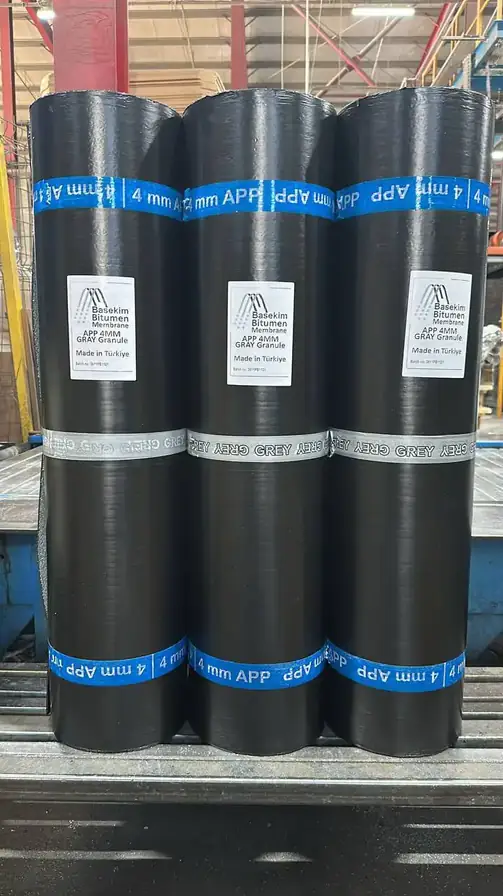
The Bitumen Membrane Manufacturing Process involves several controlled production stages that transform raw materials into durable waterproofing sheets. Manufacturers carefully select materials, modify bitumen compounds, combine reinforcement layers, apply coatings, and perform quality inspections. As a result, the final membrane achieves the required strength, flexibility, and resistance for construction applications.
Raw Materials Used in Production
Manufacturers begin the process by selecting high-quality raw materials. Each component affects the final performance of the membrane. Therefore, factories carefully control material selection before production begins.
The main materials include:
Modified bitumen
Reinforcement carriers
Mineral fillers
Polymers
Surface finishing materials
Bitumen forms the main waterproofing compound. However, manufacturers often improve its characteristics by adding polymers. These additives increase flexibility, temperature resistance, and durability.
Additionally, reinforcement materials provide structural strength. Manufacturers commonly use polyester, fiberglass, or composite carriers because these materials help the membrane maintain stability during installation and long-term use.
Step-by-Step Bitumen Membrane Manufacturing Process
The Bitumen Membrane Manufacturing Process follows a continuous production line. Although equipment designs vary between factories, most manufacturers follow similar production principles.
The main stages include:
Raw material preparation
Bitumen modification
Reinforcement preparation
Compound mixing
Membrane coating
Cooling and shaping
Surface treatment
Quality testing
Packaging
Each stage requires precise control because small variations can influence product performance.
Bitumen Modification Stage
First, manufacturers heat bitumen inside specialized mixing tanks. Next, they combine polymers and additives to improve the physical properties of the material.
During this stage, production teams control:
- Temperature levels
- Mixing speed
- Additive quantities
- Processing time
Furthermore, proper mixing allows polymers to distribute evenly throughout the bitumen. Consequently, the modified compound develops better flexibility and resistance against environmental conditions.
After achieving the required consistency, manufacturers transfer the modified bitumen to the coating section.
Reinforcement Preparation
The reinforcement layer plays an important role in membrane strength. Therefore, manufacturers prepare the carrier material carefully before coating.
First, the reinforcement passes through tension control systems. These systems keep the material flat and stable during production. Then, manufacturers feed the carrier into the coating machine.
Because the reinforcement supports the membrane structure, proper alignment prevents defects such as wrinkles or uneven thickness.
Moreover, manufacturers select reinforcement types based on the required application. For example, polyester carriers often provide high tensile strength, while fiberglass carriers offer dimensional stability.
Mixing and Coating in Bitumen Membrane Manufacturing Process
The coating stage creates the main membrane structure. During this step, manufacturers apply the modified bitumen compound onto the reinforcement layer.
The production line controls coating thickness through automated systems. As a result, manufacturers achieve consistent product dimensions across the entire roll.
Typically, the process includes:
Applying the first bitumen layer
Positioning the reinforcement carrier
Adding the upper bitumen layer
Adjusting thickness and surface texture
After coating, the membrane moves through additional processing equipment. These machines ensure the material reaches the required thickness and surface quality.
Furthermore, manufacturers may add protective layers such as mineral granules or special films. These finishing materials improve surface protection and handling performance.
Cooling and Finishing Stage
After coating, the membrane enters the cooling section. Cooling equipment reduces the temperature gradually and stabilizes the structure.
However, manufacturers must control cooling conditions carefully. Rapid temperature changes can affect flexibility and surface quality.
During the finishing stage, production lines complete several tasks:
Surface treatment
Edge trimming
Length measurement
Roll formation
Finally, machines roll the finished membrane into manageable sizes for storage and transportation.
Quality Control During Manufacturing
Quality control remains one of the most important parts of the Bitumen Membrane Manufacturing Process. Manufacturers test products throughout production instead of checking only the final rolls.
Common quality tests include:
Thickness measurement
Tensile strength testing
Flexibility evaluation
Waterproof performance testing
Heat resistance testing
Surface inspection
Because construction projects require reliable waterproofing materials, manufacturers follow strict testing procedures.
Additionally, continuous monitoring helps factories identify production issues early. Therefore, quality control reduces waste and improves consistency.
Modern Technologies in Production Lines
Modern manufacturing plants use automation to improve accuracy and productivity. Automated systems monitor temperatures, material flow, and coating thickness in real time.
Furthermore, advanced production equipment helps manufacturers:
Reduce material waste
Improve production speed
Maintain consistent quality
Lower operational errors
Digital monitoring systems also provide valuable production data. As a result, factory teams can identify performance trends and optimize manufacturing settings.
Moreover, energy-efficient equipment helps reduce operating costs while supporting more sustainable production methods.
Factors Affecting Bitumen Membrane Manufacturing Process Quality
Several factors influence the final quality of bitumen membranes. Therefore, manufacturers must manage every production variable carefully.
Important factors include:
Raw Material Quality
High-quality bitumen, polymers, and reinforcement materials create stronger products. Conversely, poor-quality inputs can reduce durability.
Temperature Control
Manufacturers must maintain accurate temperatures throughout production. Excessive heat or insufficient heating can affect material performance.
Mixing Accuracy
Proper mixing ensures uniform distribution of additives. Therefore, manufacturers must control mixing time and speed.
Equipment Performance
Well-maintained production equipment improves consistency. Additionally, regular maintenance reduces unexpected production problems.
Environmental Considerations in Production
Manufacturers increasingly focus on reducing environmental impact during production. Therefore, many factories improve energy efficiency and optimize material usage.
Modern approaches include:
Reducing production waste
Improving recycling practices
Using efficient heating systems
Optimizing transportation packaging
Furthermore, better process control helps manufacturers use resources more effectively. As sustainability requirements increase, production facilities continue developing cleaner manufacturing methods.
Conclusion: Bitumen Membrane Manufacturing Process
The Bitumen Membrane Manufacturing Process requires careful planning, advanced equipment, and strict quality control. Manufacturers combine modified bitumen, reinforcement materials, and specialized production techniques to create reliable waterproofing products.
From raw material preparation to final testing, every stage influences the performance of the finished membrane. Therefore, efficient manufacturing methods help deliver products that meet construction requirements and provide long-term protection.
FAQs Bitumen Membrane Manufacturing Process
What are the main stages in the Bitumen Membrane Manufacturing Process?
The main stages include raw material preparation, bitumen modification, reinforcement preparation, coating, cooling, finishing, testing, and packaging.
Why do manufacturers modify bitumen during production?
Manufacturers modify bitumen to improve flexibility, durability, temperature resistance, and overall membrane performance.
Which reinforcement materials do factories use for bitumen membranes?
Factories commonly use polyester, fiberglass, and composite reinforcement materials to improve strength and stability.