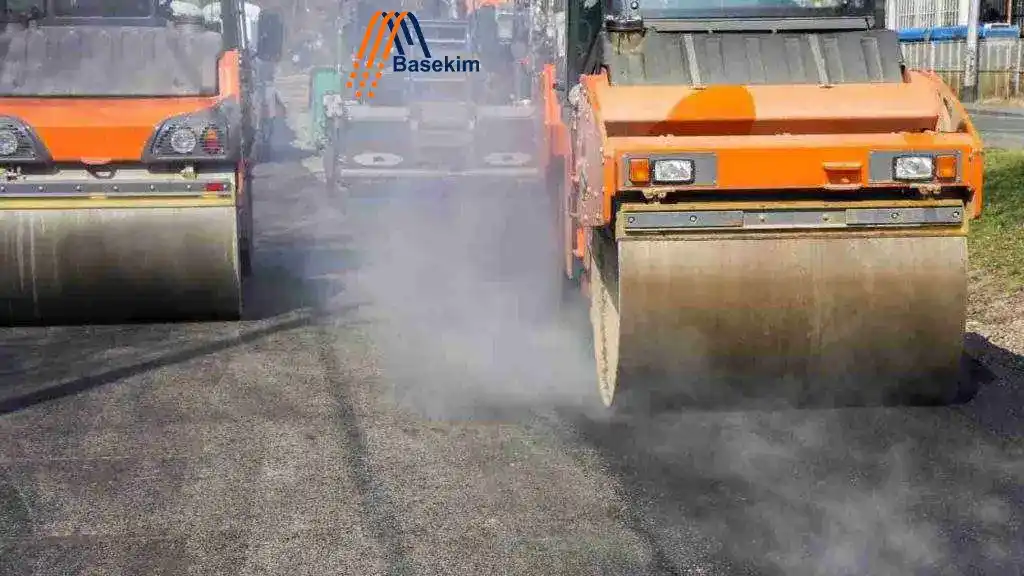
Accurate bitumen quantity calculation is one of the most important steps in any road construction, waterproofing, or industrial paving project. Whether you are planning a highway, parking lot, airport runway, or roofing application, calculating the correct amount of bitumen helps reduce waste, control costs, and improve overall project quality.
Moreover, incorrect estimation can lead to material shortages, unnecessary expenses, project delays, and inconsistent pavement performance. Therefore, engineers, contractors, procurement teams, and project managers rely on proven calculation methods to determine the exact quantity required before construction begins.
In this comprehensive guide, you will learn how to calculate bitumen quantities using standard engineering formulas, understand the factors affecting consumption, and discover practical examples that simplify the estimation process.
Why Bitumen Quantity Calculation Matters
Every construction project begins with material estimation. Since bitumen represents a significant portion of project costs, accurate calculations directly influence budgeting and scheduling.
Proper quantity estimation offers several advantages:
Reduces material waste
Prevents project delays
Improves procurement planning
Optimizes transportation costs
Ensures consistent pavement quality
Minimizes environmental impact
Helps contractors prepare accurate bids
Furthermore, reliable calculations improve inventory management and reduce the likelihood of emergency purchases during construction.
What Is Bitumen Quantity Calculation?
Bitumen quantity calculation is the process of determining how much bitumen is required to complete a specific construction activity.
Depending on the project, calculations may include:
Prime coat
Tack coat
Asphalt paving
Surface dressing
Roofing membranes
Industrial coatings
The required quantity is usually expressed in:
Kilograms (kg)
Tons
Liters
Cubic meters
The calculation method depends on both the application and the material specifications.
Basic Formula for Bitumen Quantity Calculation
The simplest engineering formula is:
Bitumen Quantity = Area × Application Rate
Where:
Area = square meters (m²)
Application Rate = kilograms per square meter (kg/m²)
Example:
Area = 2,000 m²
Application Rate = 1.2 kg/m²
Calculation:
2,000 × 1.2 = 2,400 kg
Therefore, the project requires approximately 2.4 metric tons of bitumen.
This formula works well for surface treatments, waterproofing, and many maintenance applications.
Formula for Asphalt Pavement Bitumen Calculation
When calculating bitumen inside asphalt mixtures, another formula is commonly used.
Bitumen Quantity = Asphalt Mix Weight × Bitumen Percentage
Example:
Asphalt Mix = 800 tons
Binder Content = 5%
Calculation:
800 × 5%
= 40 tons of bitumen
Consequently, an asphalt plant producing 800 tons of hot mix requires approximately 40 tons of binder.
Step-by-Step Bitumen Quantity Calculation
Following a systematic process improves estimation accuracy.
Step 1: Measure the Area
First, determine the total surface area.
Area Formula:
Length × Width
Example:
Length = 600 m
Width = 8 m
Area:
600 × 8 = 4,800 m²
Step 2: Determine Application Rate
Next, identify the recommended application rate.
Typical values include:
| Application | Average Rate |
|---|---|
| Tack Coat | 0.25–0.60 kg/m² |
| Prime Coat | 0.70–1.50 kg/m² |
| Surface Dressing | 1.2–2.0 kg/m² |
| Waterproofing | 1.5–3.5 kg/m² |
Always follow project specifications because actual rates vary depending on surface conditions.
Step 3: Multiply Area by Application Rate
Suppose:
Area = 4,800 m²
Application Rate = 1.1 kg/m²
Calculation:
4,800 × 1.1
= 5,280 kg
Equivalent to:
5.28 tons
Step 4: Include Waste Allowance
Although calculations provide theoretical quantities, contractors normally add a safety margin.
Typical allowances include:
3% for experienced contractors
5% for average projects
8–10% for difficult terrain
Therefore:
5.28 tons × 5%
= 0.264 tons
Final requirement:
5.54 tons
Factors Affecting Bitumen Quantity Calculation
Several variables influence actual bitumen consumption.
Surface Texture
Rough surfaces absorb more binder.
Consequently, older pavements usually require higher application rates than smooth concrete.
Surface Porosity
Highly porous aggregate requires additional bitumen.
Meanwhile, dense surfaces consume considerably less material.
Aggregate Size
Large aggregates create larger voids.
Therefore, higher binder content becomes necessary.
Pavement Thickness
As pavement thickness increases, total asphalt volume also increases.
As a result, binder demand rises proportionally.
Climate Conditions
Hot climates often require different binder grades and slightly modified application rates.
Similarly, colder environments may require adjustments to maintain flexibility.
Construction Method
Machine spraying generally provides more uniform coverage than manual application.
Accordingly, equipment quality affects actual consumption.
Bitumen Quantity Calculation for Road Construction
Road projects represent the largest use of bitumen worldwide.
A typical calculation involves:
Road Length
Road Width
Pavement Thickness
Mix Density
Binder Percentage
Example:
Road Length = 1,200 m
Width = 7 m
Thickness = 50 mm
Density = 2.35 t/m³
Bitumen Content = 5.2%
Step One
Volume:
1,200 × 7 × 0.05
= 420 m³
Step Two
Asphalt Weight:
420 × 2.35
= 987 tons
Step Three
Binder Requirement:
987 × 5.2%
= 51.3 tons of bitumen
This method is widely used in highway engineering projects.

Using Bitumen 60/70 in Quantity Estimation
Projects Using Bitumen 60/70
Many asphalt pavement projects specify bitumen 60/70 because of its balanced penetration characteristics and reliable performance under moderate climate conditions.
When estimating material requirements, the calculation method remains exactly the same. However, engineers should always use the binder percentage specified in the asphalt mix design rather than assuming a standard value. This ensures that the calculated quantity matches laboratory-approved formulations and project specifications.
Bitumen Quantity Calculation for Waterproofing
Waterproofing projects use area-based calculations.
Example:
Roof Area = 1,500 m²
Consumption Rate = 2.5 kg/m²
Calculation:
1,500 × 2.5
= 3,750 kg
Including 5% allowance:
3,937 kg
Approximately:
3.94 tons
This method is commonly applied to roofing systems, basements, bridges, and foundation waterproofing.
Estimating Bitumen for Surface Dressing
Surface dressing uses aggregate combined with sprayed binder.
Typical binder rates range from:
1.2–2.0 kg/m²
For example:
Area = 12,000 m²
Rate = 1.6 kg/m²
Calculation:
19,200 kg
Equivalent to:
19.2 tons
Working with Bitumen SS1
Quantity Estimation for Bitumen SS1
When using bitumen SS1 for tack coat applications, engineers generally calculate the required quantity according to the recommended spray rate for the existing pavement condition. Since diluted emulsions may have different residual binder contents, contractors should verify the product specifications before estimating the final volume. This approach improves accuracy and prevents over-application during pavement preparation.
Bitumen Quantity Calculation for Prime Coat
Prime coat calculations often require higher application rates because granular bases absorb more binder.
Example:
Area = 6,000 m²
Rate = 1.3 kg/m²
Calculation:
7,800 kg
Or:
7.8 tons
Absorption testing may further refine this estimate.
Estimating Cutback Bitumen Requirements
Calculating Material for Bitumen MC 30
Projects that use bitumen MC 30 for prime coating follow the same calculation principles based on treated surface area and specified application rate. Nevertheless, because cutback bitumen contains volatile solvents, engineers often consider the residual binder content when preparing procurement estimates. Reviewing the manufacturer’s technical data helps achieve more precise material planning.
Common Mistakes in Bitumen Quantity Calculation
Even experienced contractors occasionally make estimation errors.
The most common mistakes include:
Ignoring surface absorption
Using incorrect density values
Forgetting waste allowance
Mixing metric and imperial units
Assuming standard binder percentages
Overlooking project specifications
Measuring incorrect pavement thickness
Fortunately, these mistakes can be avoided through careful planning and quality control.
Tips for More Accurate Calculations
Professional estimators follow several best practices.
These include:
Verify all project dimensions twice.
Use laboratory-approved mix designs.
Measure actual pavement thickness.
Consider weather conditions.
Include realistic waste percentages.
Check equipment calibration.
Follow local engineering standards.
Review supplier technical data.
Additionally, digital estimating software can significantly improve consistency on large infrastructure projects.
Digital Tools for Bitumen Quantity Calculation
Modern construction companies increasingly rely on software to estimate material quantities.
Popular tools can calculate:
Pavement volume
Asphalt mix weight
Binder requirement
Cost estimation
Material scheduling
Transportation planning
These systems reduce human error while improving project efficiency.
Why Material Quality Matters
Even the most accurate calculation cannot compensate for inconsistent bitumen quality.
High-quality binders provide:
Better adhesion
Improved durability
Longer pavement life
Greater resistance to moisture
Reduced maintenance costs
Therefore, selecting a trusted supplier is just as important as calculating the correct quantity.
Basekim: Your Reliable Bitumen Supplier
Accurate bitumen quantity calculation begins with reliable technical information and consistent product quality. Basekim supplies a wide range of high-quality bitumen products for road construction, waterproofing, industrial applications, and infrastructure projects worldwide.
In addition to dependable product quality, Basekim provides technical documentation, flexible packaging options, export experience, and professional support to help customers choose the right materials for their projects. As a result, contractors and distributors can plan procurement with greater confidence and improve overall project efficiency.
Conclusion
Proper bitumen quantity calculation is essential for successful construction projects. By accurately measuring the project area, selecting the correct application rate, considering pavement thickness, accounting for waste, and following engineering specifications, contractors can significantly reduce costs while improving construction quality.
Furthermore, understanding the factors that influence binder consumption allows engineers to make smarter purchasing decisions and avoid costly shortages. Whether you are building highways, applying waterproofing systems, or producing asphalt mixtures, accurate estimation remains the foundation of efficient project management.
Finally, partnering with an experienced supplier like Basekim ensures not only reliable bitumen products but also the technical support needed to achieve precise calculations and outstanding project performance.